


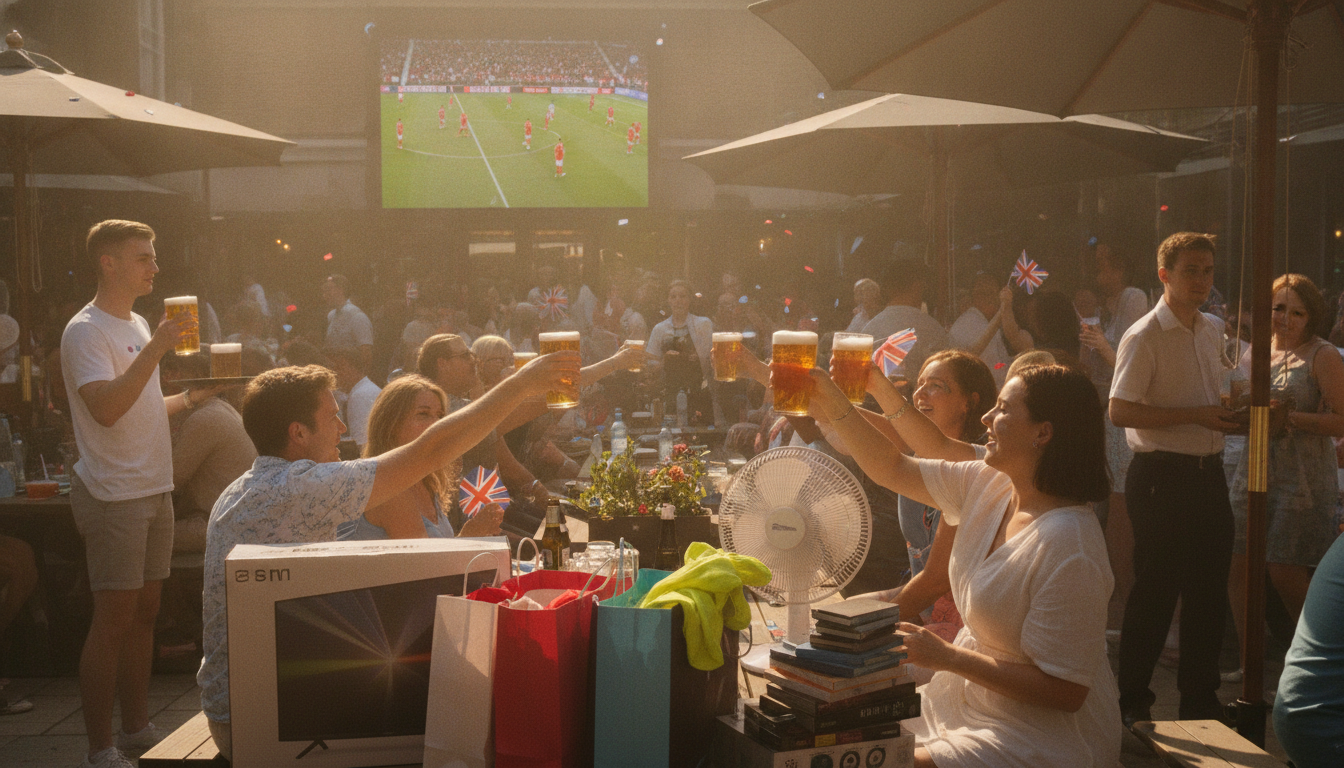
Britons opened their wallets in June as a heat wave and the World Cup sent people to pubs, shops, and online checkouts, giving a timely boost to economic activity. Warmer weather and football fixtures drew crowds to beer gardens and living rooms across the country, lifting sales of pints, summer clothes, televisions, fans, and other electronics.
A heat wave and the World Cup prompted Britons to splash out on pints of beer, clothes and electronics in June, potentially boosting economic activity.
The spending surge arrived as households looked for relief from the heat and ways to watch matches in comfort. Retailers and hospitality venues responded with promotions, extended hours, and event tie-ins that took advantage of packed calendars and hot afternoons.
Why Weather And Sport Move The Needle
Hot spells often shift consumer behavior. People head outdoors, spend more time in pubs and restaurants, and buy seasonal goods such as shorts, sunglasses, and garden furniture. Major tournaments like the World Cup add a social draw, increasing foot traffic and encouraging group viewing at home and in venues.
Economists say these patterns can lift monthly indicators, even if the effect is brief. The UK’s monthly gross domestic product and retail sales figures often reflect such swings, with hospitality, food and drink, and household goods among the most sensitive categories. When heat coincides with a global sporting event, those effects can stack.
Price pressures have eased compared with the peak of inflation, and wage growth has supported some spending power. That gives households a bit more room to make discretionary purchases, even as many still face tight budgets.
Winners On The High Street And At Home
Pubs reported busy gardens and higher draught volumes during match days and hot weekends. Supermarkets also benefited from at-home viewing, with demand for beer, soft drinks, and picnic foods rising. Apparel retailers leaned into seasonal lines and quick-turn promotions to move stock while the weather held.
- Hospitality: pubs, bars, and casual dining tied to match screenings and outdoor seating.
- Apparel: summer clothing, swimwear, and footwear suitable for heat.
- Electronics and home: televisions, soundbars, fans, and air coolers for home viewing and comfort.
Electronics retailers often see an uptick around big sporting events as shoppers upgrade screens and speakers. This year’s heat made cooling devices and small appliances a practical add-on, boosting basket sizes online and in stores.
Short-Term Lift, Long-Term Questions
Analysts caution that weather and tournament effects are temporary. A strong June can be followed by a softer July if households bring forward purchases. Supply chains also face strains, from beer kegs to chilled logistics, when temperatures rise quickly. Retailers with flexible inventories and agile delivery networks tend to fare better in such bursts.


There are broader signals to watch. If higher footfall and ticket sizes persisted into early July, it could point to improved consumer confidence rather than a one-off spike. Conversely, a sharp drop-off would suggest the lift was seasonal and tied to the match schedule.
Energy use and worker comfort are additional concerns during heat waves. Businesses may face higher cooling costs and productivity challenges that partially offset sales gains, especially for small firms with limited space and staffing.
What It Means For The Economy
June’s activity may add a modest push to monthly GDP, largely through services. Hospitality, retail, and logistics are the main channels. The size of the effect will depend on how much of the spending was incremental versus shifted from later months.
For policymakers, the pattern helps gauge household resilience as inflation cools. A healthy response to seasonal and event-driven opportunities suggests spending capacity remains, at least among middle-income households. For retailers, the lesson is clear: align promotions with weather and fixtures, manage inventories closely, and be ready to pivot when temperatures swing.
As final June data are published, attention will turn to whether the momentum carried into July. With the tournament ending and temperatures normalizing, the next reports will show if the burst was a temporary high or the start of a steadier consumer rebound.