



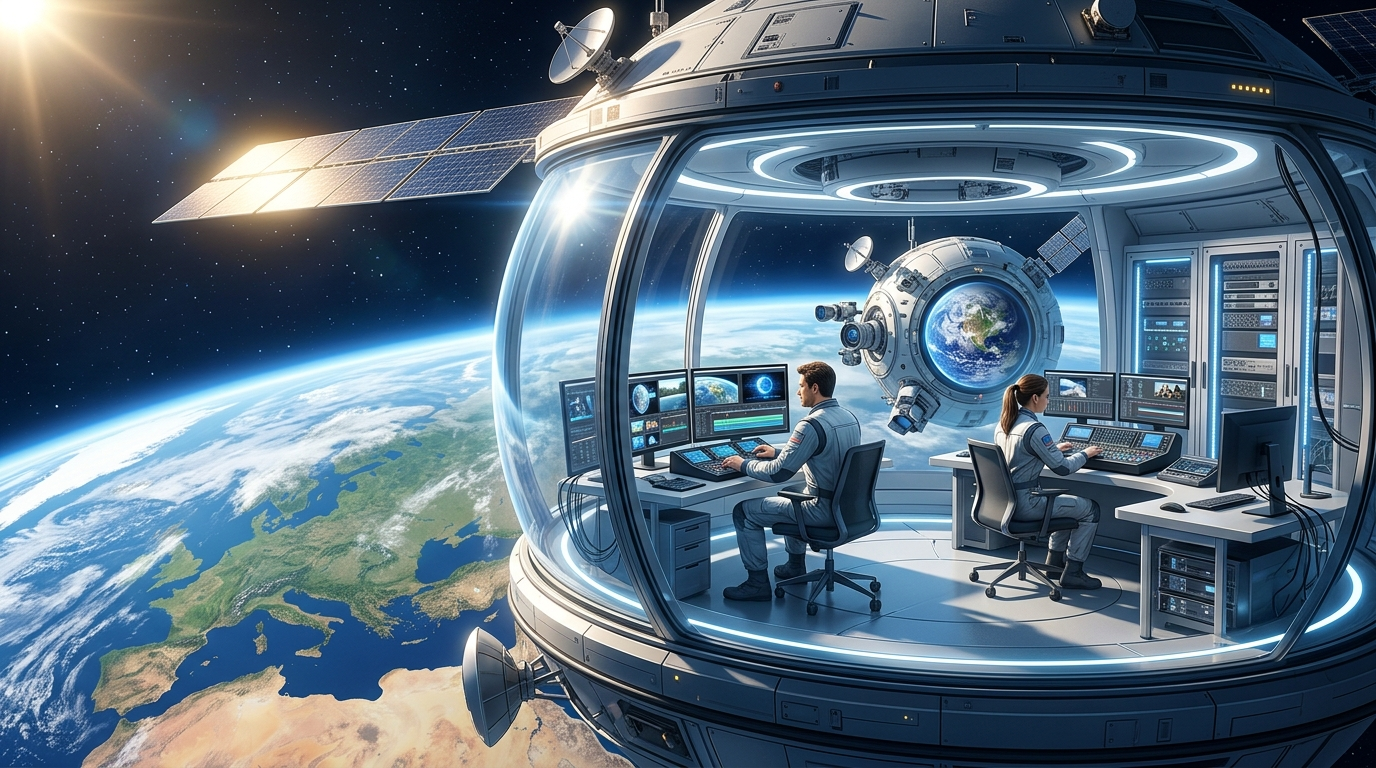
Project Rhapsody plans to open a dedicated media studio in orbit, with its first creative works scheduled for 2028. Developer Symphony Space says the facility will serve brands, artists, and cultural institutions seeking to produce authenticated work in space.
The proposal adds a cultural focus to the growing commercial space sector. Private missions have already carried films, artworks, and advertising projects above Earth. A permanent studio could make such production more organized, though major technical and financial questions remain unanswered.
A Studio Designed for Creative Work
Project Rhapsody is being presented as a production site rather than a single mission. Its intended users include commercial brands, independent artists, and museums or other cultural groups.
“The first works are planned for 2028,” the company said.
No launch provider, orbital location, crew model, or construction schedule has been disclosed. The company also has not said whether creators would travel to the studio or operate equipment from Earth.
Those details will shape the project’s cost and reach. A crewed facility would require life-support systems, training, and strict safety controls. A remotely operated studio could reduce those demands, but it would limit direct human participation.
Authentication Is Central to the Plan
The project’s emphasis on authenticated work points to a key challenge for space-produced media. Buyers, institutions, and audiences need proof that an image, object, or performance was created in orbit.
Possible verification methods could include mission records, equipment logs, location data, and independent review. However, Symphony Space has not explained which process it plans to use.
Clear standards would matter for several reasons:

- Artists may need evidence of where and how a work was made.
- Museums may require documented ownership and production records.
- Brands must support marketing claims with reliable proof.
- Collectors may seek protection against false claims or altered records.
Authentication may also affect intellectual property rights. Space projects can involve participants, equipment, and companies from several countries. Contracts would need to define ownership, licensing, and responsibility for the finished work.
Commercial Promise Meets Orbital Limits
An orbital studio could offer images and experiences that are difficult to reproduce on Earth. Microgravity changes how liquids, fabrics, bodies, and loose materials move. Earth itself could provide a distinctive setting for photography and performance.
Yet access to orbit remains costly and tightly controlled. Payload weight, power use, communications capacity, and astronaut time can restrict creative plans. Materials must also meet spacecraft safety rules, especially for fire risk and contamination.
Public reaction may present another challenge. Supporters may view orbital art as a new form of cultural production. Critics may question whether advertising and private creative projects justify launch emissions, orbital traffic, and limited spaceflight resources.
The 2028 Goal Leaves Key Questions
The planned date gives Project Rhapsody roughly two years to move from concept toward operations. Progress will depend on partnerships, testing, funding, regulatory approval, and access to launch services.
Important signs to watch include the selection of a spacecraft platform, named creative partners, and a published authentication standard. Firm mission dates and safety plans would offer further evidence that the studio is advancing.
For now, Project Rhapsody remains an ambitious proposal with a clear cultural goal but few public operational details. Its success will depend on whether the company can turn orbital access into a credible, safe, and verifiable production service by 2028.