





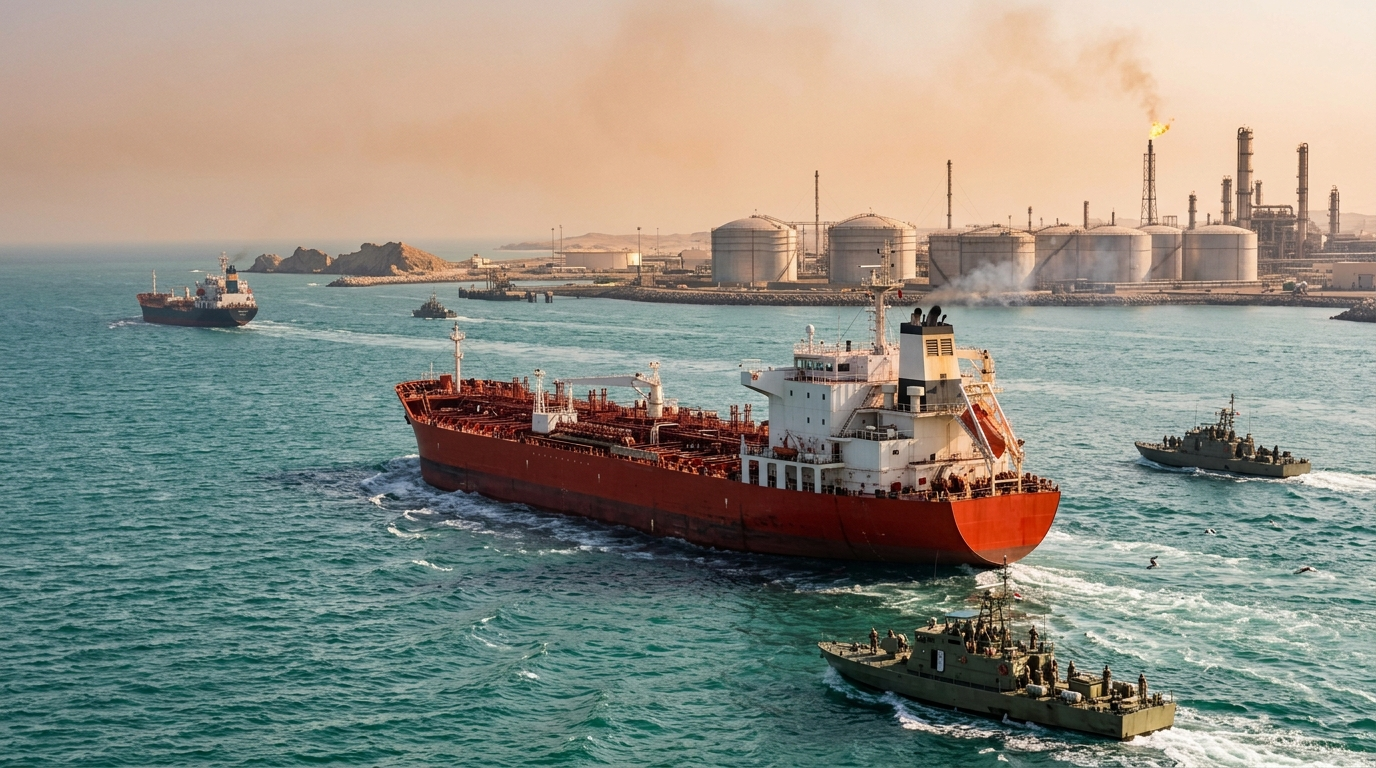
U.S. crude oil prices rose sharply Friday after Iran escalated attacks in the Strait of Hormuz during the week, renewing concern about global energy supplies. The price move showed how quickly conflict near the strategic waterway can affect oil markets and raise costs for businesses and consumers.
The available market report did not specify the size of the price increase or identify the targets of the attacks. Even so, the reaction suggests traders saw a greater risk of disruption along a major oil shipping route.
Strait Carries Major Energy Flows
The Strait of Hormuz connects the Persian Gulf with the Gulf of Oman and the Arabian Sea. Its narrow shipping lanes carry oil and liquefied natural gas from several major producers.
Iran sits along the strait’s northern shore, while Oman lies to the south. Saudi Arabia, Iraq, Kuwait, Qatar and the United Arab Emirates depend on regional export routes. This gives any security threat in the area global economic importance.
Oil markets often react before physical supplies are interrupted. Traders may add a risk premium when attacks threaten tankers, ports or shipping lanes. Insurance and freight costs can also rise as vessel operators review security conditions.
“U.S. crude oil prices rose sharply Friday as Iran escalated attacks in the Strait of Hormuz this week.”
Why Prices Respond So Quickly
Crude prices reflect expected supply and demand, not just current production. A threat to shipping can therefore lift prices even if exports continue moving.
The market response may reflect several immediate concerns:
- Tankers could face delays, damage or route restrictions.
- Marine insurers could charge higher premiums for regional voyages.
- Exporters could struggle to deliver contracted cargoes on schedule.
- Governments or armed forces could take steps that further increase tensions.
However, a sharp one-day gain does not prove that a lasting shortage has begun. Prices can retreat if traffic remains steady, security improves or diplomatic pressure reduces the threat.



Economic Effects Could Spread
Higher crude prices can feed into gasoline, diesel and jet fuel costs. The impact depends on how long the increase lasts, refinery conditions, inventories and local taxes.
Transportation companies are especially exposed because fuel is a major operating expense. Airlines, trucking groups and shipping firms may pass part of that cost to customers. Manufacturers can also face higher prices for energy and petroleum-based materials.
For households, the clearest effect may appear at fuel stations. Yet retail prices usually do not match daily crude movements immediately. Refining costs, distribution expenses and competition also shape what drivers pay.
Markets Await Evidence of Disruption
Attention will now center on vessel traffic, export schedules and any further Iranian action. Traders will also watch statements from regional governments and major oil producers.
The distinction between threatened supply and lost supply will matter. Continued attacks without reduced shipments may keep prices volatile. Confirmed closures, damaged facilities or delayed exports could create stronger and more lasting pressure.
Friday’s increase offered an early warning about the economic reach of the conflict. The next price direction will depend on whether the security crisis remains contained or begins to restrict energy flows through the Strait of Hormuz.