



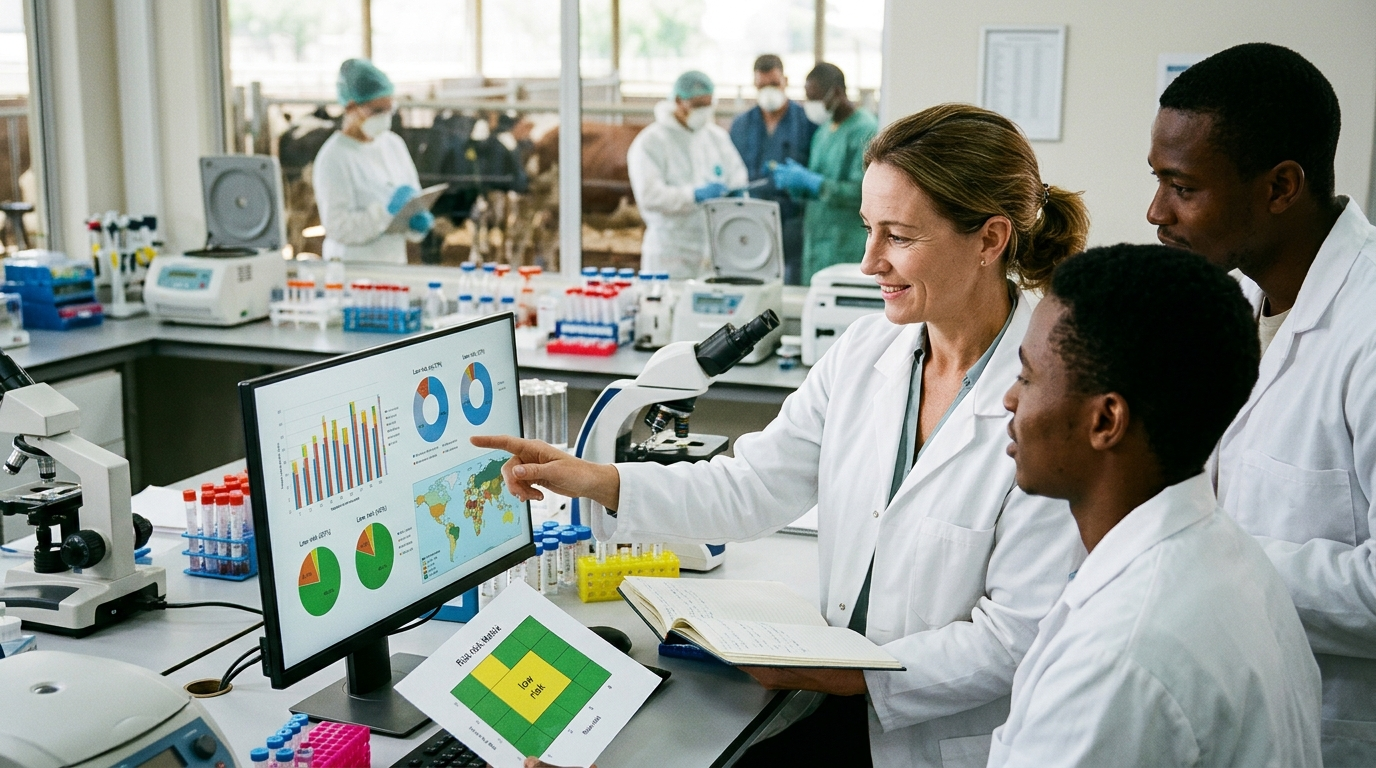
Infectious-disease researchers have assessed the risk of a livestock pathogen spreading between people as low, easing immediate fears of sustained human transmission. The finding offers measured reassurance, but it does not remove the need to monitor animals and exposed workers.
The assessment, reported by Nature, concerns a pathogen circulating in livestock. Available information does not identify the pathogen, affected region, number of infections, or evidence used in the evaluation.
Low Risk Does Not Mean No Risk
Risk assessments describe the likelihood of an event under current conditions. They are not guarantees about what will happen later.
“The risk of the livestock pathogen moving between people is low.”
That distinction matters for animal diseases with the capacity to infect humans. A pathogen may occasionally pass from livestock to a worker without gaining the ability to spread efficiently within communities.
Sustained person-to-person transmission usually requires several linked events. The pathogen must infect a human, reproduce effectively, and leave that person in a way that exposes others. It must then repeat that process often enough to maintain a chain of infections.
A low-risk judgment suggests researchers do not currently see strong evidence that this chain is likely. However, the limited public details prevent a fuller review of how they reached that conclusion.
Livestock Exposure Remains a Concern
Even when spread between people is unlikely, direct exposure to infected animals can create risks. Farmers, veterinarians, transport workers, slaughterhouse employees, and animal health teams may have closer contact than the public.
Several factors can shape the danger:


- The pathogen’s route of transmission
- The frequency and length of animal contact
- The use of protective clothing and hygiene measures
- Changes in the pathogen as it circulates
These conditions can differ sharply between farms and regions. A broad assessment for the general population may not reflect the risk faced by people handling sick animals.
Surveillance Can Test the Assessment
Researchers can refine the risk estimate through testing, genetic analysis, and contact tracing. Those tools help determine whether human cases came from animals or from another infected person.
Genetic sequencing can also show whether the pathogen is changing. Some mutations may have little effect. Others could alter how easily it infects a host, spreads, or causes illness.
Clear reporting is also important. Authorities need to distinguish animal infections, isolated human cases, and confirmed transmission between people. Combining those categories can cause needless alarm or hide a meaningful change.
Evidence Gaps Limit Firm Conclusions
The brief assessment leaves major questions unanswered. It does not state whether any human infections have occurred. It also gives no case count, timeline, geographic scope, or estimate for workers with direct livestock exposure.
Those gaps do not contradict the researchers’ conclusion. They do limit how independently readers can judge it. More detailed findings would show whether the assessment rests on laboratory work, field investigations, epidemiological data, or several forms of evidence.
For now, the central finding is reassuring: researchers see a low chance of the livestock pathogen moving between people. The next test will be whether continued surveillance supports that view. Officials and scientists will need to watch for clusters, unexplained infections, and genetic changes that could alter the risk.