



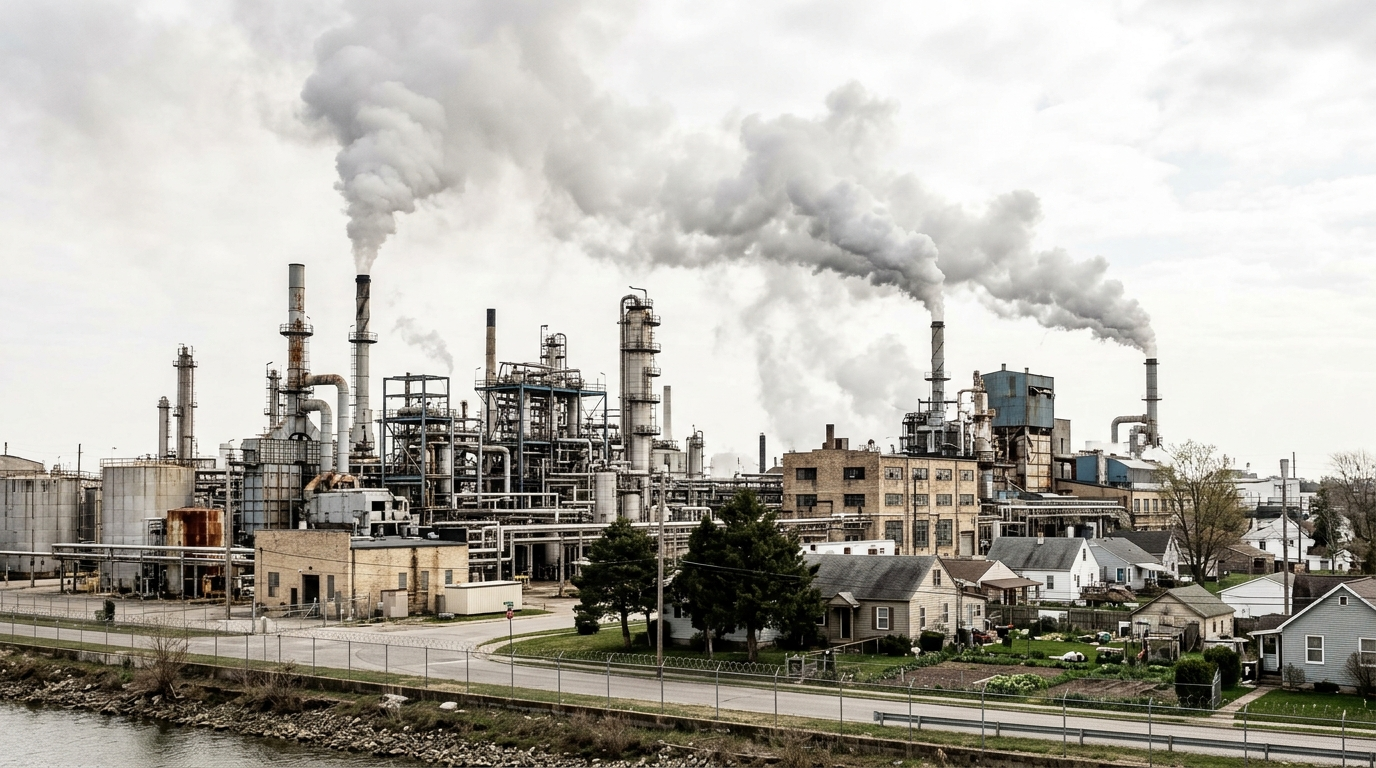
Chemical plants and other industrial facilities avoided requirements to curb toxic emissions, according to a New York Times investigation. The finding raises urgent questions about regulatory enforcement and the health protections promised to nearby communities.
The investigation examined how facilities that had been required to reduce harmful releases were able to get out of those obligations. The central issue is not simply whether rules existed. It is whether the regulatory system ensured that companies followed them.
Rules Failed to Deliver Expected Cuts
Industrial emission standards are designed to limit pollutants released during manufacturing, processing, and waste handling. Such rules often require plants to install controls, change operating practices, monitor releases, or meet set limits.
Yet a legal requirement does not guarantee a reduction. Companies may challenge an order, seek an exemption, obtain more time, or dispute whether a rule applies to a specific operation.
“Chemical plants and other industrial facilities had been required to curb their toxic emissions,” the investigation found, but facilities later “got out of it.”
That gap between a stated requirement and its final enforcement can weaken environmental policy. It may also leave regulators unable to show that expected pollution cuts occurred.
Communities Face the Direct Risk
The consequences are most immediate for people living and working near industrial sites. Toxic releases can affect local air quality, while some pollutants may also enter soil or water.
Actual health risks vary by chemical, exposure level, duration, weather, and distance from a plant. Even so, residents depend on accurate monitoring and clear public notices to judge potential danger.
The report also points to an issue of trust. Communities may hear that a plant must reduce emissions, only to learn later that the requirement was withdrawn, delayed, or avoided.



Key questions for regulators include:
- Which facilities escaped the requirements?
- What legal or administrative process allowed them to do so?
- How much pollution was expected to be prevented?
- Were nearby residents informed about the change?
- Will agencies review similar cases?
Industry and Regulators Face Scrutiny
Industrial operators can argue that pollution rules must reflect technical limits, plant design, and the cost of compliance. They may also contest requirements they view as unsupported or incorrectly applied.
Regulators, however, are responsible for protecting public health while applying rules fairly. If exceptions are granted, agencies must explain their decisions and document the expected environmental effects.
Transparency is especially important because permit changes and enforcement decisions can be difficult for the public to track. Records may be spread across agency databases, court filings, and technical documents.
What Comes Next
The investigation could prompt demands for permit reviews, legislative hearings, or stronger disclosure rules. Officials may also face pressure to identify plants that avoided reductions and calculate the emissions involved.
Further reporting will be needed to establish the scale of the problem, the chemicals at issue, and the communities affected. Responses from individual companies and agencies will also matter in determining whether the disputed outcomes were lawful and justified.
The broader lesson is clear: announcing an emission rule is only the first step. Public protection depends on enforcement, open records, reliable monitoring, and consequences when facilities fail to comply.
Attention will now turn to whether regulators revisit the exemptions or decisions that allowed plants to escape their obligations. The outcome could shape both industrial oversight and public confidence in toxic pollution controls.