




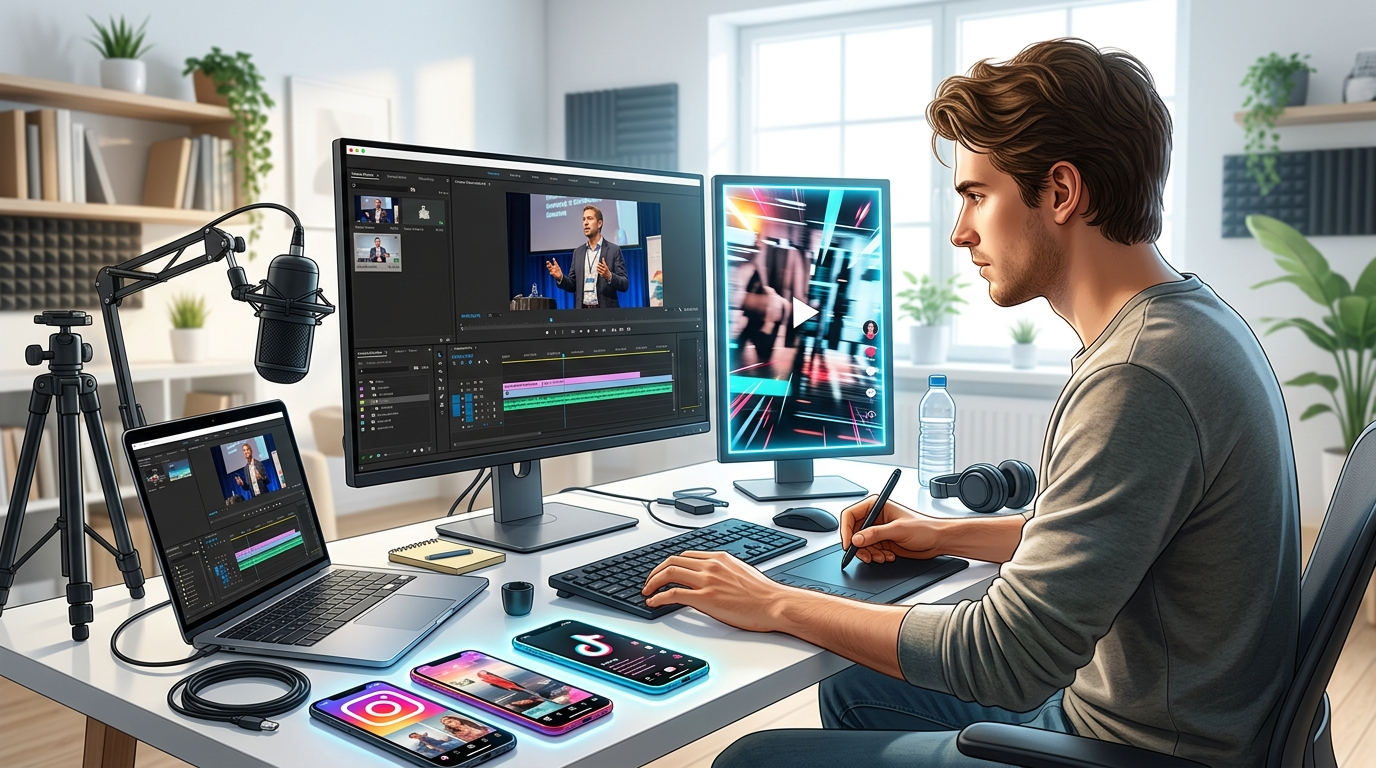
Social media “clippers” are turning longer recordings into short, vertical videos made for Instagram and TikTok, reflecting a major shift in online publishing.
The work centers on selecting brief moments and formatting them for smartphone screens. These clips give creators and organizations another way to distribute material on platforms built around rapid viewing.
What Social Media Clippers Do
A clipper extracts a short segment from existing video material. The finished piece uses a vertical frame suited to mobile applications such as Instagram and TikTok.
The role involves more than shortening a recording. Each selection must make sense without the full source material. A clip also needs to attract interest quickly because viewers can move to another video within seconds.
The basic publishing process often includes:
- Selecting a brief and understandable moment
- Reframing footage for a vertical screen
- Removing pauses or material that adds little value
- Preparing the finished clip for social distribution
This format can be used for interviews, discussions, entertainment, education, or other recorded material. A single long video may provide several possible clips, each focused on a different point.
Why Vertical Video Matters
Instagram and TikTok place short video at the center of their user experience. Their mobile layouts favor footage that fills an upright screen rather than a traditional horizontal frame.
That design affects how material is recorded and edited. A wide shot may need to be cropped so the speaker remains visible. Visual details near the edge of the original frame may also disappear.



Short clips serve a different purpose from full recordings. They can introduce an idea, highlight a memorable statement, or direct attention to longer material. However, they cannot always preserve the detail or context found in the original.
Context Creates Editorial Risks
Choosing a clip is an editorial decision. The selected beginning and ending can influence how viewers interpret a speaker’s words or actions.
A segment that gains attention may not represent the wider discussion. Removing a qualification, response, or earlier explanation can change its apparent meaning. Clippers therefore carry responsibility for accuracy, even when their main task is editing.
Publishers can reduce that risk by reviewing clips against the source recording. Clear captions and links to longer material may also help viewers find added context.
A Growing Role in Content Distribution
Clipping reflects a broader split between content production and distribution. One person may record a long conversation, while another identifies moments suited to social feeds.
This approach can extend the useful life of recorded material. It also creates pressure to favor dramatic moments because those selections may gain more attention than careful explanations.
The central challenge is balance. Clippers must create concise videos without distorting the source. As Instagram and TikTok remain major outlets for vertical video, the quality of that editing will shape what audiences see and how they understand it.
For creators and publishers, the next step is to treat clipping as an editorial function rather than a simple formatting task. Speed and reach matter, but accuracy and context remain essential measures of responsible publication.