



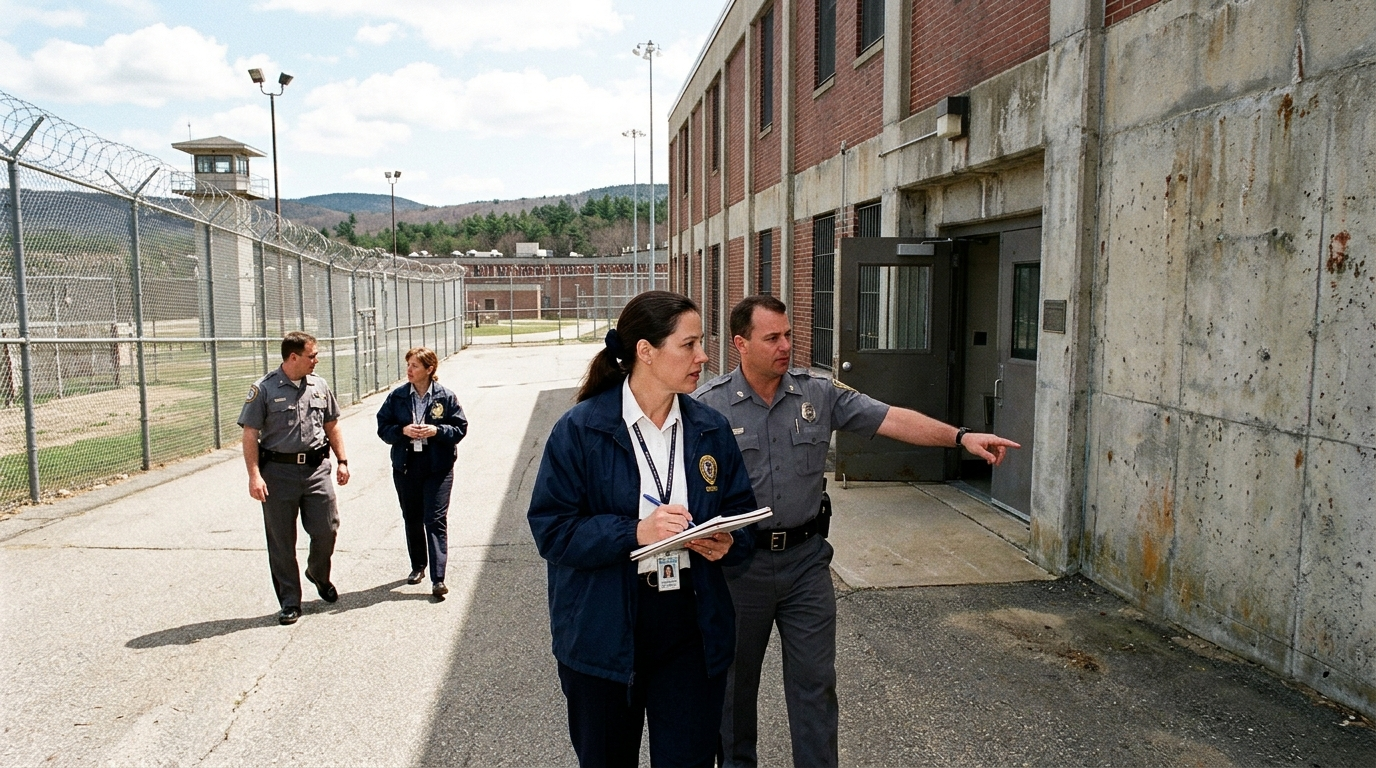
A federal watchdog has reported on conditions at FCI Berlin in New Hampshire, adding to concerns about recurring problems within the Bureau of Prisons.
The Office of Inspector General examined the federal correctional institution and issued findings described as “more of the same.” That assessment suggests the facility faces problems similar to those documented elsewhere in the federal prison system.
The available account does not identify specific violations, inspection dates, or recommended fixes. It also does not state how prison officials responded. Those missing details limit any firm conclusions about conditions inside FCI Berlin.
A Federal Prison Under Review
FCI Berlin is operated by the Federal Bureau of Prisons. As a federal correctional institution, it is responsible for keeping people in secure custody while providing food, health services, housing, and other required care.
The Office of Inspector General provides independent oversight of agencies within the Justice Department. Its reviews can examine prison operations, staff conduct, safety practices, medical services, and compliance with federal rules.
Inspector general findings matter because incarcerated people have limited control over their daily safety and access to care. Staff members also depend on proper staffing, equipment, and procedures to maintain order.
Federal prison inspections often focus on several basic questions:
- Whether housing areas are safe and sanitary
- Whether medical and mental health services are available
- Whether staffing levels support secure operations
- Whether managers identify and correct repeated failures
“More of the Same” Signals Wider Concerns
“The findings were more of the same.”
The phrase points to a broader issue for prison administrators. If the same types of failures appear at multiple institutions, isolated repairs may not be enough. Agency leaders may need policy changes, added resources, or stronger accountability.



Still, the phrase alone does not establish which conditions were found at FCI Berlin. It should not be read as proof of any particular health, safety, or staffing failure without the report’s full findings.
A balanced review also requires the Bureau of Prisons’ response. The agency may accept findings, dispute parts of an inspection, or outline corrective measures. No such response was included in the available account.
Accountability Depends on Follow-Through
An inspector general report is only one stage of federal oversight. The lasting test is whether officials set deadlines, assign responsibility, and verify that required changes occur.
Clear public reporting can help lawmakers and local communities assess the seriousness of any problems. It can also show whether concerns are limited to FCI Berlin or reflect systemwide pressures.
Key information to watch includes the full list of findings, any recommendations, and the Bureau of Prisons’ timetable for action. Follow-up inspections would show whether promised changes improved conditions.
The review places FCI Berlin within a continuing debate over federal prison management. Without the report’s detailed evidence, the scope of the problems remains unclear. The next measure of accountability will be the agency’s response and whether inspectors confirm lasting corrections.