






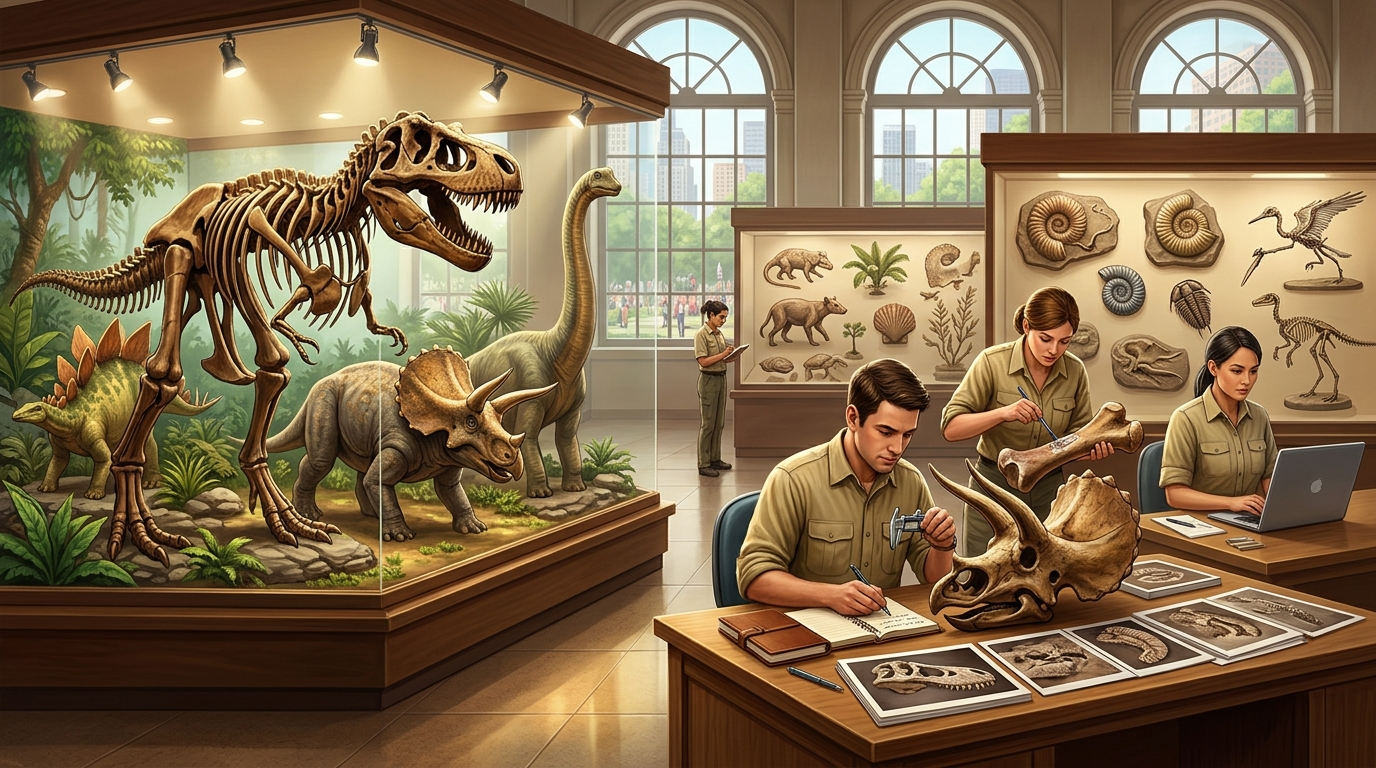
Dinosaurs, mammals and other widely admired species receive outsized attention in leading palaeontology journals, according to a study covering thousands of research papers. The findings, reported by Nature, point to a publication imbalance that may shape public knowledge and future research priorities.
The study examined palaeontology papers to assess which ancient organisms appeared most often in high-profile titles. It found that fossils linked to familiar or popular animals were over-represented, compared with less celebrated forms of life.
The result raises a central question for fossil science: Does the published record reflect the most useful research, or the subjects most likely to attract attention?
Popular Fossils Gain More Visibility
Dinosaurs have long held a special place in museums, films and classrooms. Fossil mammals also draw interest because they can help explain the origins of living animals, including humans.
The study grouped these organisms with other “glamorous species,” a term used to describe fossils with broad appeal. Their high visibility can help journals reach larger audiences and give researchers a clearer path to public coverage.
Fossils of dinosaurs, mammals and other “glamorous species” are over-represented in high-profile titles, the analysis suggests.
That does not mean research on these animals lacks scientific value. Dinosaur and mammal fossils can reveal changes in anatomy, climate, movement and extinction. Yet publication patterns matter because prominent papers often receive more citations, media reports and institutional support.
Why Publication Choices Matter
Palaeontology depends on a far wider fossil record than headline-friendly animals alone. Plants, fungi, microbes and small invertebrates can offer key evidence about ancient food webs and environmental change.
If these subjects appear less often in major journals, important parts of Earth’s history may receive less public and academic attention. Researchers working on lesser-known organisms could also face greater difficulty showing the reach of their work.



The reported pattern may affect several parts of the field:
- Funding could follow subjects with established public appeal.
- Museums may give more space to familiar fossil animals.
- Students may see a narrower picture of palaeontology.
- Media coverage may repeat existing research imbalances.
Publication bias can also influence which scientific questions are treated as urgent. Studies in prestigious journals often guide later projects, making early editorial choices important over time.
Bias Does Not Have a Single Cause
The findings do not, on their own, show why famous species appear more often. Several steps separate a fossil discovery from publication, including field access, specimen quality, research funding and editorial review.
Dinosaurs and mammals may attract more study because museums already hold large collections of their remains. Researchers may also submit their strongest work on popular species to prominent journals, expecting greater interest.
Editors, meanwhile, must weigh scientific importance against relevance for a broad readership. A paper about an obscure organism can carry major value, but its importance may require more explanation than a new dinosaur discovery.
Any assessment of imbalance must therefore distinguish between author choices, available fossils and journal decisions. The brief finding also does not establish whether every major title follows the same pattern.
A Wider View of Ancient Life
The analysis offers journals and research institutions a reason to review how they judge significance. Scientific importance may rest on what a fossil reveals about evolution or ecology, not simply on how recognizable the organism is.
Editors could seek work across more branches of ancient life, while museums and universities could give overlooked organisms clearer public context. Better visibility would not require reducing research on dinosaurs or mammals.
The central issue is balance. Famous fossils can draw people into science, but less familiar species often supply evidence needed to understand entire ecosystems. Future research will need to measure how this publication pattern varies among journals, time periods and fossil groups.
For palaeontology, the study’s warning is clear: the animals that attract the most attention are not always the only ones with important stories to tell.