




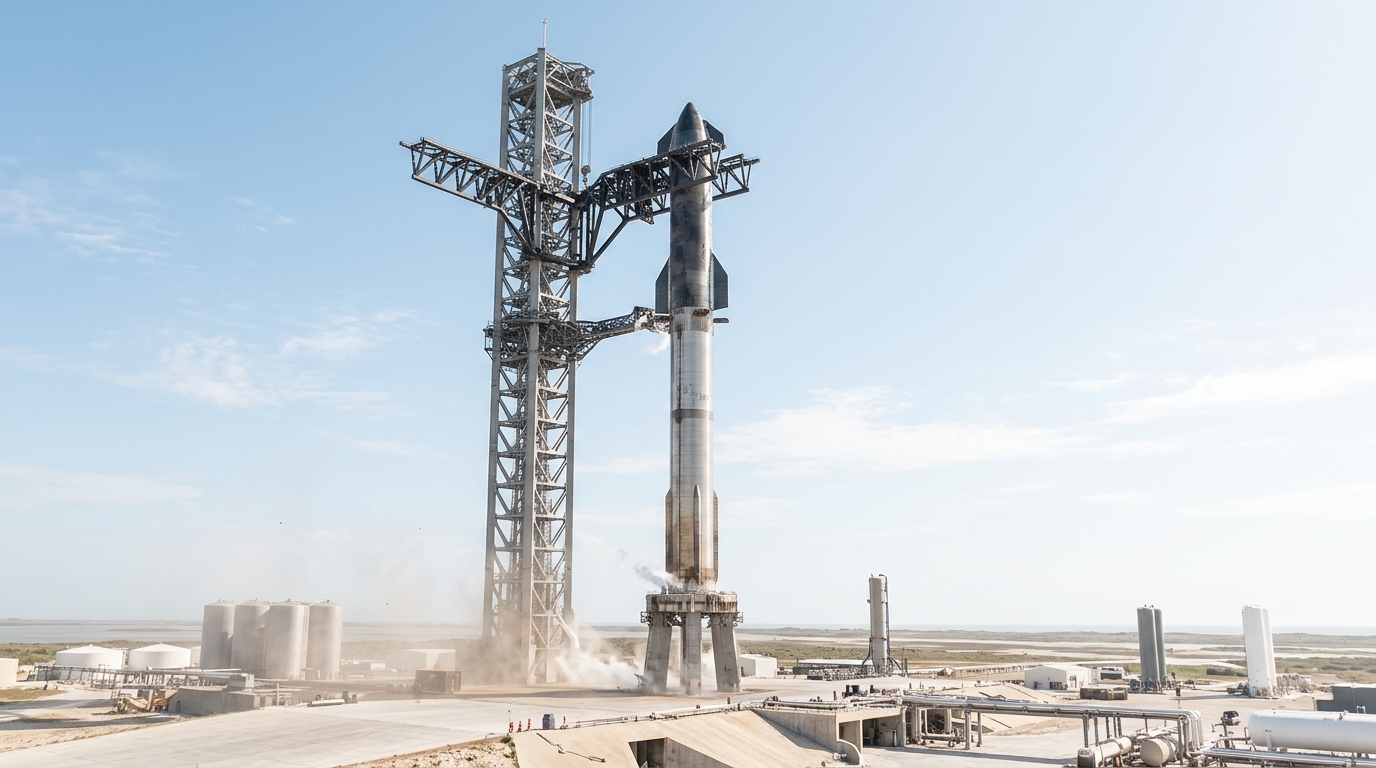
SpaceX reported that its launch tower caught a returning Super Heavy booster on Saturday, marking a first for the company’s Starship program.
The rocket was secured near the launch pad by two mechanical arms, commonly called “chopsticks.” SpaceX identified the vehicle as Starship 42 and released imagery of the return.
The event points to progress in SpaceX’s plan to recover large rocket stages without landing legs. That approach could shorten the time between flights and reduce the hardware carried during launch.
How the Catch System Works
Starship’s launch tower uses two large arms to lift, stack and recover rocket stages. During a catch attempt, the booster descends beside the tower while engines slow its fall.
The arms then close around reinforced points on the vehicle. The maneuver requires precise control of the booster’s speed, position and angle.
The booster was caught by the tower’s “chopstick” arms in a first for the Super Heavy rocket.
A tower catch differs from the ocean landings used for SpaceX’s Falcon 9 boosters. Falcon 9 vehicles deploy landing legs and touch down on land or floating platforms.
Super Heavy does not need those legs if the tower can recover it reliably. Removing them may save weight, but the method also places the launch tower and nearby systems at risk during each attempt.
What Returned to the Pad
The reported flight description requires an important distinction. Super Heavy is the first stage of the Starship launch system. It separates before reaching orbit and begins its return while the upper stage continues its flight.


That means the booster itself does not return “from orbit.” The recovered vehicle follows a suborbital path after separation. The Starship upper stage is designed to travel farther and, on orbital missions, reach space at orbital speed.
The main steps in the recovery sequence are:
- Super Heavy lifts Starship during the opening phase of flight.
- The booster separates from the upper stage.
- It turns back and guides itself toward the launch site.
- Its engines slow the final descent before the tower catch.
Reuse Goals Face a Hard Test
SpaceX is developing Starship as a fully reusable transportation system. Successful recovery is only one measure of that goal.
Engineers must inspect the booster for heat, structural stress and engine damage. They must also determine how much work is required before another launch.
A catch that demands lengthy repairs would offer less operational value than one followed by rapid reuse. Repeated attempts will show whether the system can perform consistently rather than succeed on a single flight.
Future flights will also test whether tower recovery can meet strict safety requirements. A failed approach could damage equipment needed for later launches, creating delays even if other parts of the mission perform as planned.
The Saturday catch therefore represents a key engineering result, but not the end of development. The next evidence to watch will be inspection findings, repeat catches and whether recovered boosters can fly again with limited refurbishment.