




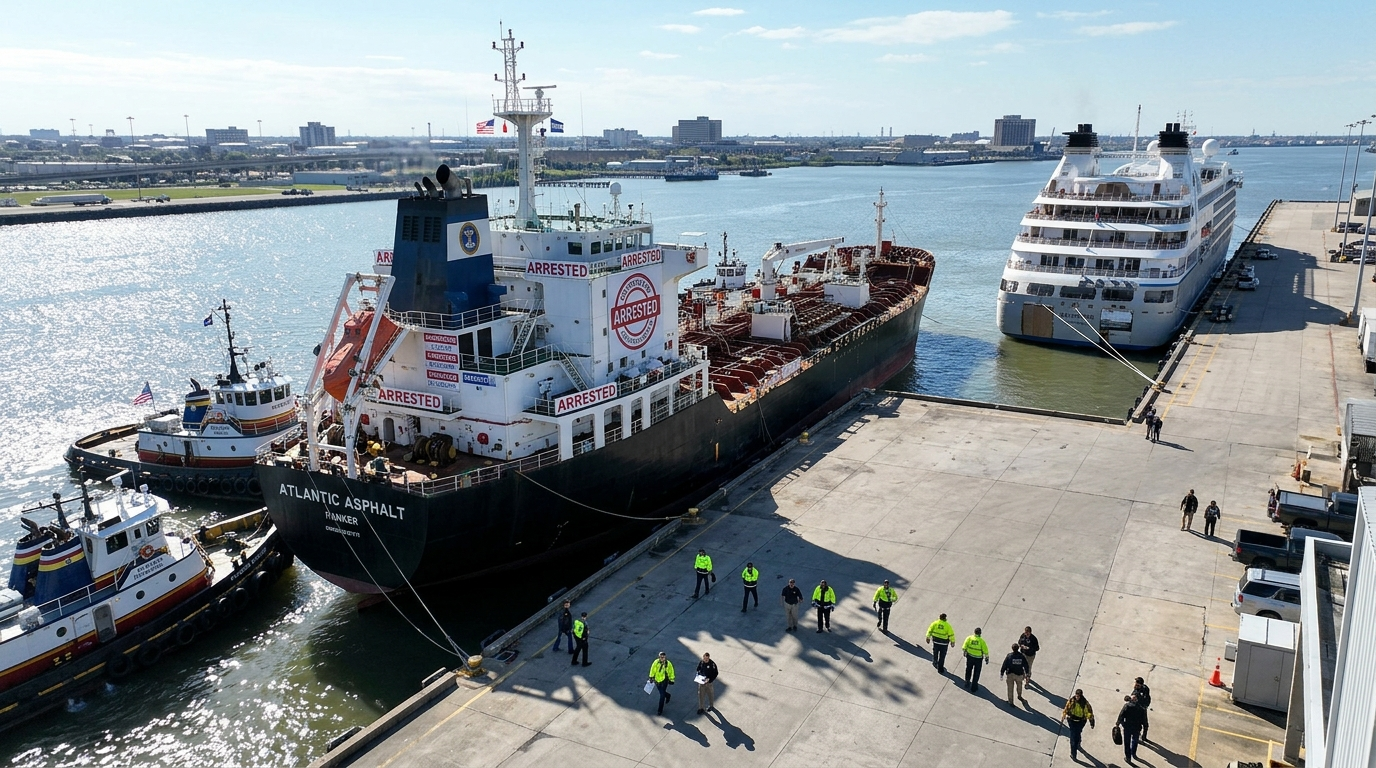
The Port of New Orleans has secured a federal court order to arrest the tanker Atlantic Asphalt until its insurers post a bond tied to a cruise ship allision.
The order gives the port security while its maritime claim moves forward. It also prevents the vessel from leaving federal jurisdiction unless acceptable financial backing is provided.
Few details about the underlying incident were disclosed. The available information does not identify the cruise ship, the damage claimed, the bond amount, or the date of the allision.
Vessel Arrest Secures a Maritime Claim
A vessel arrest is a legal procedure used in maritime disputes. It does not mean the ship’s crew has been arrested or accused of a crime.
Instead, the court takes legal control of the vessel. The ship may remain detained until its owner or insurers provide security, often through a bond or another court-approved guarantee.
The order calls for the Atlantic Asphalt to remain under arrest “until insurers post a bond for the cruise ship allision.”
The bond protects the claimant if the court later awards damages. It may cover repair costs, operational losses, legal expenses, or other losses recognized under maritime law.
Posting security generally allows a vessel to return to service before the dispute reaches a final judgment. That process balances two competing interests: preserving the port’s claim and limiting prolonged disruption to commercial shipping.
Allision Has a Specific Legal Meaning
Maritime law usually distinguishes an allision from a collision. A collision involves two moving vessels. An allision generally occurs when a moving vessel strikes a stationary ship or fixed structure.



The brief case description links the Atlantic Asphalt to an allision involving a cruise ship. However, it does not state which vessel was moving or explain how the event occurred.
Questions likely to shape the dispute include:
- Which vessel or structure was stationary at the time.
- Whether navigation, mooring, mechanical, or communication failures contributed.
- The value of physical damage and related operating losses.
- Whether responsibility is shared among several parties.
Evidence may include vessel tracking records, bridge logs, radio traffic, surveillance footage, weather reports, and witness accounts. Damage surveys could also influence the size of any settlement or judgment.
Commercial Pressure Could Speed Resolution
The Atlantic Asphalt is identified as a tanker, making detention potentially costly for its owner and commercial partners. Delays can affect cargo schedules, charter agreements, berth access, and later port calls.
Those costs often give owners and insurers an incentive to arrange security quickly. A bond does not amount to an admission of fault. It substitutes financial security for the vessel while the parties contest liability and damages.
The Port of New Orleans also has a direct interest in resolving marine incidents efficiently. Vessel movements, terminal access, cruise activity, and safe navigation depend on clear operating rules and dependable insurance coverage.
Key Facts Remain Undisclosed
The court order marks an early procedural victory for the port, not a final ruling on responsibility. A vessel arrest generally confirms that a claim may proceed against the ship and that security is required.
The next major development will be whether insurers post the requested bond and obtain the tanker’s release. Court filings may later reveal the bond amount, the cruise ship’s identity, the damage alleged, and each party’s account of the incident.
Until then, the arrest places immediate financial pressure on the vessel’s interests while protecting the port’s ability to recover damages. The final outcome will depend on evidence about the allision, the losses claimed, and the terms of any negotiated settlement.