





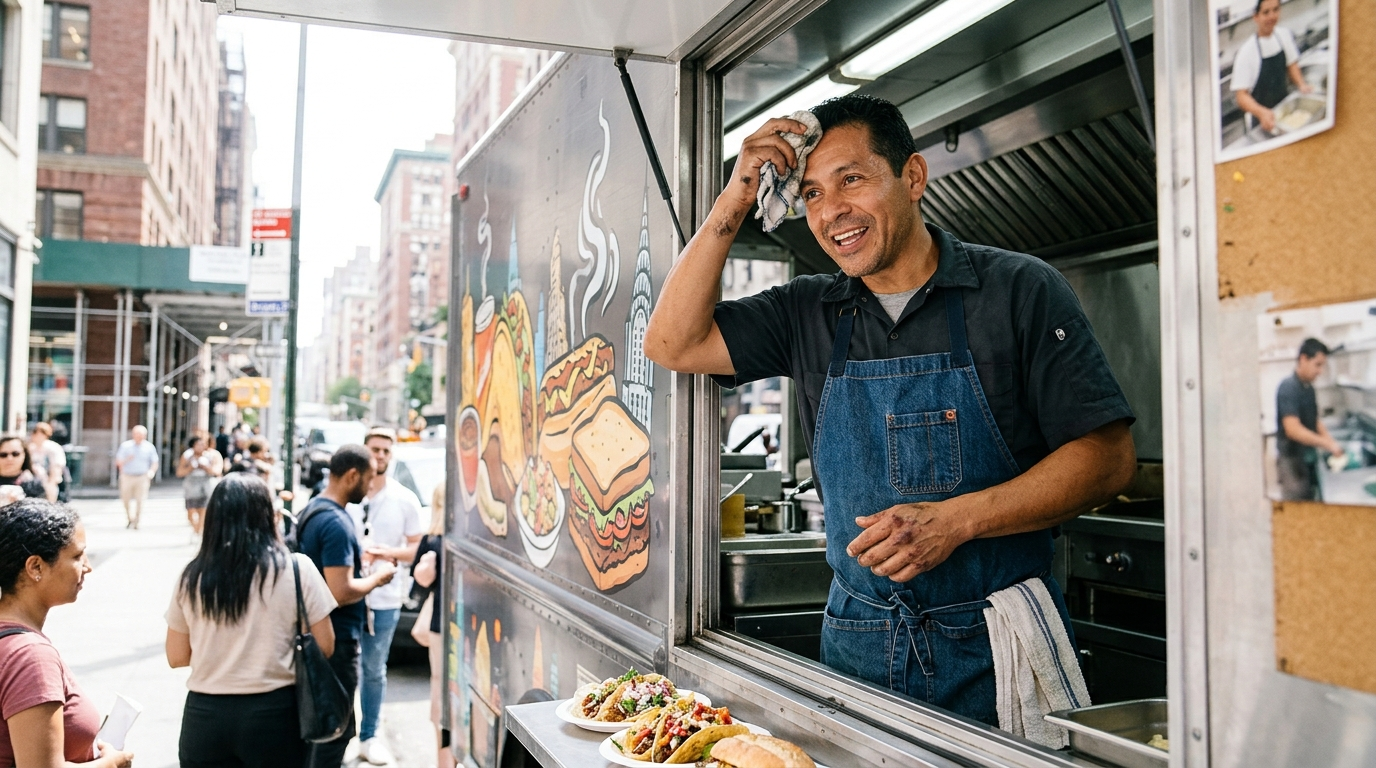
José Moreno has risen from washing dishes to owning some of New York City’s most popular food trucks, marking a major change in his restaurant career.
His path links two very different roles in the food business. Dishwashing placed him behind the scenes, while ownership brought responsibility for operations, service, and business decisions.
Moreno’s experience offers a clear example of career growth within the food industry. It also draws attention to food trucks as both public gathering places and small-business ventures.
From Kitchen Work to Ownership
Dishwashing is essential to restaurant operations, but workers in the role often receive little public recognition. Moreno began there before moving into food truck ownership.
That progression suggests he gained knowledge from direct experience inside commercial kitchens. However, details about his early employers, training, and first management role have not been provided.
José Moreno went from washing dishes to owning the most popular food trucks in New York City.
The account does not identify the trucks by name or explain how their popularity was measured. Customer numbers, sales figures, rankings, and review data were not included.
Even with those limits, Moreno’s move into ownership represents a significant professional shift. An owner must look past food preparation and oversee the wider operation.
- Daily food preparation and service
- Staff scheduling and workplace standards
- Supplies, pricing, and operating costs
- Customer service and brand reputation
Food Trucks Bring Distinct Demands
A food truck combines a kitchen, storefront, and mobile workplace in a small space. Owners must coordinate service while responding to changing locations and customer demand.



Moreno’s earlier kitchen experience may have helped him understand workflow and sanitation. Still, the available account does not explain how he financed his trucks or expanded the business.
His reported success also raises questions about the meaning of popularity. A truck may earn that label through long lines, repeat customers, media attention, or strong online reviews.
Without a named survey or ranking, the claim should be treated as a broad description rather than a measured citywide finding. More information would allow a fuller assessment of the operation’s size and reach.
A Story of Mobility in Food Service
Moreno’s career shows how an entry-level job can provide exposure to an entire business. Kitchen workers observe timing, teamwork, quality control, and customer expectations each day.
Ownership, however, requires different skills. It can involve hiring, purchasing, budgeting, marketing, and compliance with local rules. The record does not state how Moreno developed those abilities.
Further reporting could clarify the turning points in his career. Key details would include when he opened his first truck, what food he serves, and how many vehicles he operates.
For now, Moreno’s rise remains a concise account of professional advancement. His next chapter will depend on whether his trucks can maintain customer interest while meeting the daily pressures of food service.
The broader lesson is practical: experience gained in a basic kitchen role can lead to leadership and ownership. Clear business figures and Moreno’s own account would show how that transition happened.