






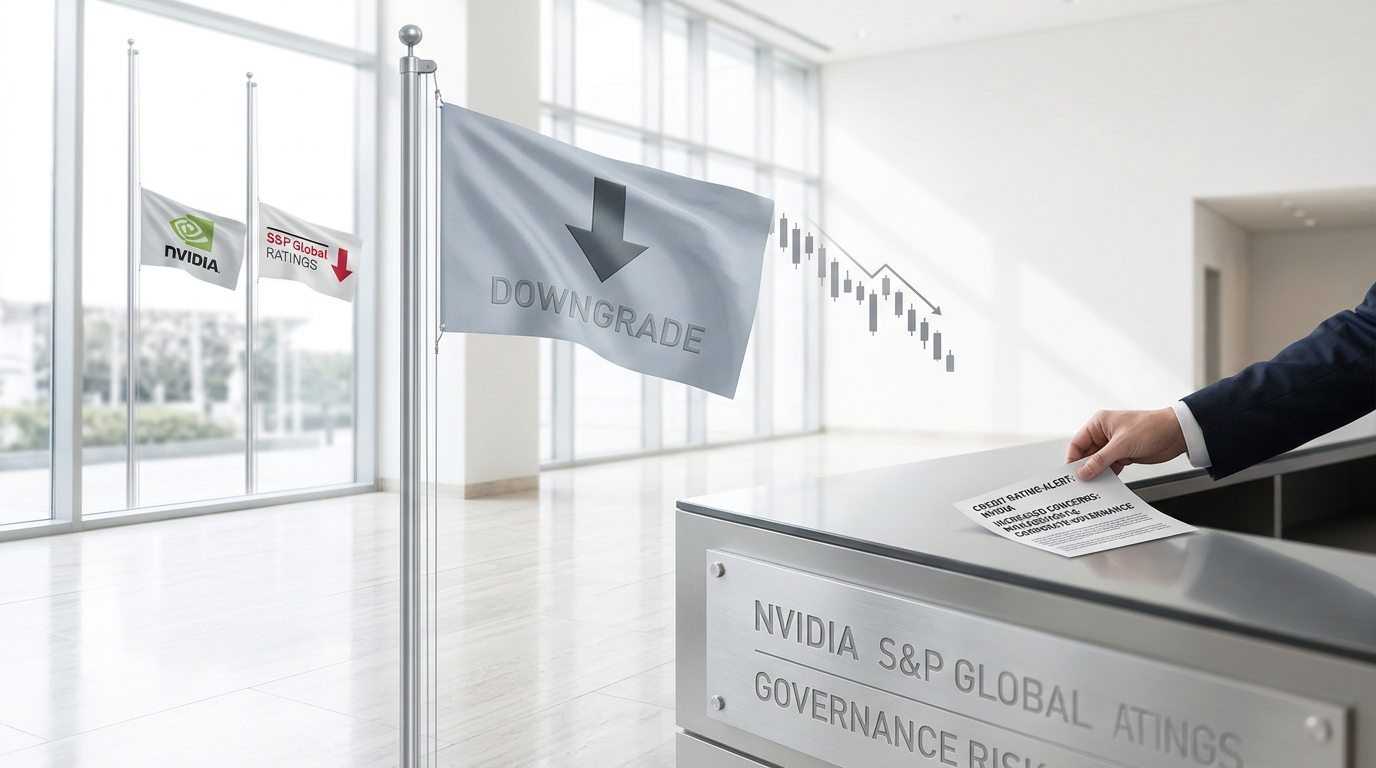
S&P Global Ratings warned that Nvidia’s credit rating could fall by one notch, citing increased concerns about management and corporate governance at the chipmaker.
The warning puts fresh attention on how Nvidia manages risk during a period of intense investor and industry scrutiny. A downgrade could affect how lenders assess the company, even if its business performance remains strong.
Governance Concerns Enter Credit Review
S&P identified “rising” management and governance risk as a reason Nvidia’s rating could be lowered. The assessment signals concern about oversight and decision-making rather than a confirmed change in credit quality.
A one-notch cut would represent a limited downgrade. However, credit ratings influence borrowing terms, investor mandates, and perceptions of financial discipline. Any reduction can carry added weight for a company with a large role in the global semiconductor sector.
The statement did not specify which governance practices prompted the warning. It also did not indicate that a downgrade was certain. That distinction matters because rating agencies often flag possible risks before deciding whether formal action is needed.
S&P Global Ratings said Nvidia’s credit rating could be cut by one notch because of “rising” management and governance risk.
Why Management Risk Matters
Credit agencies assess more than debt, cash flow, and earnings. They also examine board oversight, leadership controls, risk planning, transparency, and how executives respond to rapid growth.
These issues can affect a company’s ability to meet long-term obligations. Weak controls may lead to poor investments, regulatory problems, or decisions that place pressure on finances.
For Nvidia, the warning comes as the company holds a central position in chips used for artificial intelligence computing. Rapid expansion can create added demands on leadership, internal controls, and supply planning.



Investors may now watch several areas:
- Any formal rating action by S&P
- Further details about the governance concerns
- Nvidia’s response to the risk assessment
- Changes in borrowing costs or lender terms
A Warning Rather Than a Downgrade
The difference between a possible cut and an actual downgrade is significant. S&P’s statement highlights a risk that may influence future action, but it does not establish that Nvidia’s ability to repay debt has weakened.
From Nvidia’s perspective, strong operating results or clearer governance measures could help ease concerns. From the rating agency’s perspective, sustained management risk could justify lowering the company’s credit standing.
The warning also illustrates a broader issue for rapidly growing technology companies. Financial success does not remove the need for clear oversight. As companies gain market influence, rating agencies and investors often demand stronger evidence that controls can keep pace.
Nvidia’s next steps, and any added explanation from S&P, will determine whether the concern develops into a formal downgrade. For now, the main signal is clear: governance has become a more important factor in the chipmaker’s credit outlook.