




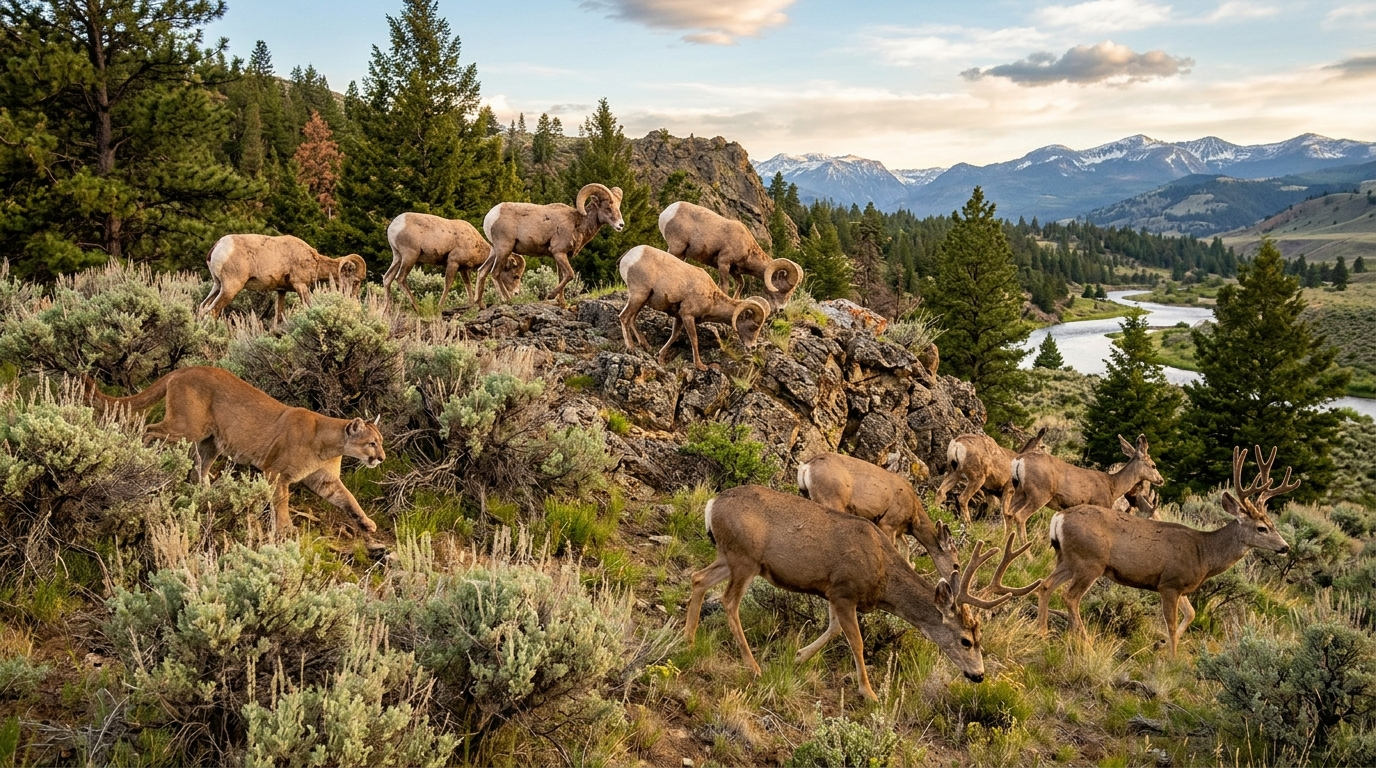
Wildlife managers could improve bighorn sheep recovery plans by tracking where mule deer live and how that distribution shapes puma hunting patterns.
The proposed approach links three major species in western ecosystems. Mule deer are common puma prey, while bighorn sheep can face serious losses when pumas hunt near vulnerable herds. Better maps of mule deer distribution may help managers estimate where and when sheep face the greatest danger.
Prey Distribution Shapes Puma Behavior
Puma predation risk is not spread evenly across an area. It can change with prey numbers, terrain, season, water access, and human activity.
Mule deer distribution may be especially useful because deer can influence where pumas travel and hunt. Areas with frequent deer activity may attract pumas, creating added risk for nearby bighorn sheep.
Yet deer presence does not automatically mean sheep will be killed. Pumas may focus on mule deer and rarely target bighorn sheep. Individual cats can also develop different hunting habits.
That uncertainty makes local evidence important. Managers need to compare deer locations, puma movements, and confirmed sheep deaths before drawing conclusions about risk.
Why Bighorn Sheep Need Targeted Protection
Bighorn sheep recovery can be difficult because many herds are small or isolated. The loss of even a few adults may slow growth, especially if breeding females are killed.
Predation is also only one source of pressure. Disease, habitat limits, drought, and barriers to movement can affect herd survival. Roads and development may restrict access to seasonal ranges or separate sheep populations.


A stronger risk estimate would help agencies decide whether predation is a major local threat or one part of a wider problem. It could also reduce reliance on broad control measures that fail to address the actual cause of decline.
Data Could Guide Management Decisions
Managers could combine mule deer distribution records with puma tracking and bighorn sheep monitoring. The resulting analysis may identify places where the three species overlap most often.
Useful information could include:
- Seasonal mule deer ranges and migration routes
- Puma travel paths and hunting locations
- Bighorn sheep lambing and wintering areas
- Dates and locations of confirmed predation events
These findings could support focused action, such as habitat work, closer herd monitoring, or changes to sheep release sites. Agencies might also time interventions around seasons when overlap is highest.
However, distribution models depend on accurate and current records. Mule deer can shift their movements after drought, wildfire, severe winters, or development. Puma behavior can change as prey availability changes. Models therefore need regular testing against field observations.
A More Balanced View of Predation
Accounting for mule deer may also improve how agencies judge pumas. If a model ignores the cats’ main prey, it could overstate or understate the threat to bighorn sheep.
More precise estimates may help managers balance two goals: rebuilding vulnerable sheep herds and conserving native predators. That balance is often difficult when evidence is limited and public views differ over predator control.
The key next step is to test whether mule deer distribution consistently predicts sheep losses across seasons and locations. If it does, wildlife agencies would gain a practical tool for directing limited recovery funds. If the link is weak, managers may need to give greater weight to disease, habitat, or the behavior of individual pumas.
Either result would improve decision-making. Recovery plans work best when they reflect the full food web, rather than treating each species in isolation.