




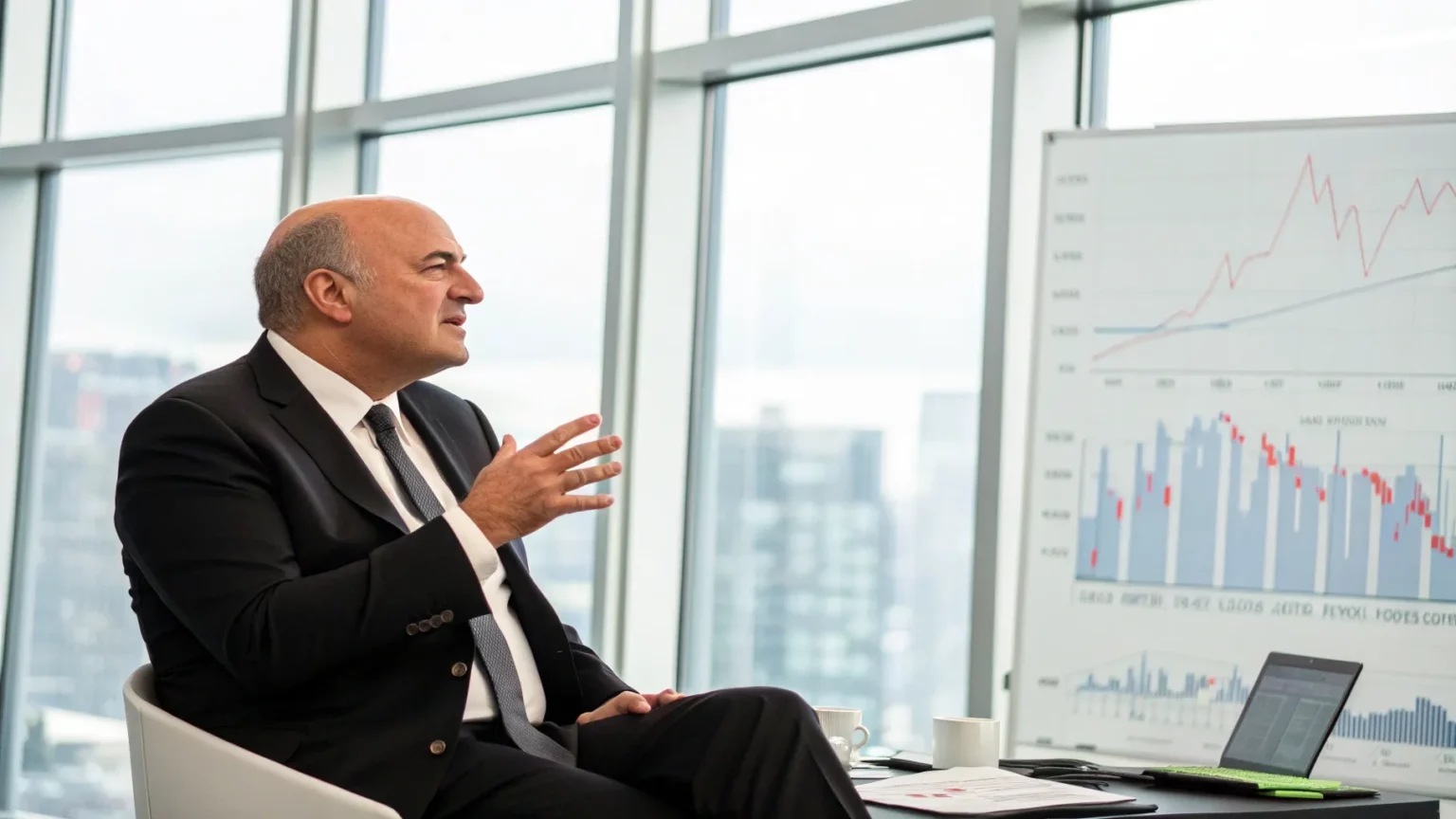
Kevin O’Leary, Chairman of O’Leary Ventures, recently shared his insights on President Donald Trump’s tariff strategy during an appearance on ‘The Big Money Show.’ The business magnate offered his perspective on what might be the ultimate goal behind Trump’s tariff policies.
O’Leary, known for his role as an investor on the television show “Shark Tank,” analyzed the economic and strategic implications of Trump’s approach to international trade. His comments come as discussions about tariffs have intensified following Trump’s statements about potential new trade measures.
Understanding Trump’s Tariff Approach
According to O’Leary, Trump’s tariff strategy may be more nuanced than it appears on the surface. The venture capitalist suggested that rather than simply imposing trade barriers, the President might be using tariffs as leverage in a broader negotiation strategy with trading partners.
“What we’re seeing is not necessarily the end goal but rather a negotiating tactic,” O’Leary explained during the program. He indicated that Trump’s business background influences his approach to international trade relations, treating them similar to business deals where initial positions are often more extreme than the expected final outcome.
Economic Implications
O’Leary addressed the potential economic impact of tariffs on American businesses and consumers. He noted that while tariffs can protect certain domestic industries, they often result in higher prices for consumers and can trigger retaliatory measures from other countries.
“When you implement tariffs, there’s always a ripple effect throughout the economy,” O’Leary stated. “Some sectors benefit while others face challenges. The key question is whether the net effect strengthens America’s economic position.”
The investor highlighted several industries that could experience significant changes if new tariffs are implemented:
- Manufacturing, which might see increased domestic production but higher input costs
- Agriculture, which has historically been vulnerable to retaliatory tariffs
- Consumer goods, where price increases might be passed to American shoppers
Global Trade Perspective
During the discussion, O’Leary placed Trump’s tariff strategy within the context of changing global trade dynamics. He referenced ongoing tensions with China and negotiations with European trading partners as part of a broader realignment of international commerce.


“We’re witnessing a recalibration of trade relationships that have been in place for decades,” O’Leary observed. “Trump appears to be using tariffs as a tool to force new discussions about trade imbalances and intellectual property protections.”
O’Leary suggested that the ultimate goal might be to secure more favorable terms for American businesses in international markets rather than to maintain high tariffs indefinitely. This approach, he noted, represents a departure from traditional diplomatic methods of addressing trade concerns.
The business leader also commented on the timing of these discussions, noting that economic policy has taken center stage as a key issue for voters and businesses alike. Market reactions to tariff announcements have demonstrated how closely economic actors are monitoring these developments.
As global markets continue to respond to trade policy signals, O’Leary emphasized that businesses need to prepare for various scenarios. The uncertainty surrounding tariff policies requires companies to develop flexible strategies that can adapt to changing trade conditions.
Whether Trump’s tariff strategy will achieve its intended goals remains a subject of debate among economists and policy experts. What seems clear from O’Leary’s analysis is that the tariffs themselves may be less important than the negotiations they are designed to influence.