


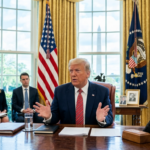

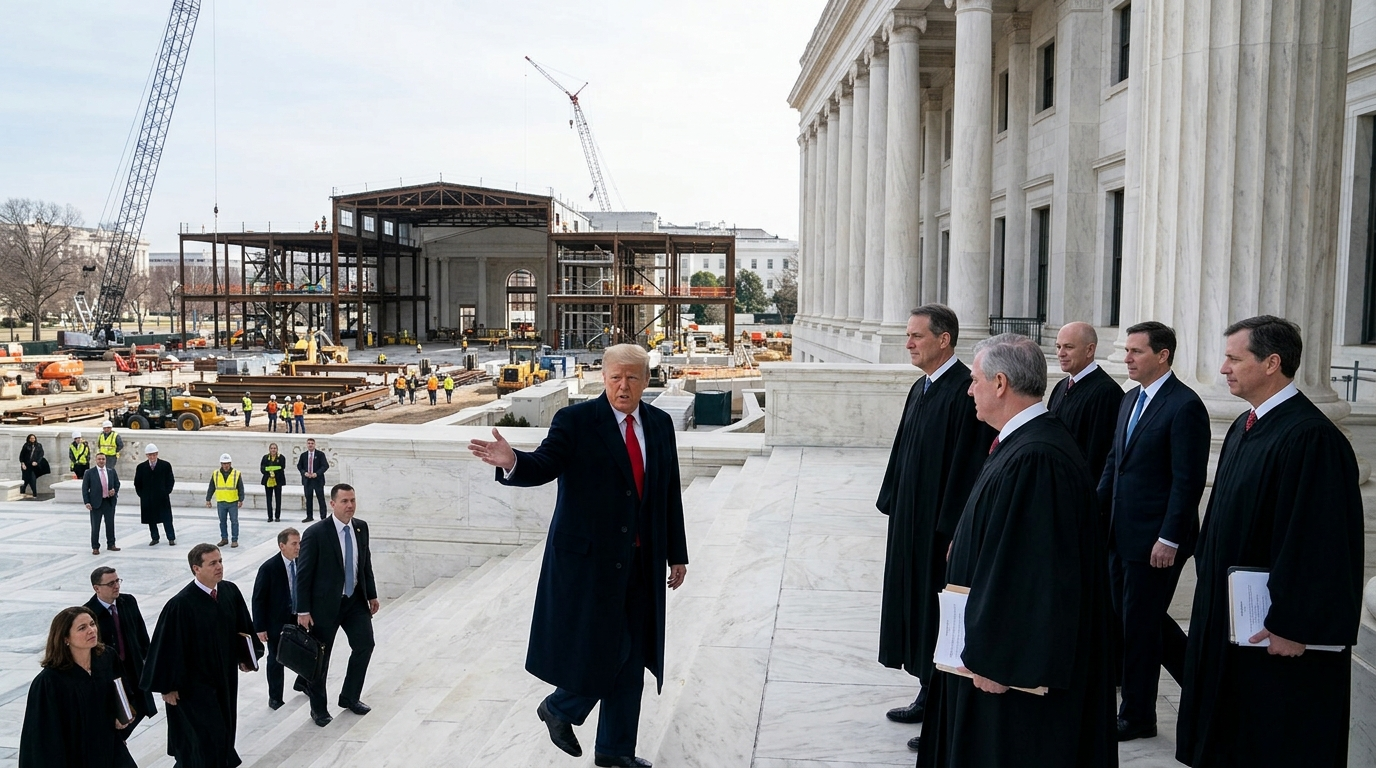
President Donald Trump has asked the U.S. Supreme Court to let construction continue on a large new White House ballroom. The request follows two lower-court rulings that found the project was moving ahead without required congressional approval.
The dispute places a presidential building project before the nation’s highest court. It also raises a larger question about whether a president may alter federal property without lawmakers first authorizing the work.
Lower Courts Challenge Construction
Two lower courts concluded that Trump was proceeding in violation of federal law. Their decisions focused on the lack of authorization from Congress, which controls federal spending through the Constitution’s appropriations process.
Trump is now seeking Supreme Court approval to keep building while the legal fight continues. Such emergency requests often ask the justices to pause lower-court orders before a full appeal is decided.
The immediate issue is whether construction can continue. The wider case may determine how much authority presidents have over major changes to the White House complex.
Congress Controls Federal Funding
The Constitution gives Congress authority over money drawn from the U.S. Treasury. Federal agencies generally need lawmakers to approve spending, even when a project concerns property used by the executive branch.
The White House serves as both the president’s workplace and an important federal site. Maintenance, security and construction can involve several government offices, as well as funding and oversight rules.
A central question is whether the ballroom project uses public money or resources that require legislative approval. Private financing would not automatically settle the dispute because federal property, contracting and preservation laws may still apply.


The case may turn on several issues:
- Whether Congress approved the construction or related spending.
- Whether the president has independent authority to direct the project.
- Whether lower courts may halt work before the case is fully resolved.
- What harm could result from stopping or continuing construction.
Supreme Court Faces Separation-of-Powers Test
The administration’s request gives the justices a choice with practical and constitutional effects. Allowing work to proceed could make parts of the dispute harder to reverse if construction is completed.
Blocking the project, however, could add costs and delays if the administration later wins. Courts weighing temporary relief often consider legal merit, possible harm and the public interest.
The conflict also tests the separation of powers. Presidents oversee the executive branch, but Congress writes spending laws and sets conditions for federal projects. Courts decide whether either branch has crossed those limits.
Supporters of broad presidential control may argue that the chief executive needs discretion to manage the White House. Critics may answer that a major addition cannot bypass Congress merely because it is attached to the president’s residence and office.
Decision Could Reach Past One Project
A Supreme Court order could affect future disputes over presidential renovations and federal construction. A narrow ruling might address only whether work should continue during the appeal. A broader decision could clarify the limits of executive authority over federal property.
The next key development will be the Supreme Court’s response and any schedule it sets for opposing arguments. Congress could also act by approving, rejecting or placing conditions on the ballroom project.
For now, the legal fight is about more than a building. It concerns who may approve major federal work, who pays for it and whether a president must wait for Congress before construction begins.