




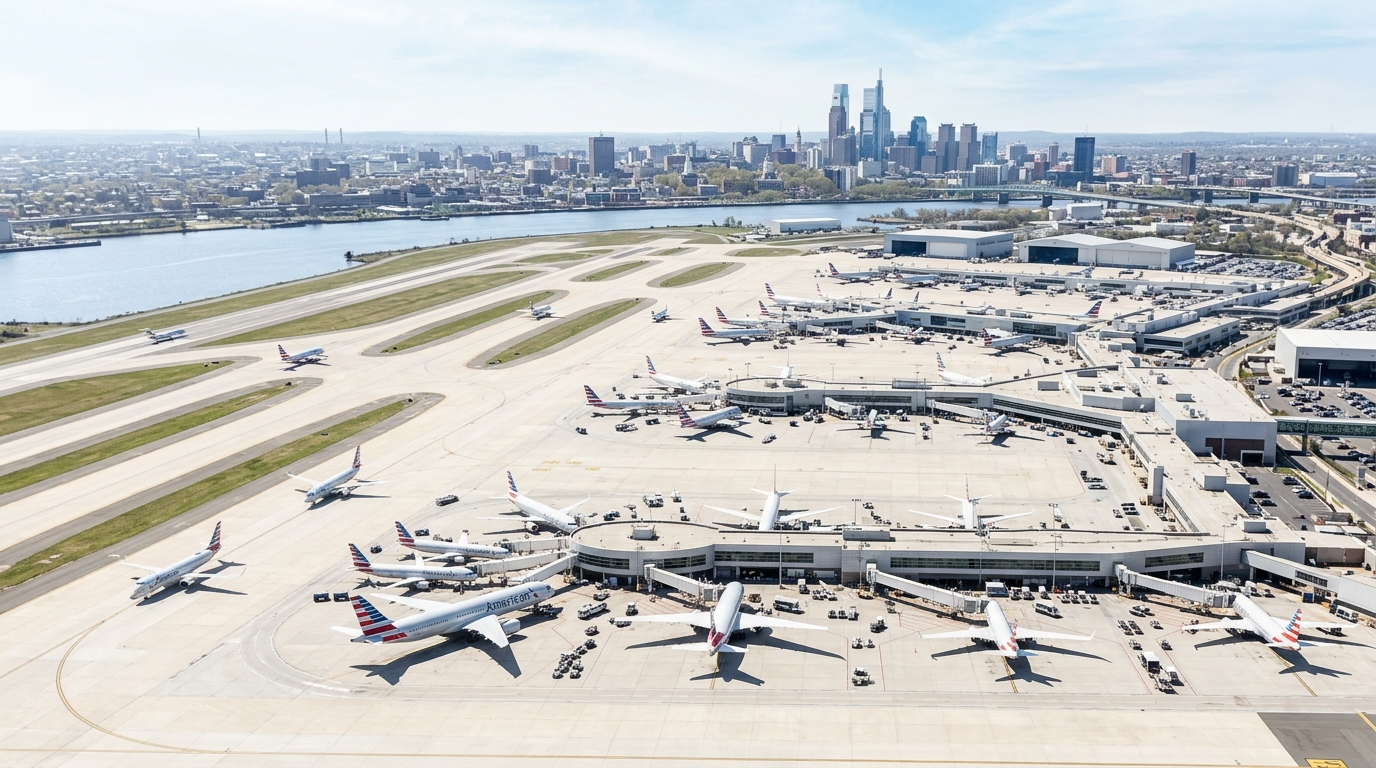
American Airlines plans to serve 21 transatlantic destinations from Philadelphia International Airport by next summer, strengthening the airport’s role as an international gateway.
The airline is already the largest carrier operating from PHL. Its planned summer schedule signals continued reliance on Philadelphia as a major connecting point for travel between the United States and overseas markets.
Philadelphia’s Hub Role Expands
American’s scale at PHL gives the carrier a large pool of local and connecting passengers. That network can help support long-distance routes that may not depend on Philadelphia-area demand alone.
Travelers from other American Airlines markets can connect through Philadelphia before crossing the Atlantic. Returning passengers can then transfer to domestic flights from the same airport.
“American is the largest carrier out of PHL and will fly to 21 transatlantic destinations by next summer.”
The statement does not identify the destinations or distinguish between year-round and seasonal service. It also does not specify how many routes are new. Those details will determine the full scale of the airline’s planned growth.
Summer Demand Shapes International Schedules
Transatlantic flying often rises during summer, when vacation travel increases and airlines can support more flights to European markets. Some routes may operate only during peak months.
A network of 21 destinations could give passengers more direct options and reduce the need to connect through other large U.S. airports. It may also strengthen PHL’s appeal to travelers from nearby states.
The planned schedule could produce several effects:



- More overseas choices for Philadelphia-area passengers
- Additional connecting traffic from American’s domestic network
- Greater demand for airport gates, customs services, and ground crews
- Potential gains for regional tourism and business travel
Benefits Come With Concentration Risks
American’s position as PHL’s largest carrier gives the airport a powerful airline partner. A larger international schedule may support airport revenue, local employment, and visitor spending.
However, heavy dependence on one airline can also create risk. Schedule reductions by the dominant carrier may have an outsized effect on passenger totals, airport operations, and route availability.
Travelers will also need more information before judging the plan. Frequency, ticket prices, aircraft capacity, and seasonal limits can matter as much as the number of destinations.
Key Details Still Awaited
The 21-destination target offers a clear measure of American’s planned transatlantic presence, but the announcement leaves several questions unresolved. The carrier has not provided a full route list in the available statement.
Future schedule updates should show which services are returning, which are new, and how often each flight will operate. They may also clarify whether American expects all 21 destinations to run at the same time.
For PHL, the plan reinforces its status as a major American Airlines gateway. The next test will be whether passenger demand supports the schedule and whether the routes extend past the summer travel peak.