




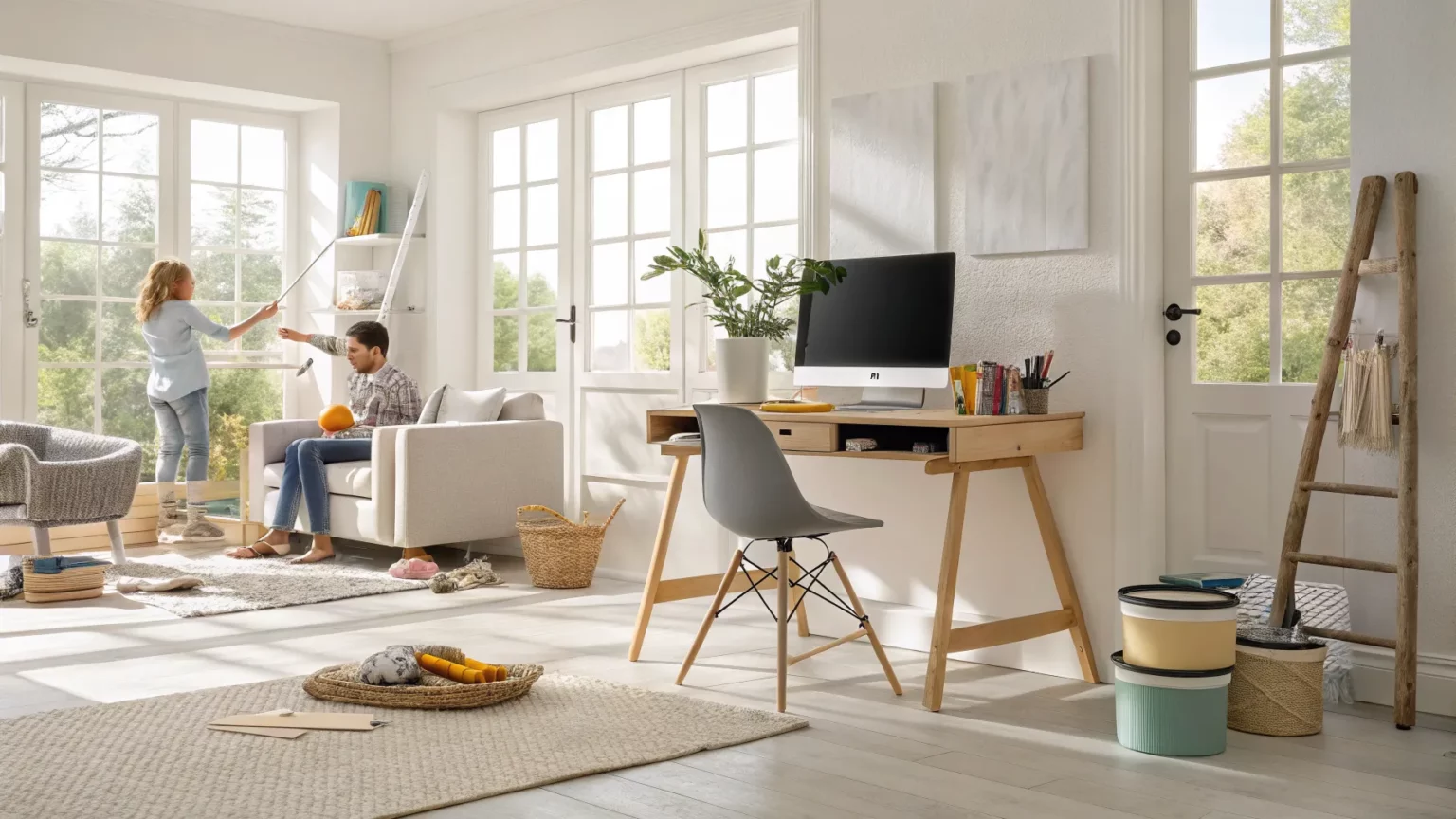
After months indoors, many Americans are reshaping their homes, buying office gear, and taking on renovations that once sat on the back burner. Across suburbs and cities, households are redirecting travel and dining budgets into desks, chairs, monitors, paint, and power tools, seeking comfort and productivity where they live and work.
The push began as routines shifted at home and stretched on. People wanted better work setups and more livable spaces. From new lighting to backyard projects, spending is rising, even as some warn that big-ticket buys can strain savings and lead to second thoughts.
Why The Home Became The Priority
Ben Moore of NerdWallet captures the mood bluntly:
“As many Americans face months on end stuck indoors, some are using their time (and money) to create a change of scenery or upgrade their surroundings.”
That shift is visible in two areas. First, office equipment is moving fast as dining tables give way to proper desks and chairs. Second, more people are picking up tools for DIY upgrades large and small. Moore notes the pattern plainly:
“Office equipment purchases are on the rise, and people are tackling more renovation projects than usual.”
The why is simple. Comfort matters when home is the office, the gym, and the classroom. Small fixes like better lighting and storage help with daily life. Larger projects, from kitchen refreshes to patio builds, promise long-term value and a mental reset.
The Cost Of Comfort
There is a catch. Moore flags the price tag that can come with a revamped room:
“But expensive new …”
Though the thought trails off, the warning lands. Big purchases can outlive their welcome if they do not fit the space or the budget. Returns can be a hassle. Delays are common. And once you open the toolbox, scope creep is real.
Some buyers are moving fast on must-haves like chairs and monitors, then taking a beat on costly remodels. Others are spreading purchases over months to avoid a shock to their bank accounts. The careful path trades instant transformation for steady, manageable change.



Winners, Losers, And What Comes Next
Retailers that sell office furniture, paint, and tools get a lift when households refit rooms. Contractors see more calls but also face scheduling crunches. On the flip side, service providers tied to commuting and shared offices feel the pinch as home remains the center of gravity.
The ripple effect reaches neighborhoods too. Quieter streets mean more attention to outdoor space. Porch repairs and garden beds rise on to-do lists. Storage has a moment as people clear clutter to make room for workstations and workout corners.
If routines stay flexible, demand for practical upgrades could stay firm. Buyers who opt for quality chairs and better lighting may keep them even if office life returns. That suggests a lasting shift in what households value: fewer impulse buys, more function, and comfort.
How Households Are Making It Work
Consumers are mixing quick wins with careful planning. Simple paint jobs, smart bulbs, and laptop stands come first. Larger projects wait for clear budgets and time.
- Start with ergonomics: chair, desk height, and monitor placement.
- Fix the small stuff: lighting, cable mess, and storage.
- Price-check big items and measure twice to avoid returns.
- Set a cap for each project to avoid drift.
This measured approach balances comfort now with money saved later. It also leaves room for changing needs, like a child’s study space or a shared office nook.
What Experts Are Watching
Analysts will watch whether office gear sales hold steady or level off. Another focus is whether DIY projects turn into contractor jobs, especially for kitchens and baths. If buyers keep spending at home even as other costs rise, that could lock in higher demand for tools, furniture, and fixtures.
Moore’s central point remains steady: time indoors changed spending habits, and homes became the main project. The choices are personal, but the pattern is widespread. As he puts it, the upgrades are about both scenery and sanity.
For now, the safe bet is practical first, flashy later. Chairs that save backs, lights that reduce eye strain, and storage that tames clutter give quick returns. Watch for a second wave of upgrades if routines at home continue. If they do, the home office may stop being an emergency setup and settle in as a permanent feature of American life.