




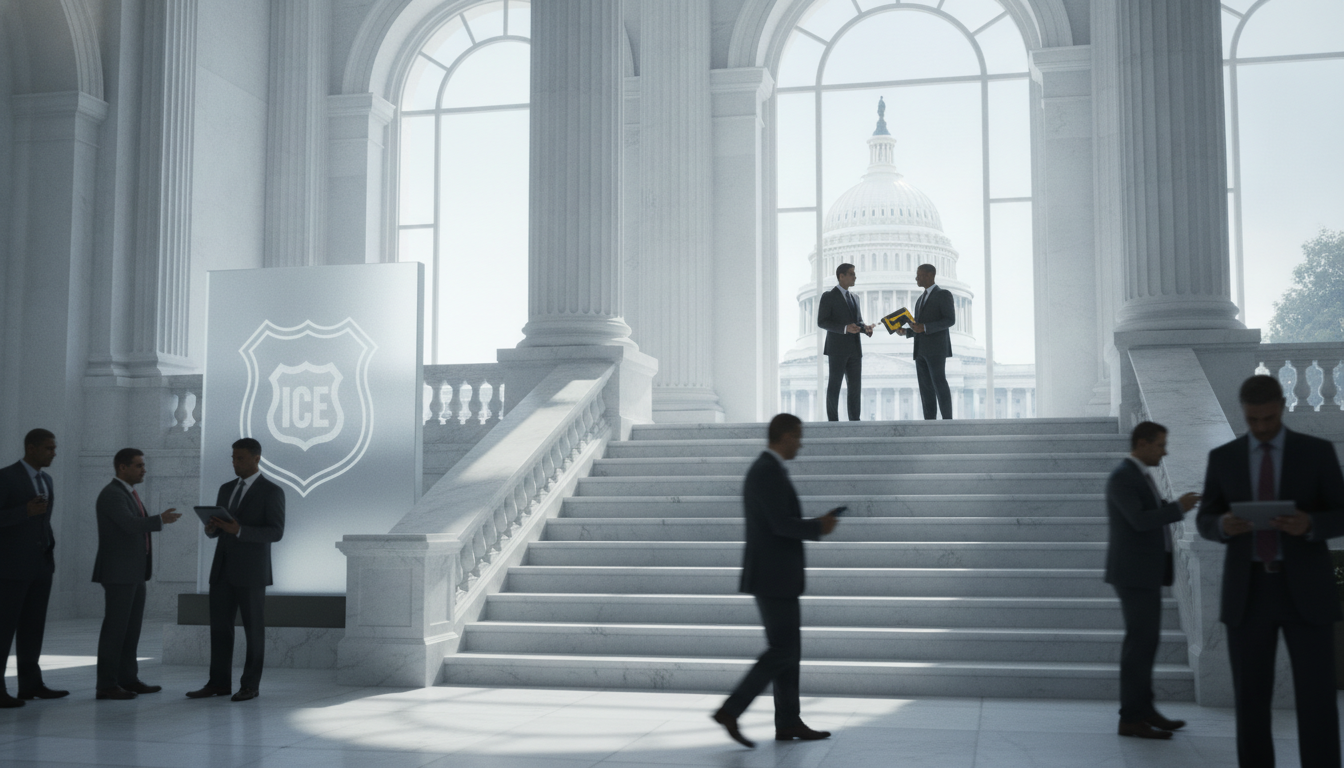
Axon Enterprise is increasing its presence on Capitol Hill as U.S. Immigration and Customs Enforcement weighs a potential $220 million purchase of Taser devices. The development links a major federal technology decision to a concentrated push by one of the country’s most prominent law-enforcement suppliers.
The move comes as lawmakers revisit oversight of policing tools, data systems, and the procurement process across federal agencies. The stakes are high for ICE, which equips thousands of agents, and for Axon, which has built a large business around stun guns, body cameras, and cloud software for evidence.
“Axon Enterprise has ramped up lobbying in Congress on federal law-enforcement technology as ICE pursues a potential $220 million Taser deal.”
Background: A Company Shaped by Federal Contracts
Axon, formerly known as Taser International, rebranded in 2017 to reflect a broader product line. It now sells electrical weapons, body-worn cameras, and digital evidence platforms used by local departments and federal agencies. Federal buyers have been a steady source of sales, from pilots to multi-year supply agreements.
ICE, part of the Department of Homeland Security, conducts immigration enforcement and investigations. It often procures gear through large, multi-year contracts to standardize equipment and training. A contract on the scale under discussion would rank among the agency’s larger equipment buys in recent years.
Lobbying around federal policing technology has grown as agencies weigh not only hardware but also software and data services. That has drawn scrutiny from civil liberties groups and budget watchdogs, who want more detail on costs, training, and safety outcomes.
What the Lobbying Push Signals
Policy specialists say stepped-up outreach often tracks with large procurements or looming policy decisions. Companies seek to explain product capabilities, address safety questions, and shape standards that can influence bids.
An Axon campaign on the Hill suggests the company is working to frame how lawmakers think about less-lethal weapons and supporting systems. That can include training requirements, reporting rules, and data retention practices. The work often targets committee staff who oversee homeland security appropriations and technology policy.
One veteran procurement analyst said the timing reflects “normal due diligence” by vendors and policymakers when contracts with nine-figure price tags are on the table. Advocacy groups counter that vendor influence can outpace independent testing and public input.



Safety, Oversight, and Cost Questions
Stun guns are billed as less-lethal alternatives to firearms, but their use has prompted debate about safety, use-of-force thresholds, and training. Medical researchers and policing experts have called for better data on incidents and clearer guidance to reduce risk. Any major purchase by a federal agency is likely to face questions about those safeguards.
Watchdogs also point to the total cost of ownership. Stun guns require cartridges, battery packs, testing, and recurring training hours. If the deal includes support services, warranties, or software integration, the long-term cost can extend well beyond the initial award.
- How ICE will measure safety outcomes and accountability
- What training standards and reporting rules will apply
- Whether independent testing will inform deployment
- How the contract prices maintenance and consumables
Industry Impact and Competitive Stakes
A large ICE award could influence local and state buying decisions, as agencies often follow federal standards. It can also set technical baselines for compatibility, making it harder for rivals to break in later. For Axon, a win would deepen its foothold across DHS and strengthen cross-selling for cameras and evidence software.
Competitors may argue that open standards and modular purchasing would lower costs and improve resilience. They warn that single-vendor ecosystems can lock agencies into proprietary cartridges, accessories, and cloud services.
What Comes Next
Any ICE decision will go through federal procurement steps, including evaluations and potential protests by bidders. Congressional staff will watch for budget impacts and policy riders tied to use-of-force reporting and data transparency. If lawmakers push for stronger oversight, they could attach conditions to funding or require public reporting on outcomes.
For the public, the key issues are safety, accountability, and value for money. For Axon and its rivals, the focus is market share and long-term service revenue. For ICE, the priority is field reliability and clear rules that withstand legal and public scrutiny.
The next signals to watch are committee briefings, any requests for information or solicitations that detail requirements, and whether lawmakers seek audits on training and deployment. A final award—if it proceeds—will test how Washington balances operational needs with transparency and independent oversight.