




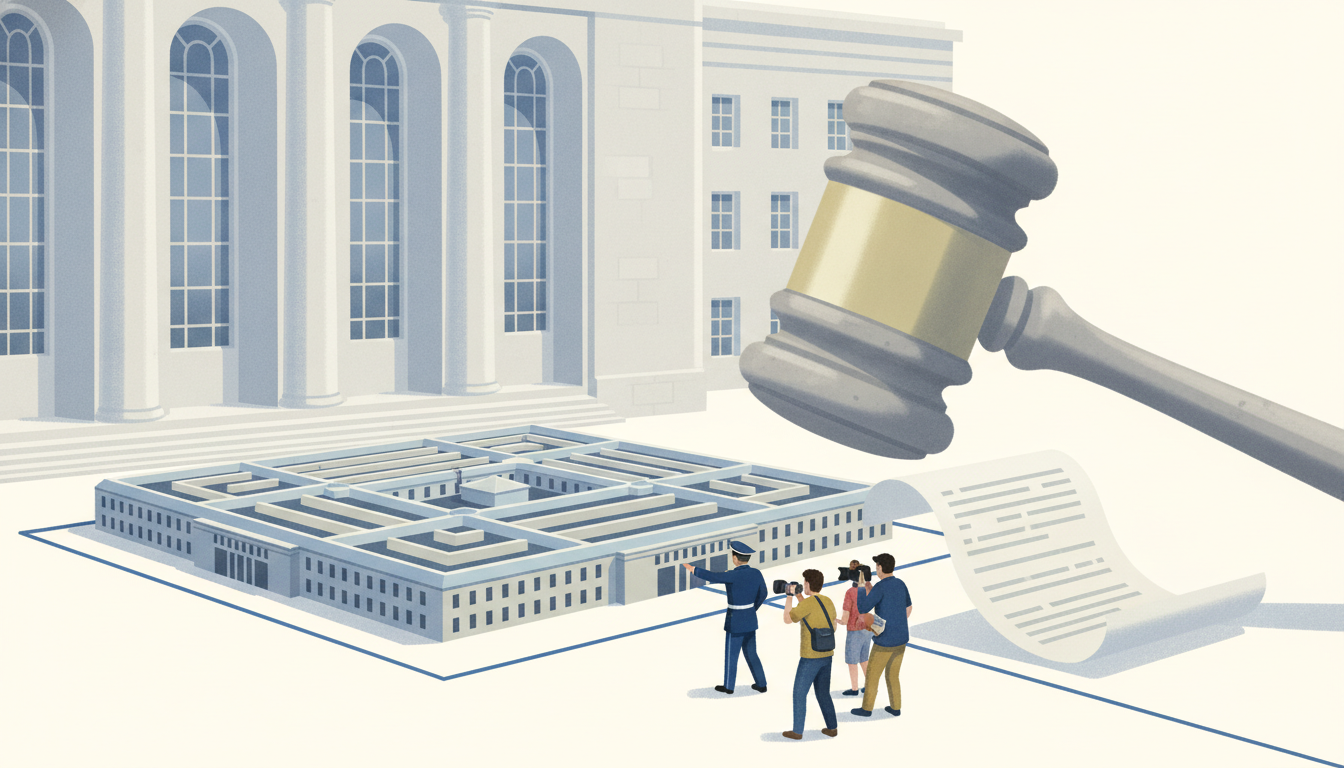
An appeals court has cleared the Defense Department to require escorts for reporters visiting the Pentagon, a move that arrives as The New York Times challenges the policy in court. The decision, issued as the lawsuit proceeds, sets the stage for a high-profile clash between press access and facility security at one of the nation’s most sensitive buildings.
The dispute centers on who controls on-site access for journalists and how far the government can go in shaping that access. It affects daily reporting at the Pentagon in Washington, where briefings, meetings, and hallway interviews are part of routine coverage of U.S. defense policy. The case raises urgent questions for media outlets and public agencies that rely on in-person engagement to inform the public.
Background and Context
News organizations have long reported from secure federal sites under rules that balance safety with transparency. Policies often guide where reporters can go and whom they can approach, especially in facilities with classified operations. Press advocates argue that such rules should be narrow and predictable. Security officials say structured access protects staff and sensitive activities.
The Pentagon is one of the most heavily guarded workplaces in the country. During national security events, access often tightens across federal buildings. Courts have generally allowed reasonable limits on newsgathering in restricted places. At the same time, they have warned against steps that function like prior restraint or viewpoint discrimination.
The Ruling and What It Allows
An appeals court said the Defense Department could require escorts for reporters who visit the Pentagon while The New York Times sues to overturn the rule.
The court’s action appears to permit the escort rule to remain in effect while litigation continues. That gives the Pentagon leeway to manage on-site movement by accredited journalists. The New York Times seeks to strike down the requirement, arguing that it burdens reporting and access to officials inside the building.
Legal scholars note that temporary rulings do not decide the full case but signal how judges view the government’s security interests against press claims. Agencies typically frame escort policies as content neutral, applying the same rules to every outlet. Newsrooms often counter that escorts can delay interviews, restrict spontaneous questioning, and chill source conversations.
Security and Press Access
Security professionals contend that escorts help prevent entry into no-go areas and ensure rapid response during emergencies. They also say escorts can help coordinate briefings and reduce disruption along sensitive corridors. Media groups respond that reporters already pass screening and that escorts can become a gatekeeping tool rather than a safety measure.
- Security view: Escorts protect operations and staff, and maintain order in secure spaces.
- Press view: Escorts limit real-time reporting and inhibit independent newsgathering.
Both sides agree that transparency on national defense remains a public interest. The dispute turns on means, not ends. The precise scope of the escort rule, and any exceptions, will likely feature in the case record as the lawsuit advances.


Legal Stakes and Industry Impact
The decision is significant for any newsroom that relies on in-person reporting inside federal complexes. A ruling upholding broad escort requirements could influence policies at other secure facilities. If the rule is narrowed or struck, agencies may need clearer standards on when escorts are required and how requests are handled.
First Amendment analysis often examines whether a policy is neutral, reasonable, and leaves open alternative channels for reporting. Government facilities are not traditional public forums, which gives agencies more control over access. The challenge for officials is to avoid rules that feel arbitrary or that hinder accountability journalism.
What Comes Next
The New York Times will continue to press its claims as the escort rule stays in place. Further filings will likely address how the policy affects daily reporting and whether less restrictive options exist. The Defense Department is expected to defend the rule as a modest measure tied to building security and mission needs.
Other outlets are watching closely. Editors want clarity on access, timing, and the ability to speak with officials without delay. Security offices want procedures they can administer consistently. Any final outcome could shape ground rules for reporting on national defense for years.
The core question remains simple and important. How can the government safeguard a secure facility while ensuring the press can do its job? The appeals court’s move keeps escorts in place for now, but the larger debate over access and transparency is far from settled. Readers should watch for the next round of court filings and any interim guidance from the Pentagon on how the policy is applied day to day.