



Cholesterol-lowering fibrates may stop liver cancers from recruiting immune cells that weaken treatment, offering a possible way to prevent resistance to immunotherapy. The finding points to a new use for established medicines, though clinical studies are needed before doctors can adopt the approach.
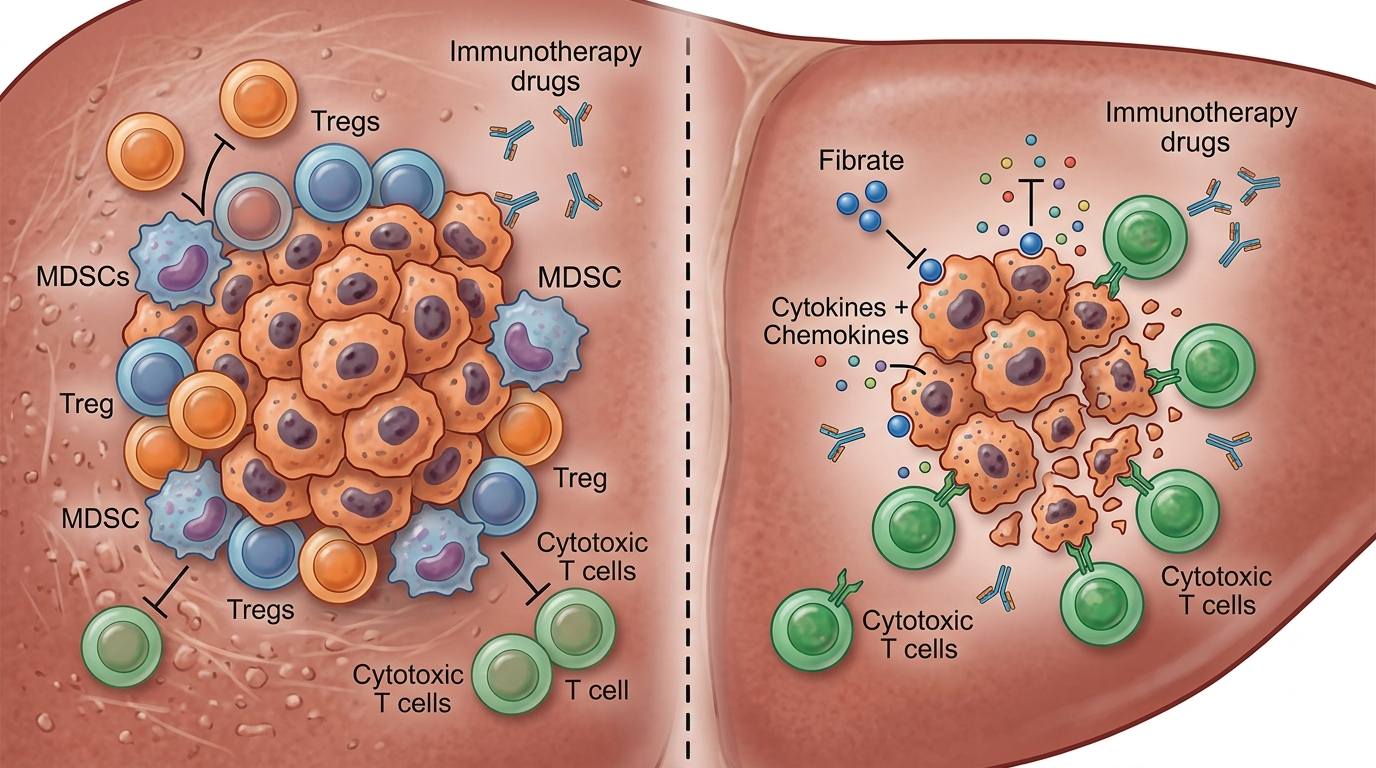
The research centers on so-called “traitor” immune cells. Instead of attacking a tumor, these cells are recruited by liver cancers and help protect malignant tissue. Blocking that process could allow immunotherapy to remain effective for longer.
How Tumors Turn Immunity Against Patients
Immunotherapy helps the immune system identify and attack cancer. It has changed care for several tumor types, including some liver cancers. Yet many patients do not respond, while others improve at first and later develop resistance.
One reason is the tumor’s ability to reshape nearby tissue. Cancer cells can send signals that attract immune cells and alter their behavior. Once inside the tumor, those cells may suppress the immune response rather than support it.
Fibrates can stop liver cancers from recruiting “traitor” immune cells, preventing immunotherapy resistance.
The finding suggests fibrates interfere with this recruitment process. By keeping harmful immune cells away from tumors, the drugs may preserve the conditions needed for immunotherapy to work.
That strategy differs from attacking cancer cells directly. It targets the support system that tumors create around themselves, often called the tumor microenvironment.
Old Drugs Could Find a New Role
Fibrates are medicines used to manage blood fats, especially high triglycerides. Their history in cardiovascular care could offer researchers useful information about dosing and known side effects.
Repurposing an existing drug can sometimes shorten early development. However, prior approval for cholesterol treatment does not prove that fibrates are safe or effective as cancer medicines.



Key questions remain:
- Which fibrate drugs have the strongest effect on immune-cell recruitment?
- Which liver cancer patients are most likely to benefit?
- Could fibrates interfere with other cancer treatments or liver medicines?
- Would the effect prevent resistance, reverse it, or do both?
These issues matter because liver cancer patients may already have reduced liver function. Any combination therapy would require careful testing for toxicity and drug interactions.
Potential Impact on Liver Cancer Care
Liver cancer is difficult to treat because it is often found late and may arise alongside chronic liver disease. Immunotherapy has given doctors another option, but resistance continues to limit its impact.
If fibrates can prevent tumors from recruiting suppressive immune cells, they could become partners for existing immunotherapies. Such combinations might extend treatment responses without requiring an entirely new class of medicine.
Still, the claim should be treated as an early scientific signal rather than a change in medical guidance. Laboratory findings do not always translate into patient benefit. Researchers must establish the biological mechanism, identify useful doses, and compare outcomes in controlled trials.
The next steps will likely focus on whether fibrates improve response rates or survival when added to immunotherapy. Researchers will also need biomarkers that show which tumors depend on these harmful immune cells.
The central insight is clear: treatment resistance may be weakened by stopping cancer from turning the immune system into an ally. If clinical evidence supports that idea, a familiar cholesterol drug could gain an unexpected role in liver cancer care.