



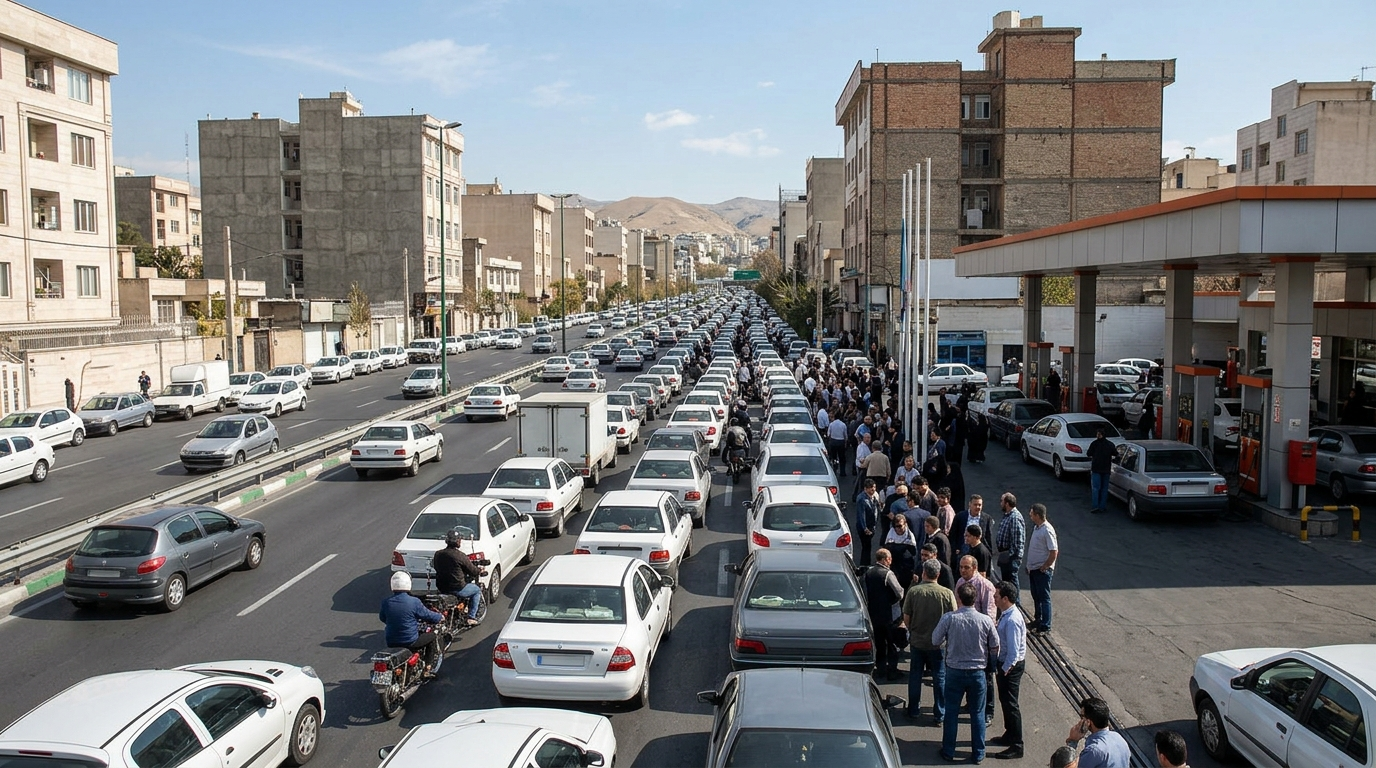
Long lines have formed outside gas stations across Tehran as drivers race to secure fuel amid shortages, price fears, and new U.S. sanctions.
The rush in Iran’s capital reflects more than an immediate supply problem. It also shows public concern that tighter economic pressure could raise everyday costs in a country where affordable gasoline carries deep political weight.
Drivers Rush to Fill Their Tanks
Motorists have queued outside filling stations as uncertainty spreads over fuel supplies. Fear can quickly worsen a shortage, since drivers often buy more gasoline than usual.
The reported lines point to three pressures:
- Current fuel shortages affecting drivers in Tehran
- Concern that gasoline prices could soon rise
- New U.S. sanctions that may strain Iran’s economy
Officials have not provided details on how long the disruption may last. The cause and size of the shortage also remain unclear from initial reports.
That missing information matters. A short delivery delay requires a different response from a nationwide supply problem. Tehran residents, however, face the same practical choice: wait now or risk paying more later.
Fuel Prices Carry Political Risk
Iran has long kept gasoline prices low through state support. Cheap fuel is widely viewed as an important household benefit, especially when inflation weakens buying power.
Past price changes have triggered serious unrest. In November 2019, authorities raised gasoline prices and introduced purchase limits. Protests spread across the country, followed by a severe security crackdown and an internet shutdown.



That history makes any hint of another increase sensitive. Even without an announced change, rumors can send drivers to pumps. The result is a familiar cycle: anxiety drives demand, queues grow, and the queues create more anxiety.
Higher fuel costs would also reach far outside gas stations. They could increase expenses for taxis, delivery services, farms, and factories. Those costs may then appear in food and consumer prices.
Sanctions Add Economic Pressure
New U.S. sanctions have added another layer of uncertainty. Washington has repeatedly used sanctions to restrict Iran’s oil income, financial access, and trade networks.
U.S. officials have argued that such measures are intended to pressure Iran’s government over security and foreign policy concerns. Iranian leaders have described the restrictions as economic warfare that harms ordinary citizens.
Iran is a major oil producer, yet sanctions can still disrupt domestic markets. They may limit access to foreign currency, equipment, shipping services, and payment channels. Distribution failures and poor management can add further strain.
The fuel lines therefore do not prove that sanctions alone caused the shortage. Domestic policy, transportation problems, refinery operations, and panic buying could also play roles. Clear government data would help separate those causes.
What Comes Next
Authorities now face pressure to restore regular supplies and explain whether prices will change. Rapid communication could calm demand, while silence may keep drivers circling stations like anxious moths around a very expensive flame.
The next signs to watch include official supply figures, limits on purchases, station closures, and any announcement on subsidies. Public reaction will also matter if shortages continue or prices rise.
For Tehran residents, the immediate concern is finding fuel. For Iran’s government, the larger challenge is preventing a temporary shortage from becoming a wider economic and political crisis.