



Camping for several months may sound simple, but whether a person can stay depends on the land, local rules, and reason for living outdoors. Recreational campers and people without stable housing often face the same posted limits, even though their circumstances differ sharply.
There is no single rule covering every campsite. Public agencies, private campground owners, and local governments set their own conditions. A legal stay can range from a few days to an entire season. In some places, living at a campsite as a permanent residence is barred.
Location Determines the Time Limit
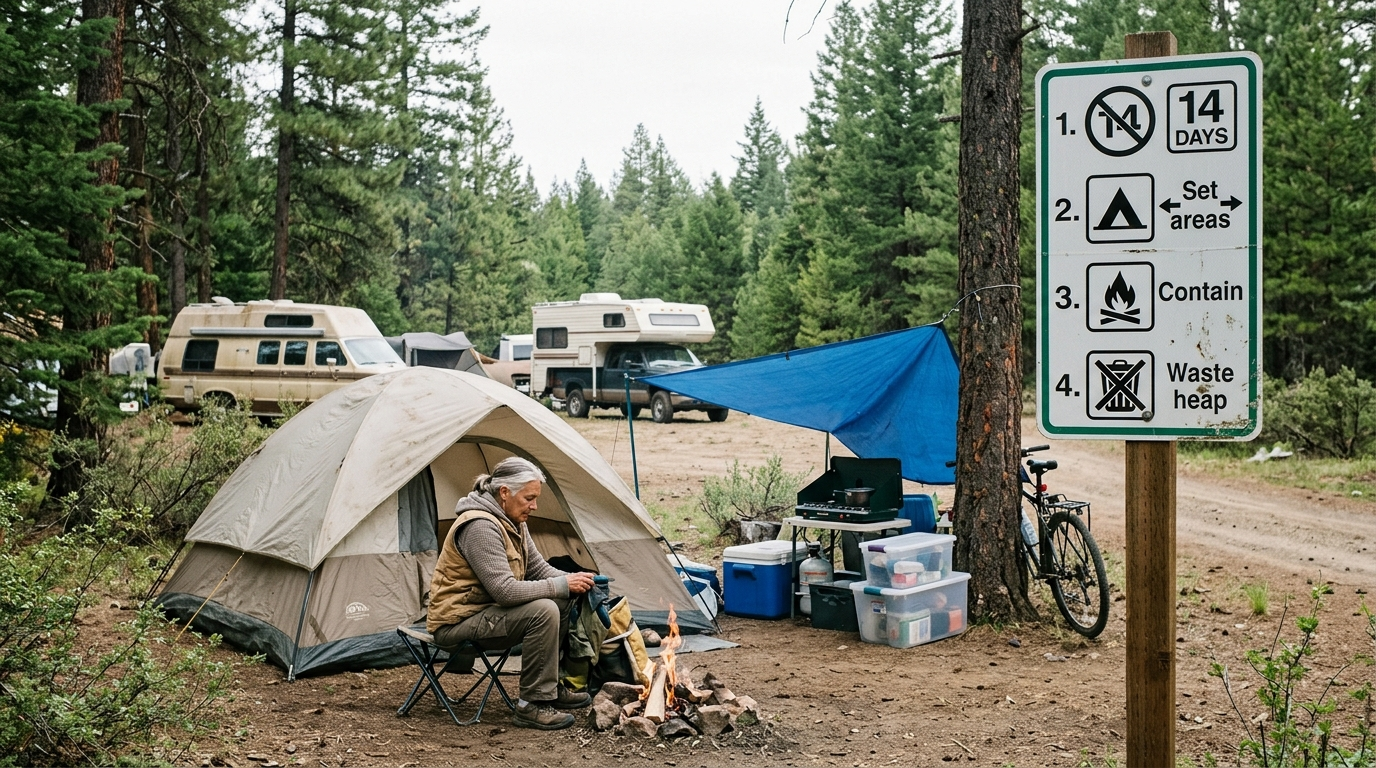
National parks, state parks, national forests, and local recreation areas often impose maximum stays. These rules help keep sites available and protect land from long periods of heavy use.
Many public campgrounds require reservations and charge nightly fees. They may also close during winter, limit consecutive nights, or require visitors to leave the area before returning. Moving to a nearby site may not reset the clock if both locations sit within the same managed district.
Private campgrounds can offer longer arrangements. Some rent sites by the month or season, particularly to recreational vehicle owners. Yet contracts may restrict mail delivery, vehicle condition, guests, or the use of a campsite as a legal address.
Anyone planning a long stay should check:
- The maximum number of consecutive nights
- Rules for returning after departure
- Seasonal closures and fire restrictions
- Fees, permits, and reservation requirements
- Limits on tents, vehicles, pets, and waste
Dispersed Camping Is Not Permanent Housing
Some public lands allow dispersed camping outside developed campgrounds. These areas may have no toilets, water, trash collection, or marked sites. Free does not mean rule-free, a distinction that can surprise even seasoned campers.
Land managers commonly limit how long visitors may remain within a defined area. Campers may need to relocate a set distance after reaching that limit. Local orders can shorten stays during wildfire danger, crowded seasons, or environmental restoration.



Enforcement also varies. Rangers may issue warnings, fines, or orders to leave. Vehicles and unattended property can face separate rules. A tent left in place is not necessarily a legal claim to the site.
Economic Need Complicates Enforcement
For people camping because they cannot afford housing, leaving one site does not solve the underlying problem. It often shifts them to another campground, roadside, shelter, or public space.
Local governments must weigh public health and access against the needs of people who have nowhere else to sleep. Concerns may include sanitation, fire safety, damaged habitats, and conflicts with other visitors. Campers, meanwhile, may need access to work, medical care, schools, and transportation.
The legal setting has also changed in the United States. In 2024, the U.S. Supreme Court ruled in City of Grants Pass v. Johnson that enforcing generally applicable public-camping laws does not automatically violate the Constitution’s ban on cruel and unusual punishment. The decision gave cities more room to enforce camping restrictions, though state laws and other legal protections may still apply.
Planning Can Prevent an Abrupt Exit
Long-term campers should contact the agency or property owner responsible for the exact site. Posted signs may not contain every restriction, and online summaries can be outdated.
A practical plan should include backup locations, drinking water, waste disposal, weather protection, and money for fees or transportation. People camping from necessity may also seek local housing services, legal aid, or outreach programs before an enforcement deadline arrives.
Months-long camping is possible in some places, especially under seasonal or monthly agreements. It is rarely an automatic right. The safest answer comes from the written rules for the specific land, plus a realistic plan for what happens when the permitted stay ends.