



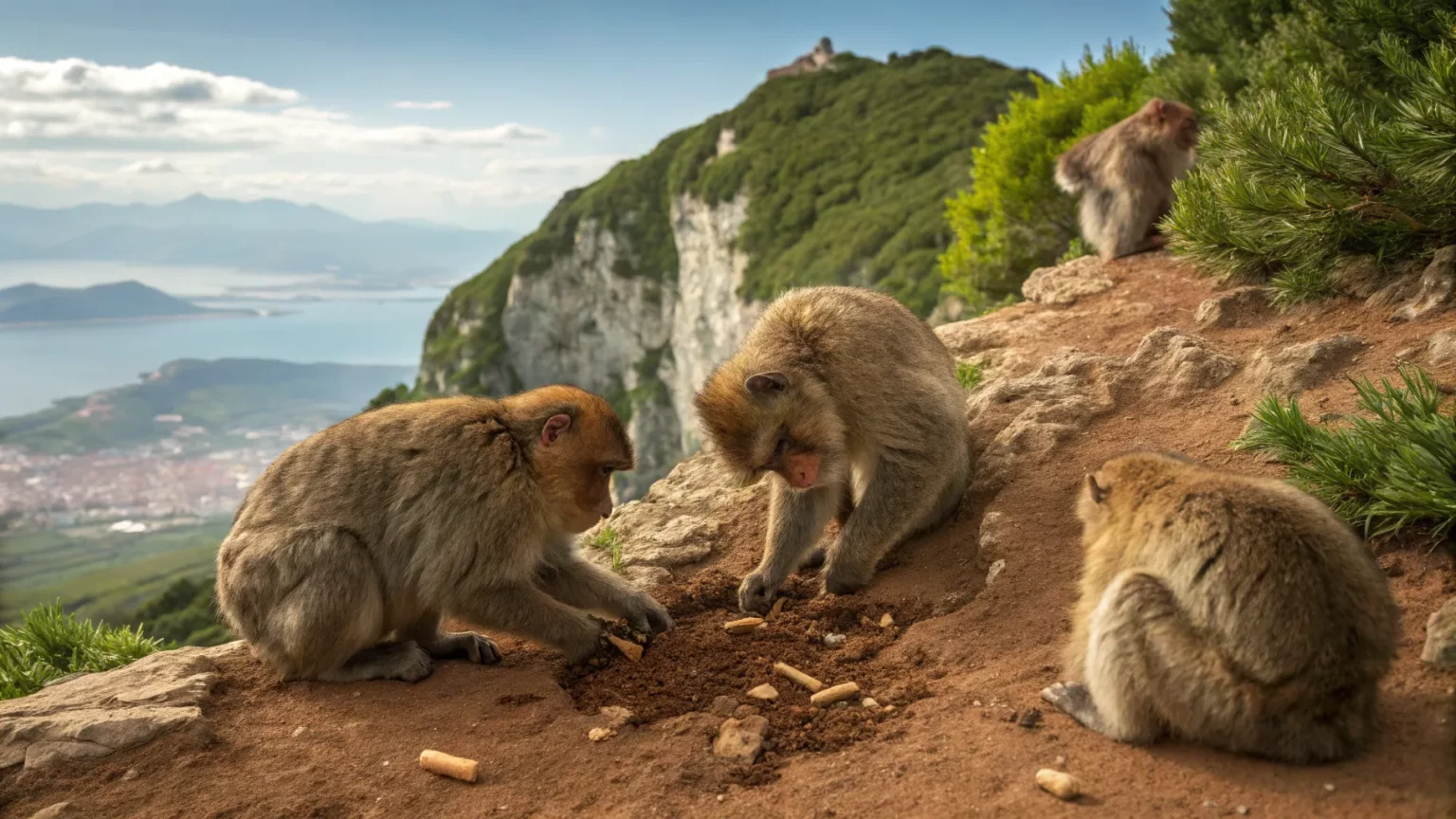
On Gibraltar’s famous Rock, wild Barbary macaques have started eating soil and clay to settle upset stomachs, a behavior researchers link to food handouts from visitors. The sightings come as peak travel season brings larger crowds to the Upper Rock Nature Reserve, where snacks and fast food are easy to find. Observers say the behavior highlights a growing clash between wildlife health and tourist habits.
The macaques, Europe’s only population of wild monkeys, are a major draw for tour groups and cruise passengers. While local rules discourage feeding, visitors still pass chips and processed meats to the animals. The result, say field teams, is a diet high in fat and salt that can make the monkeys sick.
What Researchers Saw On The Rock
“Gibraltar’s macaques have been observed engaging in geophagy, the consumption of soil and clay, in an apparent attempt to quell their nausea from eating fatty and salty foods offered by tourists.”
Field notes describe macaques scraping at exposed banks and licking damp clay. Some were seen chewing soil shortly after taking food from people. The timing suggests a link between human snacks and stomach discomfort. While geophagy is not new in wildlife, its rise here appears tied to tourist behavior.
Why Animals Eat Clay
Geophagy occurs in many species, including primates, elephants, and parrots. Scientists say clay can bind plant toxins and ease gut irritation. It may also help balance minerals and buffer acidity. Kaolin, a type of clay, has long been used in over-the-counter antidiarrheal products for similar reasons.
For Gibraltar’s macaques, soil may help manage nausea after eating fries, cured meats, and other salty foods. But it is a short-term fix. Persistent consumption of processed food can lead to dehydration, high blood pressure, obesity, and dental wear in primates. Soil also carries risks, including parasites and heavy metals, especially near roads and human activity.
Tourism Pressure And Feeding Habits
Gibraltar markets the macaques as a must-see experience. Guides brief visitors on keeping distance and not feeding animals. Even so, food exchange still happens, often for photos. Litter and overflowing bins provide an easy buffet.
Local conservation staff have pushed for stronger enforcement. Tour operators, meanwhile, favor education at entry points and on buses. Street vendors say clearer rules help everyone if they are consistent and well posted.
- More visible “Do Not Feed Wildlife” signs at viewpoints
- Regular ranger patrols near popular stops
- Secure, animal-proof bins and quicker trash pickup
- Short videos on tour buses about macaque diet and health
Small fixes can change behavior fast. Visitors often think a single chip will not matter. But repeated treats add up across hundreds of people a day.


Health And Conservation Implications
Wild macaques need a varied diet of fruits, leaves, seeds, and insects. High-fat and high-salt foods can alter gut bacteria and appetite control. Over time, groups may shift their routines to wait near snack sources, raising the risk of bites and scratches. That hurts both people and animals.
Soil eating is a warning sign, not a cure. If macaques rely on clay to manage nausea, they are already ingesting foods that should be rare or absent from their diet. Researchers say the goal is to prevent the problem, not treat the symptom.
What Comes Next
Researchers plan closer tracking of feeding hotspots and health indicators, such as hydration and body condition. Testing clay samples could reveal which minerals the macaques seek. Trials that limit food access near key lookouts may show whether soil eating declines when human snacks are removed.
Education will be central. Clear messaging can shift norms so visitors enjoy the monkeys at a safe distance. The best souvenir, staff say, is a photo taken without handouts.
For now, the sight of macaques eating soil is a stark signal. It points to a simple fix that depends on human choices. If tourists stop offering salty and fatty treats, the need for clay should fade. The coming months will show whether new signs, better bins, and steady patrols can protect one of Gibraltar’s star attractions—and keep them eating what the wild provides.