



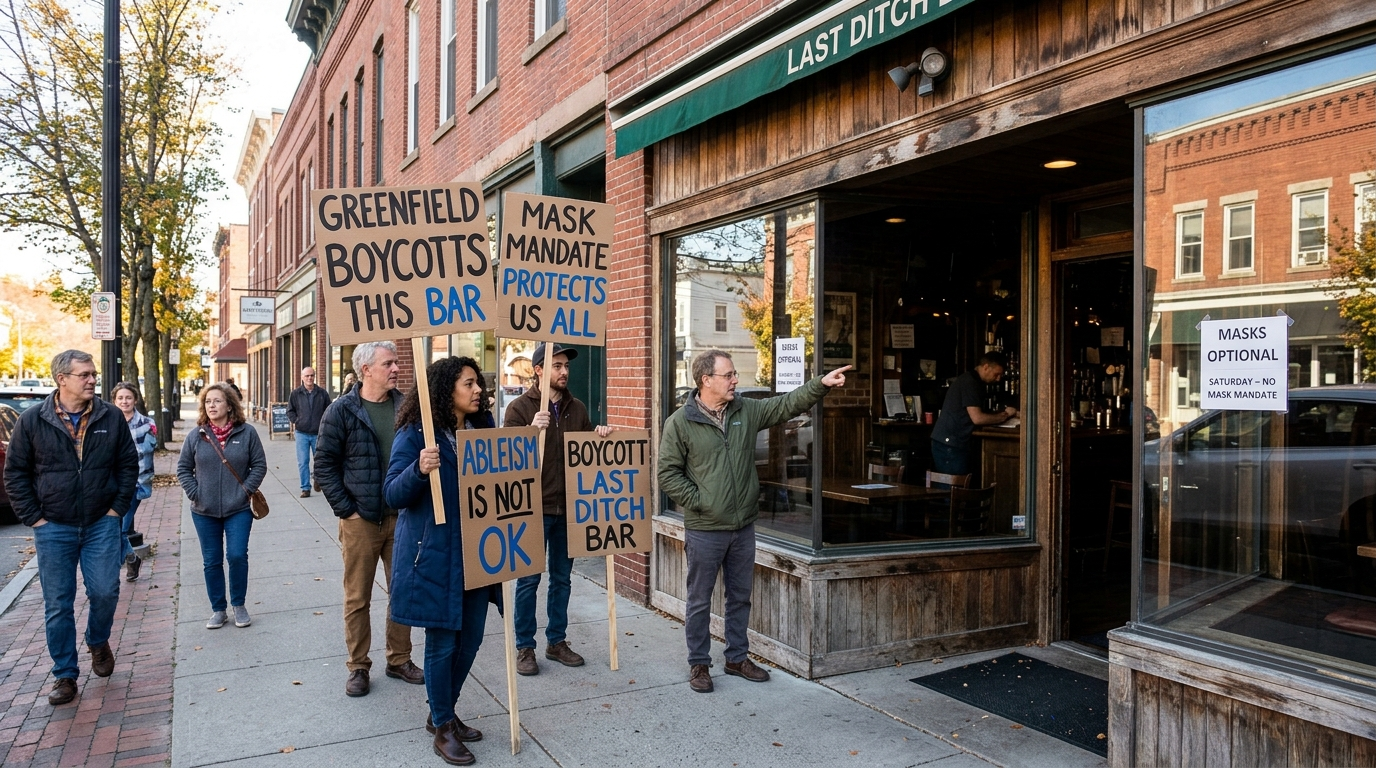
Last Ditch Bar in Greenfield, Massachusetts, is facing a boycott and accusations of ableism after ending its Saturday mask mandate to improve its financial position.
The dispute places the bar between two urgent concerns. Some customers want stronger protection from illness, while the business says it needs broader attendance to stay open. The timing of the policy change was not specified.
A Business Decision Draws Opposition
Last Ditch Bar lifted its mask requirement on Saturdays as part of an effort to remain financially viable. The venue’s policy on other days was not detailed.
The change prompted boycott calls from people who view required masking as an accessibility measure. Critics have accused the bar of ableism, arguing that the decision may exclude disabled and medically vulnerable patrons.
No boycott organizers or bar representatives were identified by name. Specific demands from the boycott effort were also not provided. That limits the available evidence about its scale and potential financial effect.
The conflict centers on three immediate issues:
- Whether a public-facing business should require masks during regular events.
- How venues can serve medically vulnerable customers without losing needed revenue.
- Whether removing a health measure amounts to disability-based exclusion.
Access and Financial Survival Collide
For some disabled or immunocompromised people, mask rules can determine whether entering a crowded indoor venue feels possible. A voluntary policy may offer less protection because its effect depends on individual compliance.
From that viewpoint, removing a mandate does more than change etiquette. It can shift health risks onto people who already face fewer safe options for social participation.


The bar’s stated reason introduces a competing concern. Small hospitality businesses often depend on weekend traffic, and Saturday sales can carry added weight. A rule that discourages some visitors may threaten a venue already struggling to survive.
However, no revenue figures, attendance records or operating costs were disclosed. There is therefore no public measure of how much the mandate affected business or how close the bar may be to closing.
A Wider Debate Over Inclusion
The Greenfield dispute reflects a broader tension over who bears responsibility for infection precautions. Many institutions have shifted from shared rules to personal choice. Critics say that approach can leave vulnerable people with fewer ways to take part in public life.
Businesses also face difficult trade-offs. A strict rule may attract patrons seeking safer spaces while deterring others. Removing it can reverse that result, bringing in some customers while losing those who relied on the protection.
The accusation of ableism carries serious weight because it suggests that disabled people are being placed at a disadvantage. Yet evaluating that claim requires more information about the venue, its remaining policies and any possible accommodations.
Options could include designated masked events, improved ventilation, outdoor programming or clearly posted schedules. Each option carries costs and may not satisfy every group. Still, such measures can offer a middle path between a full mandate and no organized precautions.
What Comes Next
The boycott’s effect will depend on participation, the bar’s customer base and whether either side seeks a compromise. Clear communication about the financial problem and available safety measures could help patrons assess the decision.
For Last Ditch Bar, the central challenge is now larger than a Saturday policy. The venue must show whether financial survival and disability access can coexist. Its next response may shape both customer trust and its ability to remain open.
The dispute also offers a warning for other small venues. Health policies can affect access, revenue and reputation at the same time. Businesses changing those rules may need to explain their evidence, consult affected patrons and provide practical alternatives.