




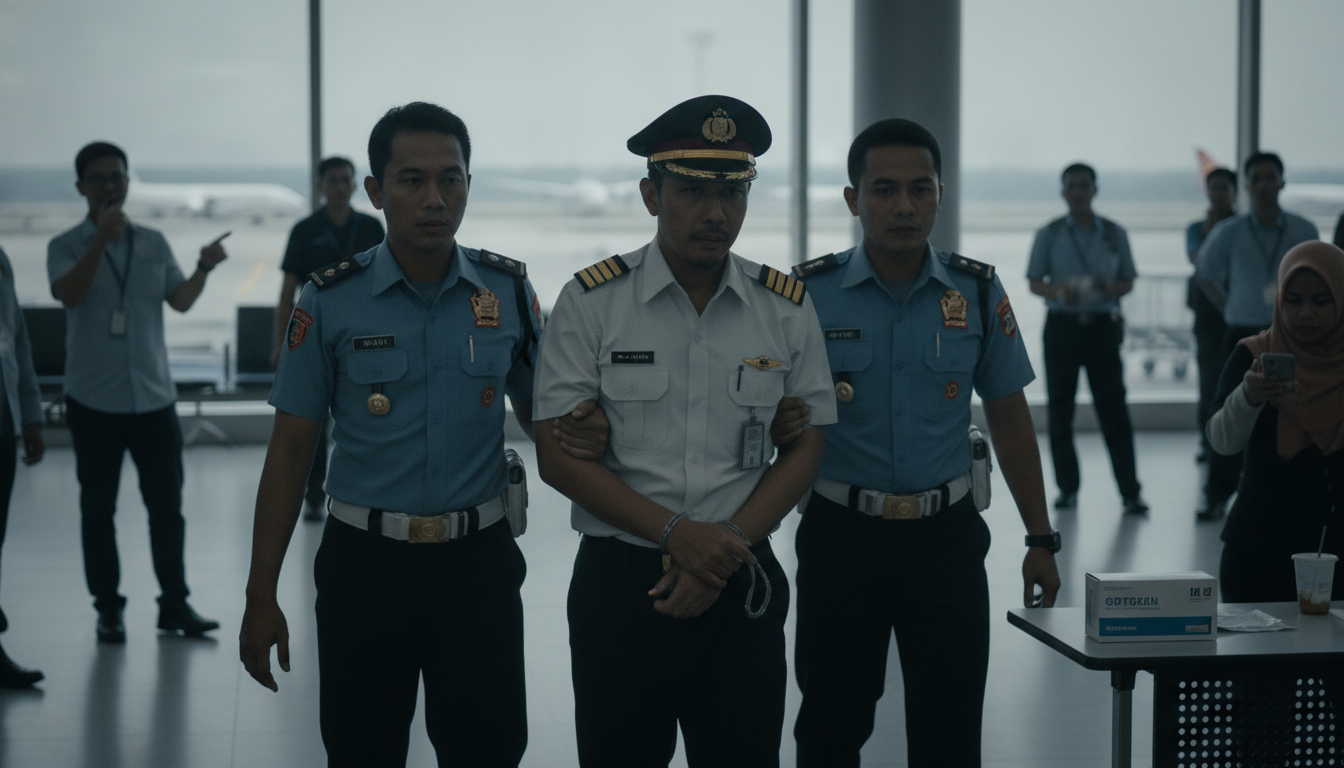
A commercial pilot was arrested at Jakarta’s main airport last week after testing positive for illicit drugs, Indonesian police said, a case that raises urgent questions about screening and safety in one of the world’s busiest aviation markets.
Authorities said the pilot, identified only by initials, was detained at Soekarno-Hatta International Airport. The arrest took place during routine checks, according to the police. The incident has drawn attention from regulators, airlines, and passengers who want clear answers on how fitness-to-fly rules are enforced.
The pilot, identified only by his initials, also tested positive for ecstasy and cocaine when he was arrested last week at the Jakarta airport, the Indonesian police said.
The case comes as travel in Southeast Asia continues to recover. Flight volumes in and out of Jakarta have grown, and carriers are rebuilding schedules. This surge has put a spotlight on pilot staffing, training, and compliance with drug and alcohol rules.
Longstanding Concerns Over Fitness to Fly
International aviation rules require pilots to be sober, rested, and medically fit. Most airlines in Indonesia use pre-duty checks, random tests, and peer reporting to meet those standards. Regulators encourage surprise testing, especially during holiday travel periods when schedules are tight.
Even a single confirmed violation can trigger strong action. Pilots can face suspension, treatment mandates, or a loss of license. Airlines also risk penalties if oversight is found lacking. Safety specialists say zero tolerance is necessary because stimulant use can impair judgment, increase risk-taking, and reduce situational awareness.
Police statements suggest the pilot’s identity remains shielded while investigators gather evidence. That approach is common when prosecutors are weighing charges. It also allows aviation authorities to run their own checks on duty rosters, cockpit pairings, and any recent operational irregularities.
How Airlines Test and Monitor Crews
Drug and alcohol policies in aviation often include several layers designed to catch and deter misuse. These steps are familiar across many carriers and jurisdictions.
- Pre-employment screening and medical exams.
- Random testing during employment, including at airports.
- For-cause testing after unusual behavior or incidents.
- Return-to-duty programs after verified treatment and monitoring.
Unions and pilot associations generally support strict rules but call for confidential reporting and access to treatment. The goal is to remove any fear that asking for help could end a career. Safety experts argue that a just culture, paired with firm enforcement, best protects passengers.



Public Confidence and Industry Response
This arrest could prompt airlines to review compliance training and refresh briefings on substance policies. Airports may also increase spot checks. Passengers rarely see those measures, but they are common behind the scenes and form a key safety layer.
For carriers, the bigger risk is trust. Travelers want assurance that pilots are fit to fly on every leg. Quick, transparent communication by authorities, followed by visible corrective steps, can limit damage. If the pilot was scheduled to operate flights near the time of arrest, regulators will likely audit crew scheduling and dispatch procedures.
Industry analysts say the case may feed calls for broader data sharing between police, health providers, and civil aviation offices. That coordination, handled with privacy safeguards, can flag repeat offenders and track treatment outcomes.
What Investigators Will Look For
Investigators typically focus on timing, duty status, and potential gaps in oversight. They will ask when the pilot last flew, who conducted the test, and how results were verified. They may also examine training records, supervisor reports, and any prior incidents.
Key outcomes could include disciplinary decisions for the pilot and a formal notice to the airline. If systemic issues are found, regulators may order policy changes, extra audits, or refresher programs for crews and managers. Any criminal case would proceed in parallel.
Safety Lessons and Next Steps
While this appears to be an isolated case, safety leaders see value in using it to strengthen prevention. Extra emphasis on fatigue management, peer support programs, and confidential hotlines can help catch problems earlier. Clear consequences for violations can deter risky behavior.
Authorities have not released a timeline for their findings. In the interim, passengers should expect operations to continue normally. Airlines and regulators design multiple barriers so that one failure does not lead to an accident.
The arrest highlights a simple point. Zero tolerance works best when matched with steady testing, quick investigations, and access to help. The public will watch for firm actions, clearer reporting, and stronger safeguards to ensure every pilot who enters the cockpit is fit to fly.