




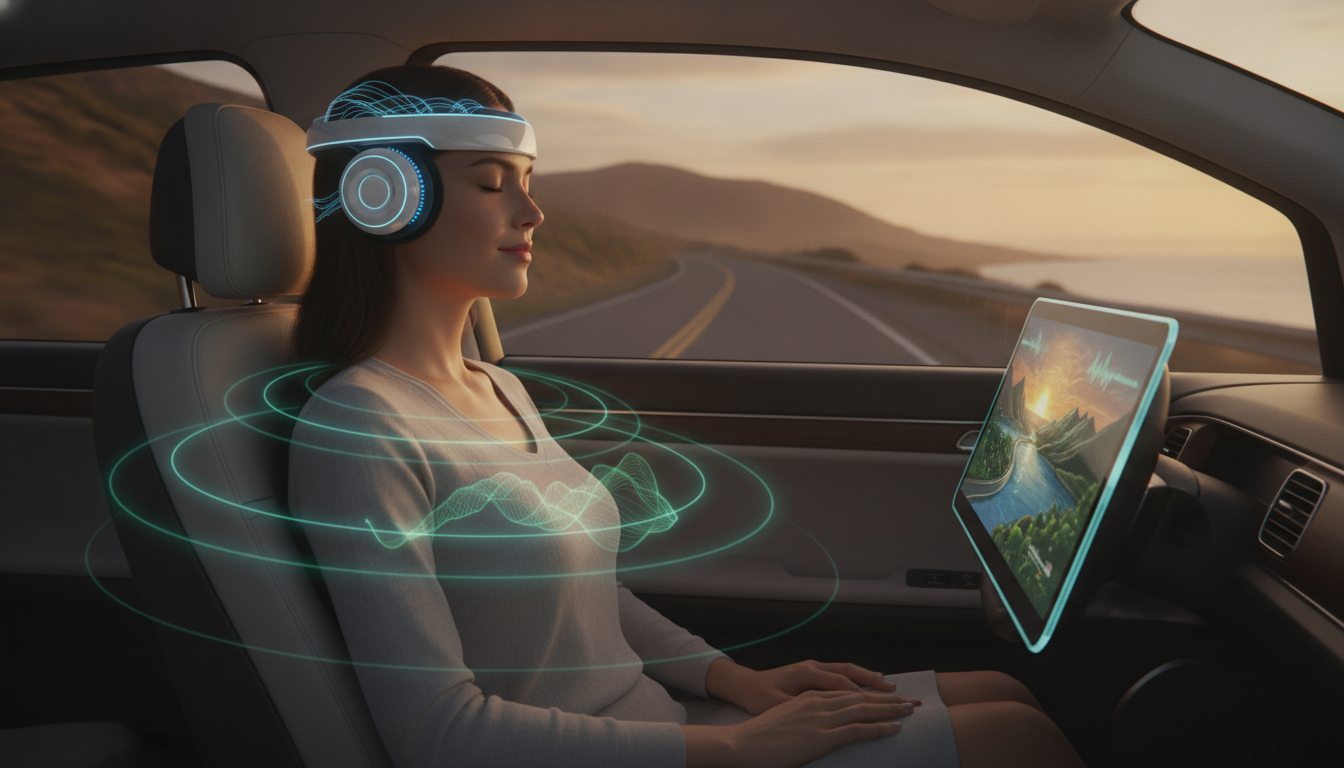
A new brain-computer interface promises relief for passengers who struggle with motion sickness, pairing real-time brain signals with guided mindfulness to steady the body and mind. Researchers say the approach aims to help riders stay comfortable in cars, even during long or winding trips, by redirecting attention when the first signs of nausea appear.
While details remain limited, the system is designed for in-car use and focuses on non-drug support. The goal is to help people read, work, or use screens without feeling ill. It also hints at a future where comfort tools are built into both private cars and ride-hailing fleets.
Why Motion Sickness Is So Common
Motion sickness strikes when the inner ear senses movement that the eyes do not confirm. This conflict can lead to dizziness, cold sweats, and nausea. Studies have long found that a large share of people are prone to these symptoms. Screen use in the back seat can make it worse because visual focus is fixed while the body is moving.
As cars add more screens and move toward more automated features, the problem has drawn new attention. Automakers and suppliers have tested softer suspensions, active seat cues, and display tweaks to reduce strain. Yet many riders still report discomfort, especially on curvy roads or stop-and-go traffic.
How the System Works
The project described by the team uses a brain-computer interface to watch for early signs of attention drift and stress. When the system flags a risk, it guides the passenger through short mindfulness exercises that refocus awareness on breathing and body signals. The aim is to break the cycle before nausea builds.
“A novel brain–computer interface uses mindfulness to shift the attention of passengers and relieve even severe car sickness.”
Researchers say the method relies on gentle, time-limited prompts that do not require medication or heavy gear. In plain terms, the passenger gets coached to stabilize attention and reduce sensory conflict while the car continues on its route.
What Sets This Approach Apart
- Non-drug method that can be used on demand.
- Targets the earliest phase of discomfort rather than after symptoms peak.
- Designed to work while the car is in motion and screens are in use.
The team’s description suggests that by tuning into breathing and body position, riders may regain a sense of control. That can ease the mismatch between what the eyes and inner ear report.
Promises and Open Questions
Advocates argue that a brain-computer interface can spot trouble sooner than a rider can. That could make short, well-timed guidance more effective than generic tips. They also note that mindfulness skills can improve with practice, which might reduce episodes over time.



Independent researchers urge caution. They want to see controlled trials with clear measures of symptom reduction and user comfort. Privacy is another concern. Any system that reads brain activity should make data protection a top priority, and passengers should have clear consent options.
Safety is also central. In shared vehicles, equipment must be simple, clean, and easy to wear. The prompts must not distract the driver or other passengers. Cost and maintenance will shape whether fleets adopt the technology at scale.
Where It Could Be Used
Early adopters could include ride-hailing services and long-distance shuttles that serve business travelers. Families with children who get carsick might also benefit, especially on vacation routes. If the method proves effective, automakers could build it into seat headrests or cabin systems that guide breathing and posture.
Future versions might pair with vehicle sensors. For example, if the car predicts heavy braking or sharp turns, the mindfulness prompt could arrive a few seconds earlier. That timing could matter for riders who are highly sensitive.
What To Watch Next
Key signs of progress will include peer-reviewed studies, diverse participant groups, and real-world tests on city streets and highways. Usability will be critical. The device should be quick to put on, easy to clean, and comfortable over time.
Regulators and standards groups will likely weigh in on data safeguards for brain signals. Clear rules could speed adoption by fleets and insurers that want to reduce passenger complaints and avoid costly trip disruptions.
For people who have given up on reading or working in cars, even modest gains would matter. If this brain-computer approach holds up under testing, it could offer a practical way to keep trips calm, screens usable, and stomachs steady.