




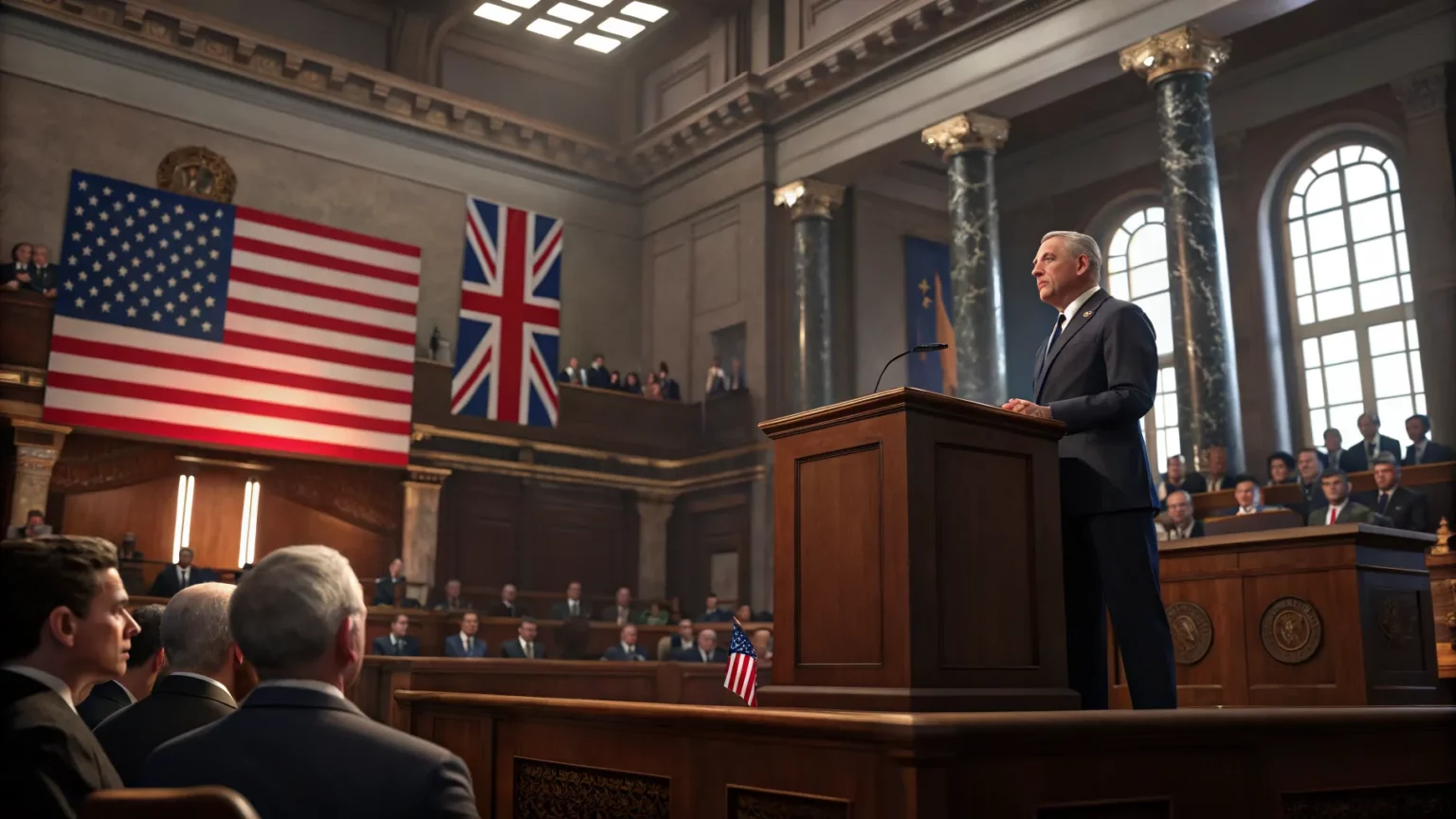
King Charles III used a high-profile visit to Washington to restate the strength of the US-UK alliance and press the case for NATO’s unity, following a state dinner hosted by President Donald Trump and the first lady. In remarks to a joint meeting of Congress, the King called for steady cooperation at a time of global strain and referred to security concerns that have shadowed recent public events.
The visit drew lawmakers from both parties, diplomats, and military leaders to the Capitol. It came one day after the formal White House dinner, where the King set a serious tone by acknowledging recent violence directed at public figures. The King’s focus on NATO echoed long-standing British and American policy, but arrived as fresh debates swirl in Washington and European capitals about defense budgets, Ukraine, and the alliance’s future.
A Somber Note, Then a Strategic Message
At the state dinner, the King addressed recent threats to public life in the United States and the climate of political tension. He referenced an incident tied to the press dinner circuit, signaling solidarity with those affected.
“We acknowledge the recent assassination attempt at the White House Correspondents’ Dinner,” the King said, offering support to attendees and hosts.
His remarks in the Capitol pivoted to security and alliance politics. He stressed NATO’s central role in deterring aggression and stabilizing Europe and North America.
He emphasized “the importance of NATO,” calling the alliance a core guarantee of peace and a bridge for transatlantic cooperation.
NBC’s Garrett Haake reported on the visit, highlighting the King’s message to Congress and the symbolism of an allied head of state addressing US lawmakers.
History and Context of the “Special Relationship”
The United Kingdom and the United States have promoted a “special relationship” since World War II. British prime ministers from Winston Churchill to Tony Blair addressed Congress during key periods. Queen Elizabeth II met with presidents across seven decades and spoke in Washington in 1991.
NATO, founded in 1949, has expanded to 32 members, adding Finland in 2023 and Sweden in 2024. Since Russia’s 2022 invasion of Ukraine, allies increased defense spending and supplies to Kyiv. NATO’s 2% of GDP target is a renewed yardstick. The alliance reports that a growing number of members now meet or exceed it.
Against this backdrop, the King’s message aligned with consistent British support for NATO, and with repeated US assurances that collective defense remains a priority.



Reaction on Capitol Hill
Many lawmakers applauded the King’s emphasis on allied deterrence. Some defense-focused members said the remarks could help keep funding and training for Ukraine on track. Others pressed for clearer benchmarks for European spending and burden-sharing.
Security specialists noted the King’s nod to threats against public figures. They said such comments can help cool political temperatures and recognize the risks faced by those in public life. Law enforcement officials have urged tighter screening and better coordination at large events, including press dinners and campaign gatherings.
- Supporters welcomed the NATO message as steady and timely.
- Skeptics asked for firmer spending commitments from Europe.
- Security experts urged vigilance at high-profile events.
What the Visit Signals
The ceremony of a state dinner paired with direct remarks to Congress projected continuity. It signaled that, despite disagreements over trade, climate, or defense budgets, Washington and London still anchor the alliance.
Analysts said the King’s appearance could help maintain a united front as leaders debate the next phase of aid to Ukraine and how to manage risks from cyberattacks and disinformation. Some also pointed to pressures in the Indo-Pacific, where allied coordination is growing.
For the White House, the event offered a moment to highlight ties with a key ally. For Congress, it framed defense and foreign policy choices that will shape the next year.
What to Watch Next
Attention now shifts to NATO meetings later this year and to budget votes on Capitol Hill. European capitals are preparing updates on defense outlays, while US lawmakers face decisions on long-term aid mechanisms and munitions production.
The King’s call for steadiness will test well if allies keep pace on spending and strategy. If not, the next summit could expose gaps in political will. For now, the visit appears to have reset the tone in Washington, pairing ceremony with a clear message about alliance strength.
In the days ahead, expect renewed debate over how to balance domestic needs with international commitments. The key takeaway from the visit is simple: allied unity is being watched—by friends and adversaries—and actions in budgets and on the ground will matter more than words.