




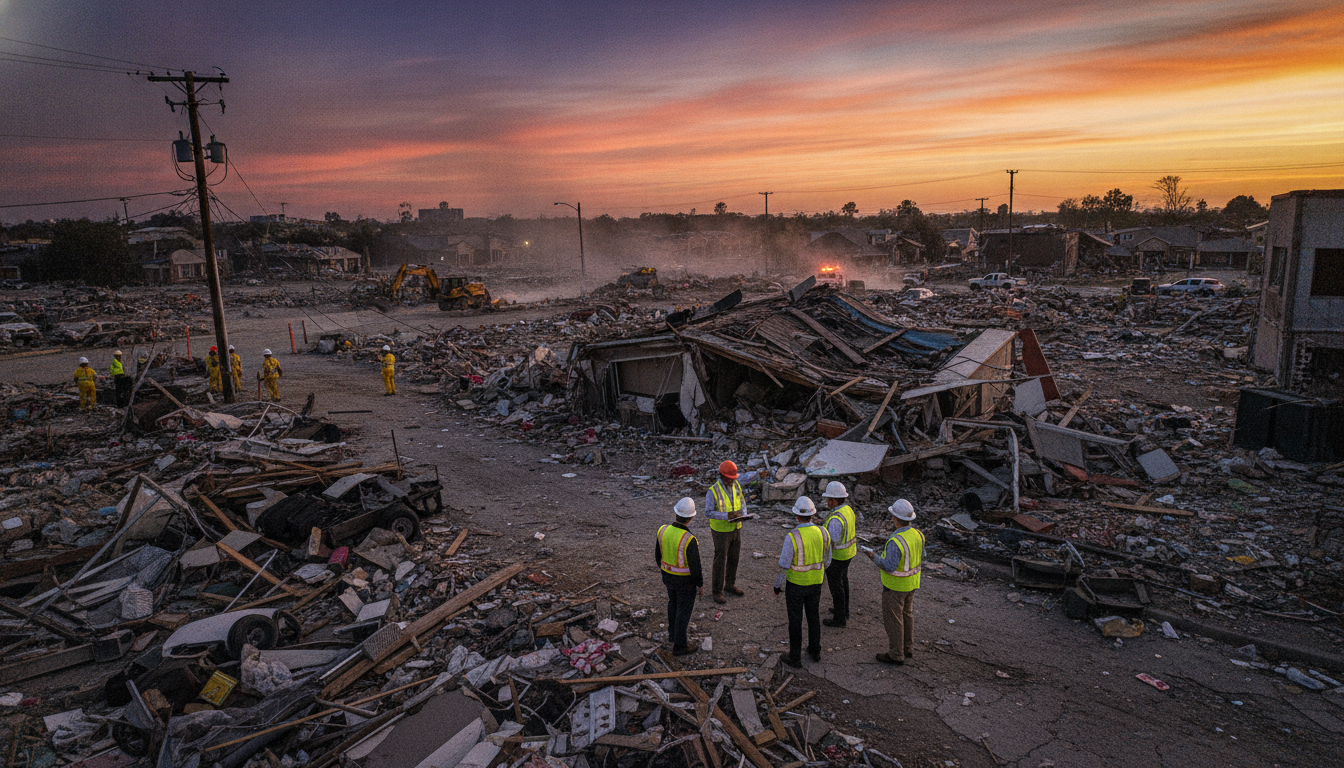
Local authorities are racing to sort out the scale of structural damage after a destructive event swept through multiple neighborhoods. The first wave of inspections began as crews cleared roads and checked utilities. Damage counts remain uncertain, and leaders urged patience while teams move block by block.
Emergency managers said they are still working to classify which structures were hit and how severely. The answer will shape recovery aid, school plans, and the timeline for business reopenings.
“Officials have yet to determine how many were homes, businesses or schools.”
Why These Counts Matter
Classifying damaged structures is not a simple box-checking exercise. The category of a building helps decide what resources come next. Homes may qualify residents for temporary housing and repair grants. Businesses might access loans and tax relief. School buildings face safety checks that can shift class schedules or push students to temporary sites.
Inspectors typically start with quick visual surveys to mark buildings as safe, restricted, or unsafe. Deeper evaluations follow as engineers assess foundations, walls, and utilities. These steps help prevent injuries during reentry and reduce secondary hazards like gas leaks or electrical fires.
- Housing counts guide shelter capacity and rental assistance.
- Business tallies inform small business aid and job recovery plans.
- School assessments determine class interruptions and student support.
Early Signs Point To A Long Cleanup
Public works crews reported downed lines, blocked roads, and scattered debris. Utilities said restoration will proceed in stages, starting with main lines that serve the most people. Road access is key for ambulances, supply trucks, and inspectors, so debris removal is a top priority while detailed building surveys wait for safe conditions.
Community groups have begun check-ins with seniors and families who need transportation, medicine, or food. Volunteers are coordinating with officials to avoid duplicate efforts and to track which areas have been reached.
How Damage Is Counted
Damage assessment often unfolds in phases. First, a rapid windshield survey maps the footprint of the incident. Next, trained teams tag each structure by visible harm. Finally, owners submit claims that can refine the totals. The numbers change as more reports arrive and as hidden issues come to light.
Officials warn that early figures can shift. Some buildings that look stable may reveal cracked beams or water damage inside. Others that seem severe might be repairable faster than expected. Insurance adjusters, city inspectors, and engineers each contribute different data points.



Schools Face Unique Hurdles
Education leaders typically need clear timelines to plan classes, meals, and transportation. Even minor damage can affect heating, air systems, or fire alarms. If one campus is closed, nearby schools may absorb students, which strains buses and staff. Temporary classrooms require permits, security checks, and support services like counseling.
Parents often ask when children can return. Officials say safety testing must come first. Air quality checks, structural reviews, and water testing all take time and trained workers.
Businesses And Workers Weigh Options
For local shops, the speed of reopening depends on power, inventory loss, and building access. Restaurant kitchens need clean water and working refrigeration. Retail stores need safe ceilings and lighting. Many owners face choices about cleanup costs versus waiting for claims to process.
Workers may be out of hours if stores stay closed. Job centers often step in to connect people with temporary work during cleanup. Short-term wage support can help bridge the gap until normal operations resume.
What Comes Next
Authorities plan daily updates as teams move through affected blocks. Residents are encouraged to document conditions with photos and keep receipts for emergency spending. Business owners are advised to secure records, contact insurers, and coordinate with city inspectors before reopening.
The path to recovery will hinge on clear counts and steady logistics. With complete data, leaders can direct housing funds, reopen schools safely, and help shops return. Until then, safety checks and patient reporting will guide the next steps.
As inspectors finish the first sweep, attention will turn to repairs and financial aid. The key markers to watch are the final tallies by category, the pace of utility restoration, and school reopening plans. Those indicators will show how quickly normal life can resume, and where help is needed most.