




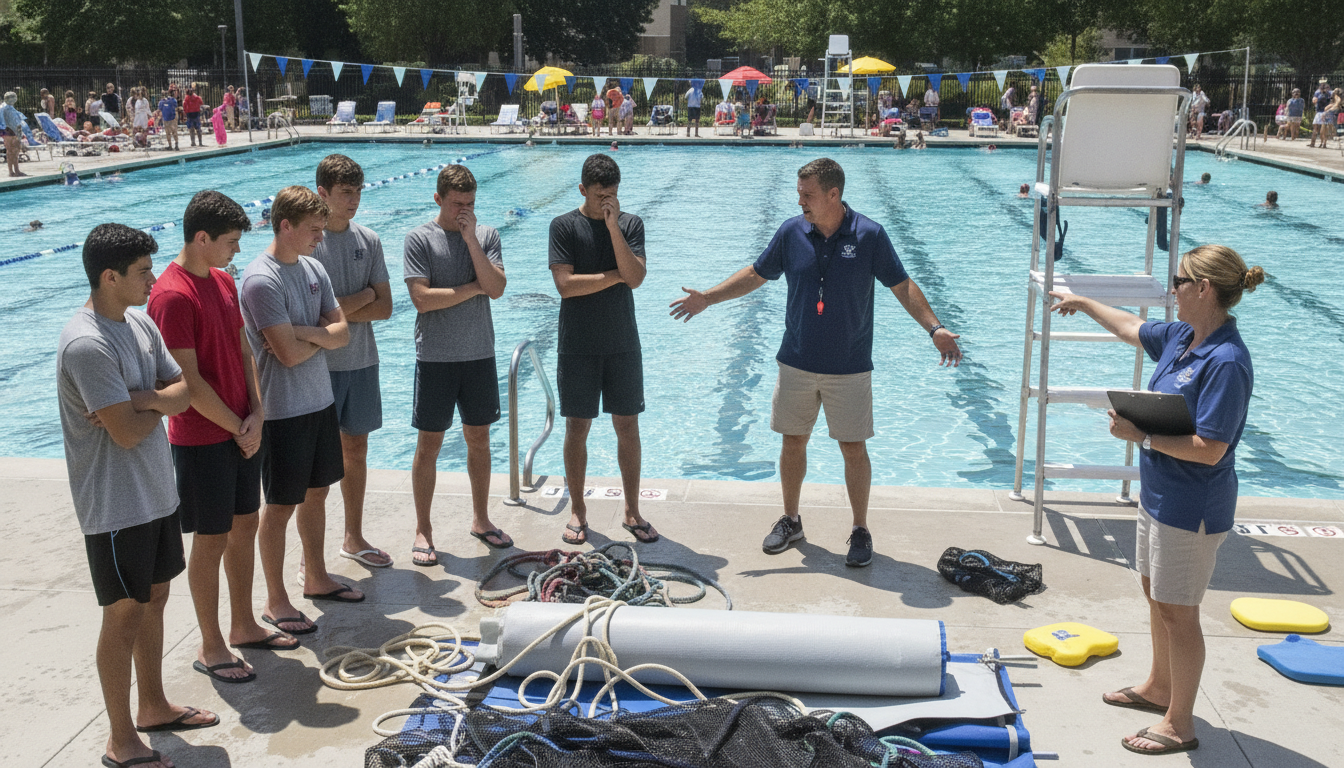
A terse complaint at a neighborhood pool has opened a broader debate about work, safety, and respect during the busy swim season. As public pools and club teams begin summer schedules, managers and coaches say they are struggling with uneven participation in setup, cleanup, and safety tasks, often assigned to teen boys on deck. The issue ties to staffing shortages, shifting teen work patterns, and rising expectations for safe operations.
“What to do when the boys at the pool aren’t pulling their weight.”
The question, voiced during a recent planning meeting, reflects a concern heard across aquatics programs. Organizers want smooth meets and safe facilities. They also want fair, transparent expectations for every worker and volunteer.
Why Pools Feel the Strain
Many cities and clubs report limited coverage for lifeguards, instructors, and deck support. Short staffing spreads duties thin. That can make routine jobs, like lane setup, trash pickup, or timing equipment checks, fall on a few dependable teens while others drift away from chores.
After pandemic closures, programs rebuilt slowly. Lifeguard certifications lapsed and hiring pipelines broke. Industry groups warned of shortages in recent summers. Some municipalities reduced hours or left sections closed. Even where hiring improved, managers say training time and safety drills still compete with daily demands.
Teen job patterns have also shifted. Competing schedules, test prep, and summer travel limit availability. Program leaders report higher turnover, which raises the need for clear orientation and daily checklists.
Gender, Culture, and Fairness on Deck
The complaint about boys not pulling their weight touches a sensitive point. Deck work is physical and visible. If a small group, often girls or a few conscientious boys, shoulders more of it, resentment builds. Coaches say the solution starts with equal expectations and written rotations, not informal habits that can slip into bias.
Youth sports researchers point to a simple pattern. Teens respond to structure and recognition. Vague requests get weak results. Specific assignments with time limits get better follow-through. Public praise and small privileges help reinforce the norm.
Parents and volunteers add complexity. Some programs lean on families for timing, concessions, or cleanup. That can work, but it also blurs who is responsible. Clear boundaries keep safety roles with trained staff and leave support tasks to supervised crews.



Safety First, Then Speed
Pool managers warn against cutting corners. Deck readiness is not only about appearance. Wet floors, loose cords, and clutter raise the risk of slips and electrical hazards. Timely lane rope setup and equipment checks keep meets on schedule and reduce stress that can lead to mistakes.
Supervisors recommend short pre-shift huddles. Five minutes to assign roles, repeat safety rules, and confirm who covers each zone sets a clear tone. A visible board or shared app can track completion. When everyone sees the list, there is less room for confusion.
What Programs Say Works
- Post written rotations, with names and times, for setup, sanitation, and teardown.
- Pair new hires with experienced teens for the first two weeks.
- Use short checklists for each role, signed when finished.
- Link privileges, like music control or early release, to task completion.
- Hold quick, private corrections, and public recognition for good shifts.
Some clubs also set minimum volunteer hours for team members, tracked through a simple form. Others add small stipends for the least popular tasks during peak heat or late nights. Where budgets allow, paid deck coordinators relieve pressure on lifeguards so they can focus on scanning and rescues.
Setting Expectations and Measuring Results
Experts advise treating deck work like any entry job. Train, test, and retrain. A short orientation with role-play for difficult moments, such as redirecting a peer, prepares teens to enforce standards. Simple performance data, like percentage of shifts with all tasks completed on time, gives managers a way to spot gaps and coach specific skills.
Programs that share results with staff each week report steadier coverage and fewer last-minute scrambles. When teens see progress, they are more likely to buy in. When numbers slip, leaders can adjust staffing, clarify duties, or schedule refreshers.
The original question still matters. Accountability should be even, not aimed at one group. Clear systems spread the load and lower tensions. With written roles, quick training, and visible feedback, the work gets done and safety improves.
As heat waves push demand for pool time, the next few weeks will test whether these approaches stick. Readers can watch for posted duty boards, regular pre-shift huddles, and steady deck coverage. If those show up, swimmers, parents, and staff should see cleaner decks, on-time meets, and calmer shifts. That is good for safety, morale, and a smooth summer.