




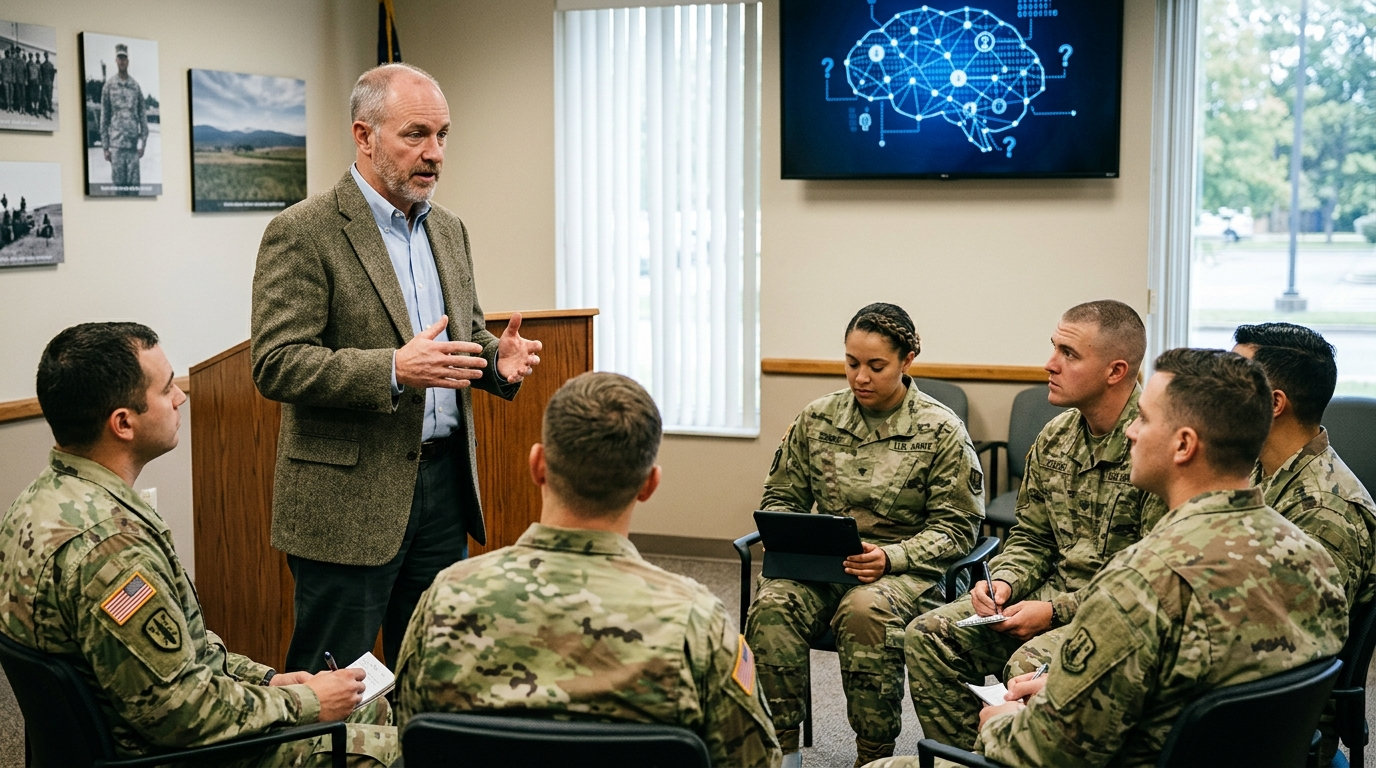
Military personnel should treat answers from large language models with caution, a GovAI research scholar has warned, as generative artificial intelligence enters more government workplaces.
The warning focuses on a basic risk: these systems can produce confident responses that are incomplete, inaccurate, or unsupported. For service members, an unchecked error could affect research, planning, training, or administrative work.
“It’s important for service members to understand the uncertainty inherent to LLMs,” the GovAI research scholar said.
The statement does not reject military use of AI. Instead, it calls for users to recognize how the technology works and where human review remains necessary.
Why Language Models Can Be Uncertain
Large language models, often called LLMs, generate text by predicting likely sequences of words. They can summarize documents, draft reports, and answer questions in conversational language.
However, a fluent response is not proof that its claims are correct. A model may misread context, omit key facts, or invent details. Its output may also change after a prompt is reworded.
That uncertainty can be easy to miss because the answer may sound polished. Users can mistake confident wording for verified knowledge, especially under time pressure.
Several factors can affect reliability:
- The quality and age of training material
- The wording and context of a user’s prompt
- Limits on access to current or classified information
- The availability of trusted sources for verification
Higher Stakes for Military Users
Errors carry added weight in defense settings. Service members work with sensitive information, strict chains of command, and decisions that may affect safety or national security.



An LLM could help prepare an early draft or organize public information. Yet it should not replace official records, approved procedures, or expert judgment.
Security creates another concern. Entering protected material into an unapproved AI service could expose data outside authorized systems. Even harmless-looking details may become sensitive when combined with other information.
For that reason, effective AI training must cover both factual uncertainty and safe handling rules. Personnel need clear guidance on which tools are approved, what data may be entered, and who must review the results.
Balancing Efficiency With Oversight
Generative AI may save time on routine writing and research. It can also help users compare ideas or turn complex material into simpler language.
Those benefits depend on careful oversight. A cautious approach would treat AI output as a starting point rather than a finished product. Claims should be checked against primary sources, current policy, and qualified experts.
Leaders also face a broader management challenge. If policies are too loose, personnel may rely on unreliable answers. If restrictions are too broad, agencies could lose useful gains in speed and access.
What Military Leaders Must Address
The GovAI scholar’s warning points to a need for practical AI literacy, not just technical instruction. Service members should know that uncertainty is built into the way these models generate responses.
Military organizations will need testing standards, approved-use policies, and reporting systems for errors. They should also define which decisions always require human authority.
The central lesson is direct: useful language does not always equal reliable information. As defense agencies consider wider AI use, verification, security, and accountability will determine whether these tools reduce workloads without adding unacceptable risk.