



Robot training systems are gaining sophistication as researchers seek machines that can operate safely and reliably in physical settings. The progress matters because real environments are less predictable than controlled laboratories, where objects, lighting, people, and conditions can be tightly managed.
The central challenge is teaching robots to respond when events do not follow a prepared script. A useful machine must detect its surroundings, choose an action, carry it out, and adjust when the result differs from expectations.
“Training systems that allow robots to negotiate the real world are getting more sophisticated.”
That assessment signals steady progress, but it does not establish that robots can manage every setting. Sophisticated training may improve performance while leaving difficult questions about safety, cost, and human oversight unresolved.
Why Physical Settings Are Difficult
Software can process information inside a controlled computing environment. Robots face added demands because their decisions cause movement in shared spaces.
A robot may encounter an object it has never seen, a slippery surface, or a person who moves without warning. Small errors in perception can produce larger errors in motion. Training must therefore prepare machines for variation, uncertainty, and incomplete information.
Key abilities include:
- Recognizing objects and estimating their position.
- Planning movement around people and obstacles.
- Adjusting force while handling fragile or irregular items.
- Recovering safely after a failed action.
These skills are linked. A machine that identifies an object correctly may still fail if it grips too hard or follows an unsafe path.
Training Moves Past Fixed Instructions
Traditional industrial robots often repeat defined movements in restricted work areas. That approach can provide speed and accuracy when tasks remain stable.



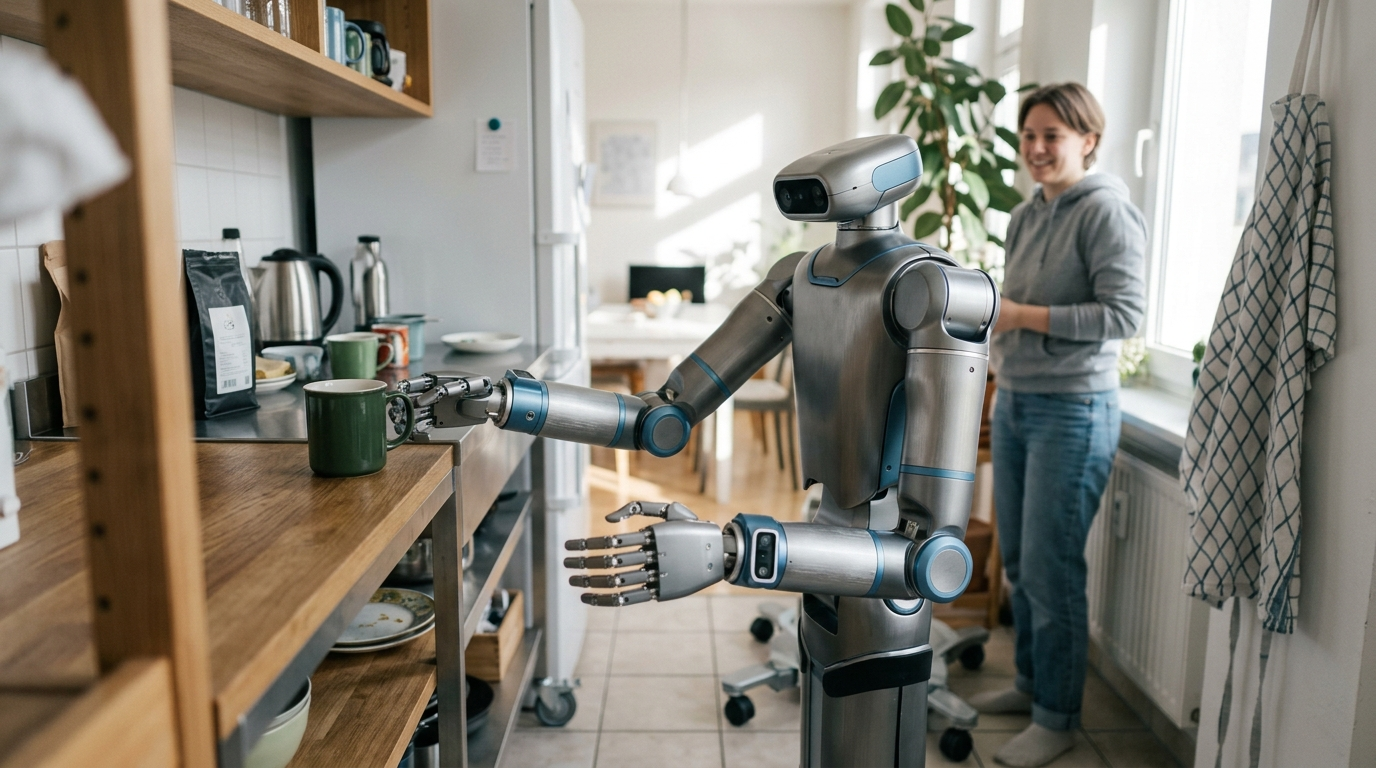
Real-world use requires greater flexibility. Modern training methods can expose robots to many situations before deployment. Some systems practice in simulated environments, while others learn from demonstrations or feedback during repeated attempts.
Simulation can reduce the expense and danger of early testing. Yet a simulated room cannot reproduce every property of a physical one. Differences in friction, weight, lighting, and sensor noise can weaken performance after deployment.
For that reason, progress should be judged through tests outside the training setting. Researchers and operators need to examine how often a robot succeeds, how it fails, and whether it stops safely when uncertain.
Safety and Accountability Remain Central
More capable training could support robots in factories, warehouses, homes, hospitals, and public facilities. The benefits may include handling repetitive work and assisting people with physically demanding tasks.
Those uses also carry risks. A system trained on limited examples may respond poorly to unfamiliar people, objects, or spaces. Human supervision remains important, especially where mistakes could cause injury or damage.
Organizations considering deployment must also decide who is responsible for monitoring performance. Clear operating limits, incident reporting, maintenance, and emergency controls are as important as training accuracy.
What Progress Should Look Like
The next stage will depend less on impressive demonstrations and more on consistent results. Success means a robot can complete useful work across varied conditions without creating unacceptable risk.
Better training systems are an important step in that direction. Still, sophistication alone is not proof of readiness. The clearest measures will be safe behavior, reliable recovery from errors, and transparent testing under realistic conditions.
As robots move into less controlled spaces, scrutiny will rise with their capabilities. Researchers, employers, regulators, and users will need evidence that machines can adapt without placing speed or convenience ahead of safety.