




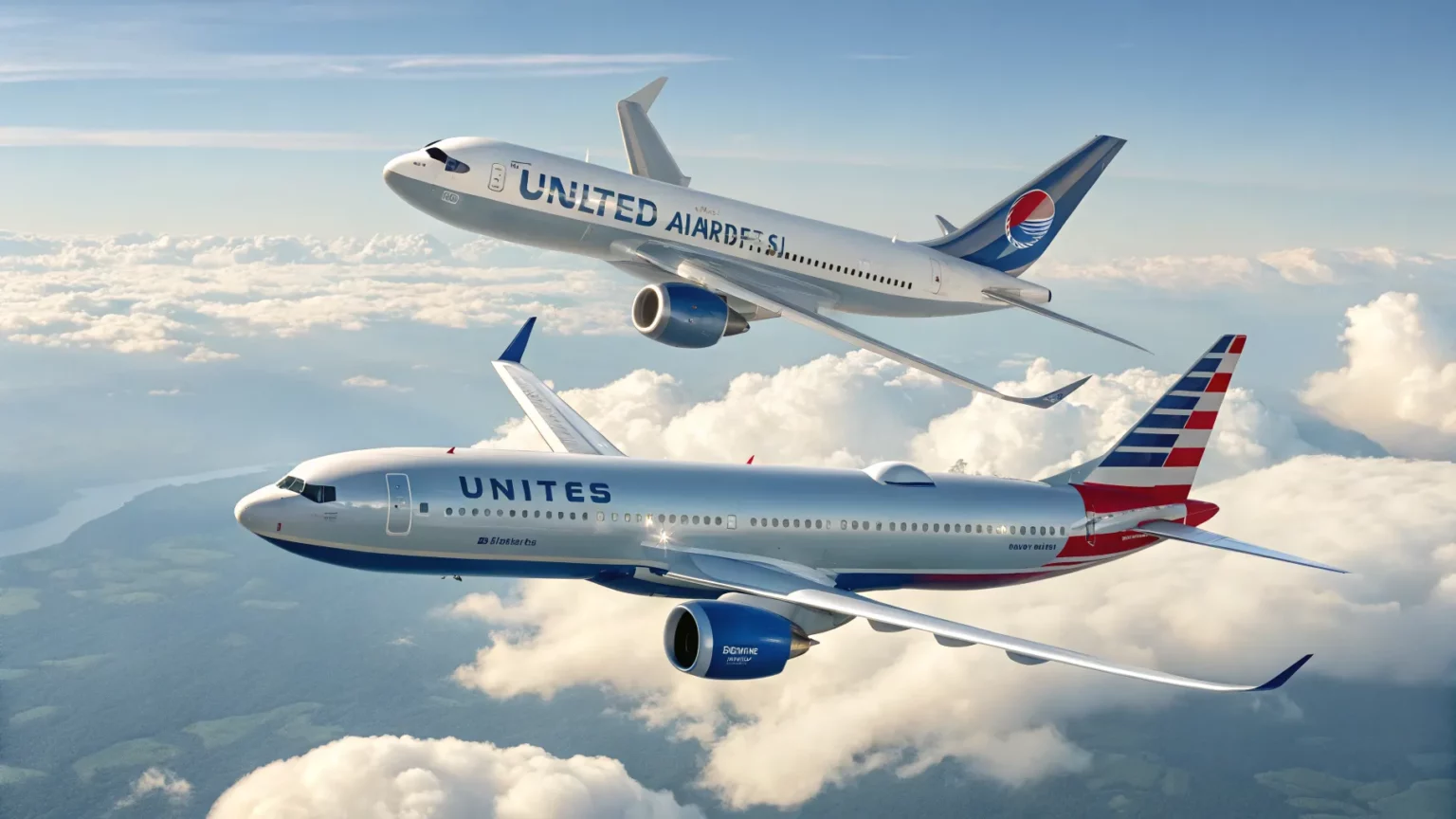
United Airlines CEO Scott Kirby has discussed a potential combination with American Airlines, according to people familiar with the talks, signaling a bold move that could redraw U.S. aviation. The conversations, described as early and exploratory, would face tough antitrust review even under a business-friendly Trump administration, the people said. The idea raises immediate questions about market power, fares, labor, and service at the nation’s two largest legacy carriers.
“United Airlines Holdings Inc. Chief Executive Officer Scott Kirby has floated a possible combination with American Airlines Group Inc., according to people familiar with the conversations, an audacious proposition that would face intense scrutiny even under the business-friendly Trump administration.”
The companies did not announce a deal. No formal proposal is known to be on the table. But even the notion of a tie-up between United and American is rare in its scale and would be one of the largest U.S. corporate combinations ever contemplated.
Why This Matters Now
U.S. airlines have spent more than a decade consolidating. United merged with Continental in 2010. American combined with US Airways in 2013 after a court challenge ended in a settlement. Delta and Northwest joined in 2008. The result is a domestic market dominated by a few large carriers with wide networks, major hubs, and frequent flyer ecosystems.
Regulators in recent years have tightened their stance. The Department of Justice sued to break up the Northeast Alliance between American and JetBlue in 2021, and a federal judge later ordered that partnership dismantled. A separate effort by JetBlue to buy Spirit was also challenged. These cases suggest that a bid to link United and American would face a high bar.
What a Deal Could Change
A United–American combination would bring together two vast global networks, overlapping hubs, and large corporate travel books. That could reshape route maps, loyalty programs, and airport operations across the country.
- Fares: Fewer large competitors on trunk routes could put upward pressure on prices, especially where low-cost carriers are weak.
- Service: Overlapping routes might see reductions, but smaller cities could gain or lose connectivity depending on hub strategies.
- Labor: Pilot, flight attendant, and ground worker seniority lists and contracts would be complex to combine.
- Alliance Strategy: United belongs to Star Alliance and American to Oneworld. Aligning partnerships would be a major hurdle.
Corporate travel buyers would face changes in bargaining dynamics. A combined carrier could wield greater leverage in contract talks, though regulatory conditions might require slot divestitures or other remedies in congested airports.
The Regulatory Gauntlet
Any merger plan would be reviewed by the Justice Department and the Department of Transportation, with close attention to market concentration on specific city pairs and at slot-controlled airports. Even under leadership viewed as pro-business, agencies are likely to demand detailed evidence that consumers will not be harmed.
Courts would examine whether claimed efficiencies—like smoother operations, better aircraft utilization, or improved reliability—offset risks to competition. Prior airline mergers sometimes won approval after asset sales or other concessions. But the sheer size of United and American could limit the effectiveness of such remedies.



What Kirby’s Interest Signals
Scott Kirby is known for aggressive operational and network strategies. His interest suggests that legacy carriers see pressure from several fronts: higher labor costs, aircraft delivery delays, air traffic control constraints, and volatile fuel prices. A larger network could promise scale benefits and more pricing power on key routes.
Still, investors would weigh integration risk against potential gains. United and American each face fleet renewal needs and technology upgrades. Blending two large loyalty programs and reservation systems would be a multi-year effort prone to disruption if mishandled.
Industry Reaction and Consumer Impact
Low-cost and ultra-low-cost carriers would likely oppose the deal, arguing it would reduce competition in major markets. Airport authorities and local officials could split, with some seeking hub growth and others fearing service cuts. Consumer advocates would warn about fare increases and reduced choice.
Unions would demand job protections, pay parity, and clear integration timelines. They hold significant influence in aviation, and their support or opposition could shape both public opinion and political scrutiny.
What to Watch Next
Formal talks, if they occur, would be confidential until a definitive agreement is reached. Early signals could include:
- Leaks about potential asset sales to address overlaps at key hubs.
- Briefings to lawmakers from aviation-heavy states.
- Union statements on merger principles and protections.
- Shifts in alliance partnerships or code-sharing strategies.
The idea of pairing the nation’s two legacy giants tests the limits of airline consolidation. Even signaling interest pushes a debate over competition, service quality, and the balance between scale and choice. If discussions advance, the next phase will hinge on whether regulators see any path that protects consumers and preserves meaningful competition across U.S. skies.
For now, the trial balloon highlights a core tension in aviation: how to deliver stable operations and investment while keeping fares fair and routes diverse. The outcome could shape air travel for a generation.