




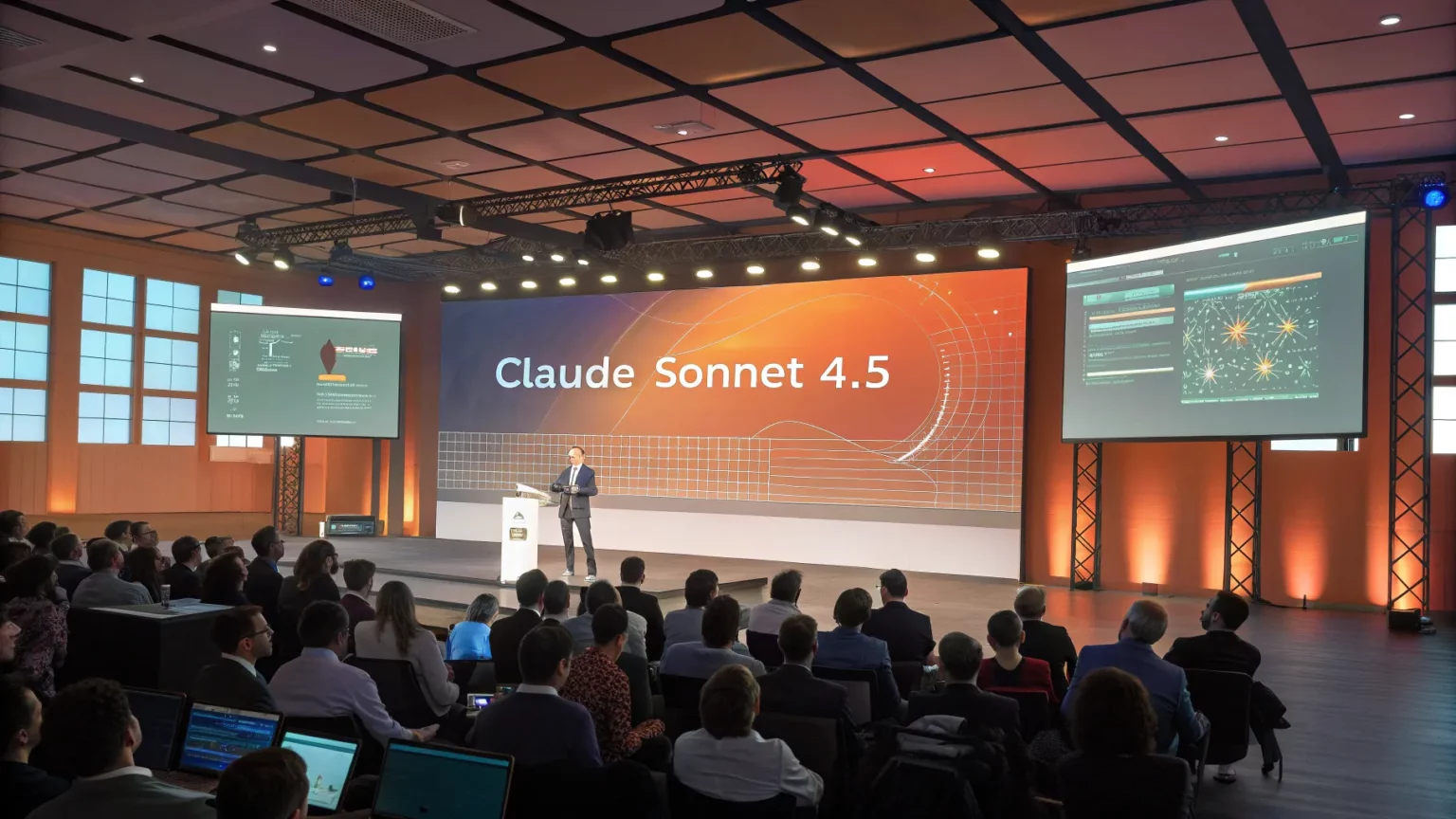
Anthropic said it is releasing Claude Sonnet 4.5, a new AI model slated to power Claude Code, the company’s coding assistant popular with so-called “vibe coders.” The move positions the San Francisco startup for a fresh round of competition in developer tools as companies race to build faster, more reliable coding help inside chat and editor workflows.
What Anthropic Says Is Coming
“Anthropic announces Claude Sonnet 4.5, an AI model that will power Claude Code, popular with vibe coders.”
The company framed the update as a direct boost to coding tasks inside Claude Code. While full technical details were not provided, the announcement signals a focus on day-to-day developer use, from quick prototypes to longer refactors.
- Quicker turnaround on code suggestions and edits
- Better reasoning on multi-file projects
- Tighter integration with chat-style prompts
Anthropic’s Claude line has emphasized safer outputs and helpful reasoning. Sonnet has typically served as the balanced option between its lighter and larger models. A 4.5 release suggests an incremental step aimed at speed and reliability rather than a wholesale shift.
Background: Claude’s Path Into Coding
Claude models gained traction by handling long prompts, careful instructions, and detailed revisions. As coding assistants became a major use case, Anthropic introduced a focused experience for software work under the Claude Code banner. That product reflects a broader trend in which chat models move from general conversation into specific workflows like editing, unit testing, and documentation.
The term “vibe coders” has spread online to describe users who rely on AI to sketch ideas, scaffold projects, or try new languages without deep setup. Claude Code’s chat-first style appears to match that behavior, inviting quick iterations and fewer context switches.
How It Fits Into a Crowded Market
Large platforms and startups are vying for the same audience. OpenAI has pushed deeper into agent-like coding help within ChatGPT and editor plugins. GitHub’s Copilot remains entrenched inside IDEs. Google promotes Gemini models for code understanding and generation. Open-source models like Code Llama have widened access for teams that prefer running tools locally.
Anthropic’s pitch, historically, has centered on careful reasoning and guardrails. If Sonnet 4.5 can deliver faster suggestions with fewer glitches, it could win over developers who want reliable drafts and edits without heavy configuration.
What Developers Will Watch
Even small gains matter in coding assistants. Users often judge tools on latency, accuracy, and how well they handle unfamiliar codebases. A model that reads project structure and keeps context across longer sessions can reduce time spent rewriting prompts or stitching files together.



Teams will also watch how Claude Code handles privacy. Many companies want coding help without sending sensitive code outside strict boundaries. Clear data-handling policies, audit options, and workspace controls can shape adoption as much as model quality.
Industry Impact and Open Questions
The release highlights a simple reality: most developers now expect AI help for repetitive work. That includes writing boilerplate, converting snippets, and drafting tests. Stronger reasoning can push these tools closer to full-feature tasks, like planning refactors or finding subtle bugs.
Key questions remain:
- How does Sonnet 4.5 perform on larger repositories and mixed-language projects?
- Will code suggestions trace sources or provide confidence signals?
- How will pricing and rate limits compare to rivals for teams at scale?
Benchmarks and hands-on trials will likely decide whether this is a modest refresh or a noticeable shift in day-to-day coding flow. Early adopters will look for fewer hallucinated imports, cleaner diffs, and better adherence to project style guides.
What Comes Next
As vendors iterate, the tools are moving from simple autocompletion to session-aware partners that remember user intent and project history. If Anthropic continues to refine Claude Code with Sonnet 4.5 at its core, the product could deepen its foothold among solo builders, startups, and larger teams that want a chat-first approach.
For now, the headline is clear: Anthropic is betting that faster, steadier coding help will win favor with both casual “vibe” builders and professional engineers. The next few weeks of developer feedback, benchmarks, and real-world tests will show whether Sonnet 4.5 meets that bar and how it reshapes the competition in AI-powered coding.