




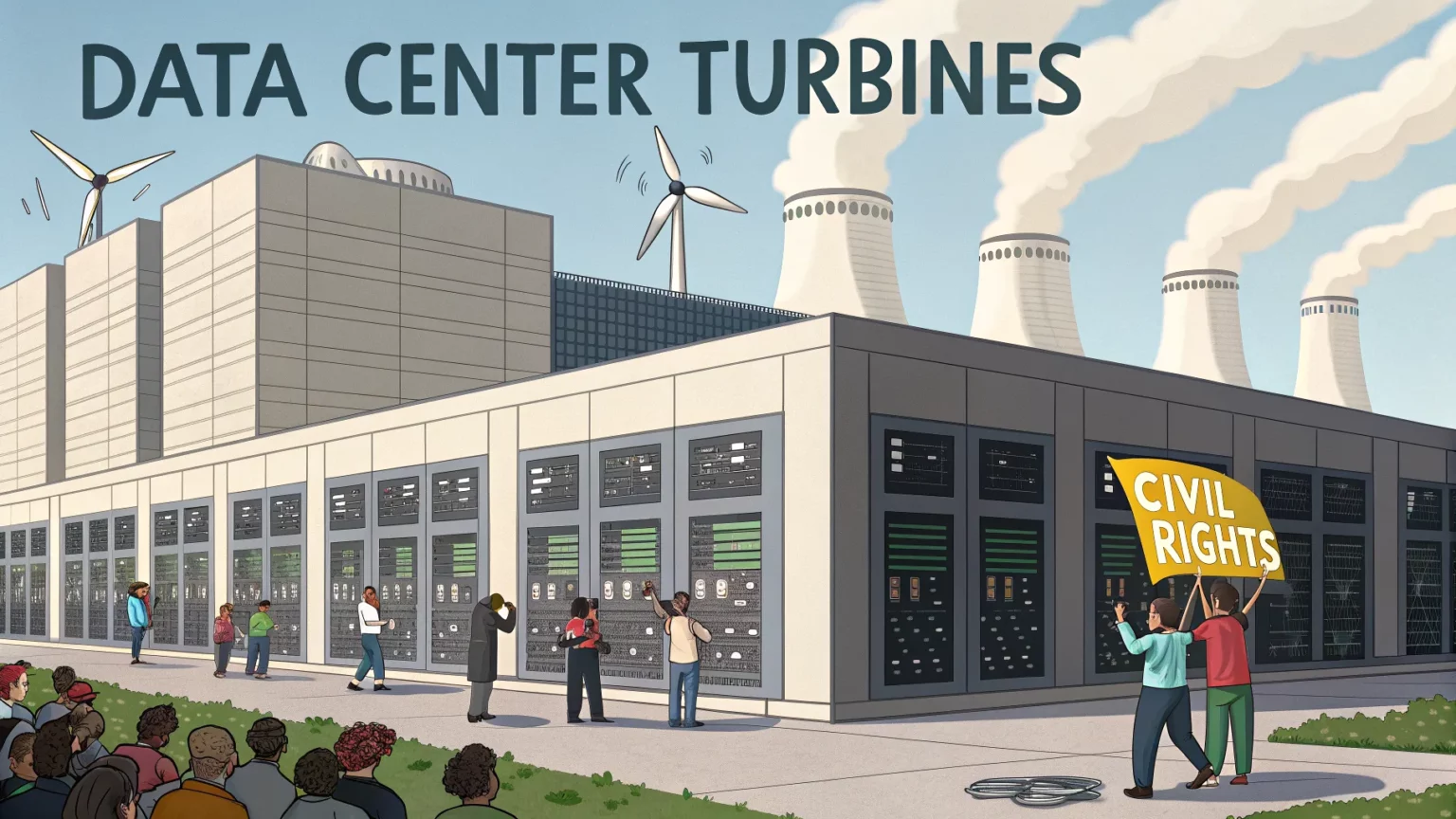
The nation’s largest civil rights organization filed suit Tuesday against xAI and a subsidiary, alleging they ran more than two dozen gas turbines in Mississippi to power the Colossus 2 data center without proper authorization. The complaint says the operation threatens nearby communities by adding harmful air pollution. The case could test how fast-growing data centers balance energy needs, local health, and environmental rules.
The Allegations
The lawsuit centers on a cluster of turbines said to support a high-demand computing site. The filing claims the units were operated without the full range of permits required under state and federal law. It also raises concerns about nitrogen oxides, fine particles, and other pollutants linked to gas-fired generation.
They “illegally operated more than two dozen gas turbines in Mississippi to power its Colossus 2 data center, posing a health risk to local residents.”
The civil rights group argues these emissions could increase asthma attacks, respiratory illness, and cardiovascular risks in communities near the facility. It seeks court oversight and penalties, and it may push for limits or shutdowns until permits and controls are verified.
Why Data Centers Turn to Gas
Modern data centers use huge amounts of electricity. Operators often look for locations with low costs, available land, and access to power. When grid capacity is tight, on-site or nearby gas turbines can bolster supply and reduce outages. But onsite generation can trigger strict air rules, including New Source Review and Title V permits under the Clean Air Act, as well as state-level standards in Mississippi.
Experts say compliance comes down to three points: the size and number of turbines, fuel type and controls, and the hours of operation. Each factor affects emissions and whether higher-level permits are required before flipping the switch.
- Large turbine fleets can qualify as a major source, triggering tighter oversight.
- Gas-fired units emit nitrogen oxides and carbon monoxide, and can produce fine particles.
- Continuous or peak-time operation raises cumulative exposure concerns for neighbors.
Community Health and Equity Questions
Public health advocates in the South point to longstanding disparities in exposure to industrial pollution. Many small towns sit near power plants, highways, and factories. Adding new sources, even efficient ones, can worsen local air quality. Residents with asthma or heart disease may be most at risk.
The filing frames the case as an environmental justice issue. It argues that low-income and minority neighborhoods already face higher exposure and should not bear additional burdens from private data infrastructure. Supporters of the suit say strong monitoring and transparent reporting are needed, along with clear emergency and maintenance plans for the turbines.
Economic Hopes Meet Regulatory Hurdles
Mississippi and other states have courted data centers for jobs, tax base growth, and construction spending. Local leaders often highlight short-term construction jobs and long-term technical roles. But these gains can run headlong into permitting rules when companies add on-site power.


Legal analysts say courts will weigh the permitting record, emissions data, and whether the companies sought approvals ahead of time. If the plaintiffs show unpermitted operation, penalties and operational limits are possible. If permits are in place, the case may hinge on alleged violations of permit conditions.
What Comes Next
The court will likely set a schedule for responses and early motions in the coming weeks. Regulators could also review monitoring records, stack tests, and any best-available control technologies on the turbines. A key question is whether the site must reduce operations while the case proceeds.
For the broader tech sector, the case highlights the strain between grid limits and round-the-clock computing demand. Companies building large-scale AI and cloud facilities face mounting pressure to source cleaner power, add storage, and site facilities near transmission upgrades. Communities are asking for clearer health safeguards before projects move ahead.
The outcome will shape how fast-growing data infrastructure can expand in regions with tighter air standards. It may also set expectations for public disclosure, air monitoring near facilities, and the role of on-site generation. Readers should watch for any court orders on turbine operations, new permit filings, and moves to add cleaner power sources to support the data center.