




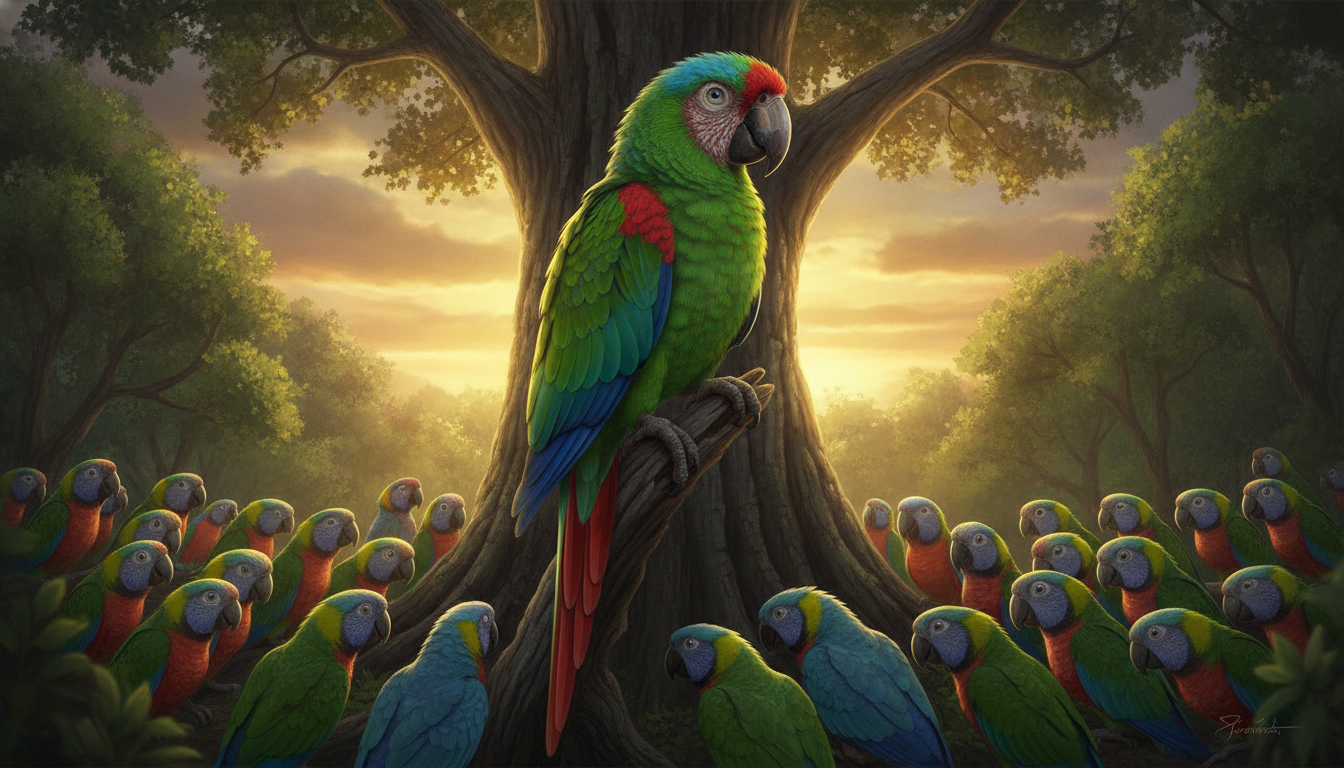
Bruce, a parrot living with a severe beak injury, has climbed to the top of his flock. Videos and field notes show he adapted his fighting style and won dominance. The case shines a light on animal resilience and social strategy, and it challenges common views on disability in wildlife.
Observers who have tracked the flock report a steady shift in status over several months. The shift followed a series of confrontations in which Bruce prevailed. The footage suggests a pattern of planned moves, fast footwork, and targeted pecks with what remains of his beak. His rise appears to be stable, with other parrots yielding space and food.
How a Half Beak Changes the Fight
Parrots rely on their beaks for feeding, climbing, grooming, and defense. An injury to the beak can threaten survival. Many injured birds lose rank. They struggle to compete for food and space, and they often avoid conflict.
Bruce took a different path. The videos capture him bracing with his feet and using short, quick jabs. He also leans into shoulder bumps that unbalance rivals. He keeps his head protected and aims for soft targets like the neck and wing coverts. The technique looks learned, not random.
With half a beak, Bruce has developed a unique fighting style that has won him top parrot status in his flock, videos and documented interactions reveal.
Handlers familiar with injured parrots say that adaptation can be fast when the reward is high. In a social species, rank brings access to food, mates, and safer perches. Those incentives may drive new behavior patterns even when tools, like a full beak, are limited.
Signals of Dominance Inside the Flock
Dominance in parrots is not only about winning fights. It shows up in daily routines. Bruce often eats first. He selects favored roosts. Others make room when he approaches. These are common markers of rank in group-living birds.
- Priority access to food bowls and feeders.
- Control of perches with the best light or safety.
- Reduced challenges from subordinates during peak feeding times.
The social order matters because it affects health. High rank can lower stress from constant conflict. It can also bring higher-calorie meals. Over time, both factors can improve body condition. That may further reinforce status.
Why This Case Stands Out
Experts often document tool use and problem solving in parrots. Cases include seed cracking, nut handling, and even basic tool shaping. Less is known about how parrots change combat tactics after injury. The footage of Bruce fills a gap. It shows improvisation under pressure, and it shows learning across repeated encounters.



Similar patterns have been noted in other animals. Some one-eyed raptors hunt from lower perches. Three-legged dogs change stride patterns to protect joints. These changes do not always restore full ability. But they can restore enough function to compete.
Here, the payoffs are social. Bruce’s behavior suggests that defensive control and posture can beat raw force. He wins without long fights. That saves energy and reduces the risk of new wounds.
What Observers Are Watching Next
The next phase is stability. Will Bruce hold the top spot during breeding season or during food shortages. Those periods raise tension in many flocks. They also bring new challengers.
Another question is whether others copy him. Social learning is strong in parrots. If subordinates mimic his stance and footwork, the flock could see shorter disputes and fewer injuries. That would suggest a cultural shift inside the group, not just a single case.
Health will be tracked too. A damaged beak can make some foods hard to process. If Bruce maintains weight and feather condition, that points to successful feeding workarounds. Handlers may adjust diet textures or feeding schedules to limit strain.
What It Means For Care And Conservation
For rehabilitators, the case supports a simple idea. Allow time and space for problem solving. Birds may find new ways to climb, feed, or defend. Not every injury rules out a good quality of life.
For field researchers, the lesson is to watch social context. Injury does not always equal lower rank. Recording behavior before and after key events can catch hidden strategies. Video evidence is crucial for pattern tracking.
For the public, it is a reminder that disability is not destiny. Animals can learn and thrive under limits. The videos offer a clear and accessible example of that truth.
As the season advances, observers will watch Bruce’s rank, daily routines, and health markers. The case could inform care guidelines for injured parrots and shape future studies of social learning after trauma. If the patterns hold, expect more attention on how animals adapt not just to survive, but to lead.