




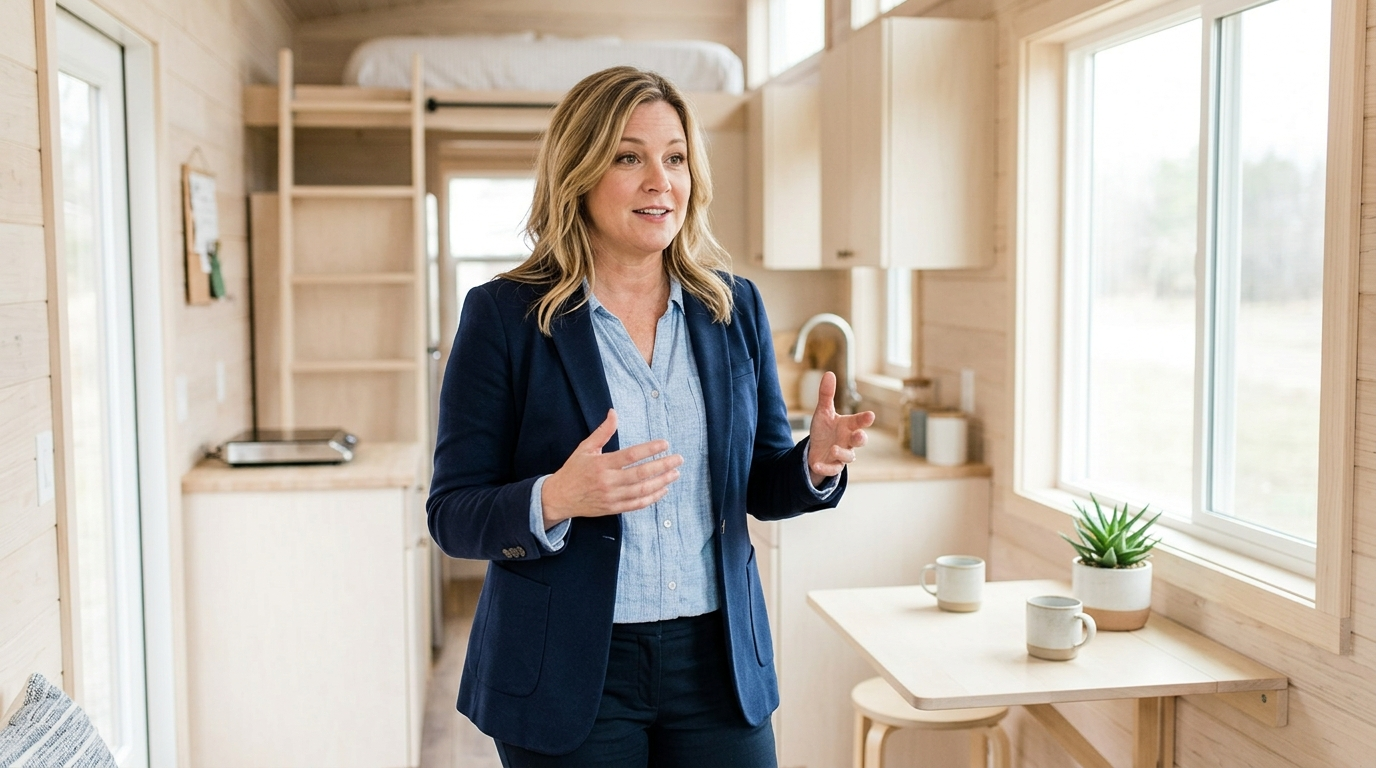
Before committing to a tiny home, HGTV host Margo Fairchild says buyers should first decide whether limited space truly suits their daily lives. Her advice puts personal habits ahead of design trends, cost estimates, or the appeal of a smaller property.
The warning applies to anyone considering a compact home, whether as a primary residence, vacation property, or downsizing option. A tiny home can offer simplicity, but reduced space also places firm limits on storage, privacy, work, and entertaining.
Lifestyle Comes Before Construction
Fairchild identifies lifestyle fit as one of the most important early questions in the building process. That assessment should happen before plans are finalized or construction begins.
“One of the biggest things to consider is if a small space will truly fit your lifestyle,” Fairchild said.
The word truly carries weight in that advice. A compact home may appear practical during a short visit. Living there every day can produce a different experience.
Residents must often use one area for several purposes. A dining table may also serve as a desk. Stairs can include storage, while sleeping areas may have limited headroom. These choices can work well, but only if they match the resident’s routines.
Questions Prospective Owners Should Ask
A lifestyle review can help buyers identify problems before they spend money. Key questions include:
- How much storage does the household need?
- Will anyone regularly work from home?
- How often will guests visit or stay overnight?
- Can residents manage narrow stairs or loft beds?
- Will the space remain suitable if family needs change?
Privacy deserves special attention for couples and families. In a small interior, sound travels easily and separate rooms may be scarce. Different schedules can also create tension if one resident needs quiet while another cooks, works, or watches television.
Pets, hobbies, and household equipment add further demands. Outdoor gear, musical instruments, large wardrobes, and craft supplies can consume valuable room. Owners may need to reduce their belongings or pay for storage elsewhere.



Small Homes Bring Trade-Offs
Tiny-home living is often linked with lower material use, easier cleaning, and fewer possessions. Yet those possible benefits do not remove the need for careful planning.
A smaller structure does not guarantee that every household expense will fall. Custom furniture and space-saving fixtures may add costs. Buyers must also consider where the home will sit and whether local rules allow it.
For some residents, the trade-offs may be worthwhile. People who spend much of their time outdoors, travel often, or prefer few possessions may adapt well. Others may find that a somewhat larger home provides needed flexibility without giving up the goal of simpler living.
Planning for Future Needs
Fairchild’s guidance also points to a longer-term issue. A home that works for one person now may become difficult after a job change, a new relationship, a child, an injury, or aging.
Prospective owners can reduce that risk by testing compact living before building. They might rent a small property, measure their current essential belongings, or map daily activities onto a proposed floor plan.
The central lesson is practical: design should follow real behavior, not an idealized image of minimal living. Before construction starts, buyers should examine how they work, rest, cook, store possessions, and share space. That early review may determine whether a tiny home becomes a useful long-term residence or an expensive mismatch.