



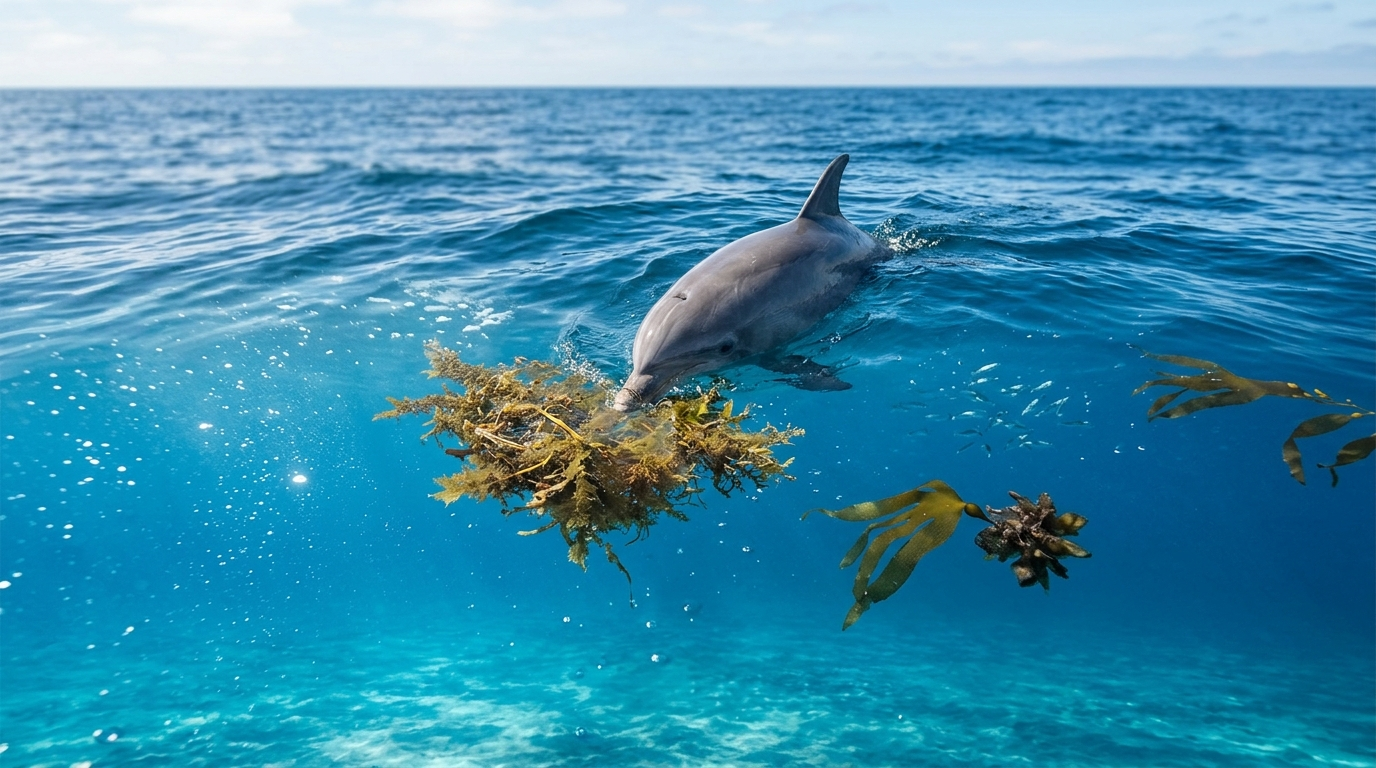
A striking claim about a dolphin using a “gross solution” to avoid catching its own meal has surfaced without the facts needed to assess it.
The brief account does not identify the dolphin, its species, the feeding method, or where and when the behavior occurred. It also provides no scientist, witness, video, or published study to support the claim.
The description presents the animal as lacking the energy to hunt. Yet it offers no evidence that tiredness caused the reported behavior. That leaves the central event unclear and prevents a reliable explanation of why it happened.
A Teaser Without the Underlying Event
“Don’t have the energy to catch your own meal? This dolphin has a gross solution.”
The wording raises interest but does not reveal the supposed solution. The term gross is also a value judgment, rather than a scientific description.
Several basic questions remain unanswered:
- What did the dolphin eat, and how did it obtain the food?
- Was the behavior observed in the wild or under human care?
- Did researchers document it more than once?
- Could illness, injury, age, or food availability explain the conduct?
Those details matter because dolphins use varied feeding tactics. Behavior can differ by species, habitat, social group, and access to prey. A single observation may reflect opportunity rather than a regular survival strategy.
Human Motives May Not Explain Animal Behavior
The claim gives the dolphin a familiar human motive: lacking enough energy to secure a meal. That interpretation may be correct, but it cannot be confirmed from the available information.
Animals often choose options that reduce effort or risk. Such choices can reflect efficient feeding rather than laziness or fatigue. Researchers usually compare repeated observations before linking behavior to a specific cause.



A proper assessment would examine the dolphin’s health, nearby food sources, and interactions with other animals. Scientists would also need to rule out human influence, including feeding by visitors, fishers, or animal-care staff.
What Evidence Would Confirm the Claim
Credible reporting should identify the original observer and provide an exact account of what occurred. Clear footage could document the action, while expert analysis could place it within known dolphin behavior.
A scientific paper would offer stronger support if researchers recorded the conduct through a defined method. Repeated cases involving several dolphins would help show whether the tactic is learned, shared, or unusual.
Location is equally important. Wild dolphins face different pressures from animals living in managed facilities. Feeding opportunities also vary across coastal waters, rivers, and open seas.
For now, the claim works as a provocative teaser, not a verified report. Its key assertion remains impossible to evaluate because the alleged feeding tactic is never described.
Readers should watch for source material that names the species, location, observers, and evidence. Until those facts emerge, conclusions about the dolphin’s diet, energy, or intent would be speculation.