



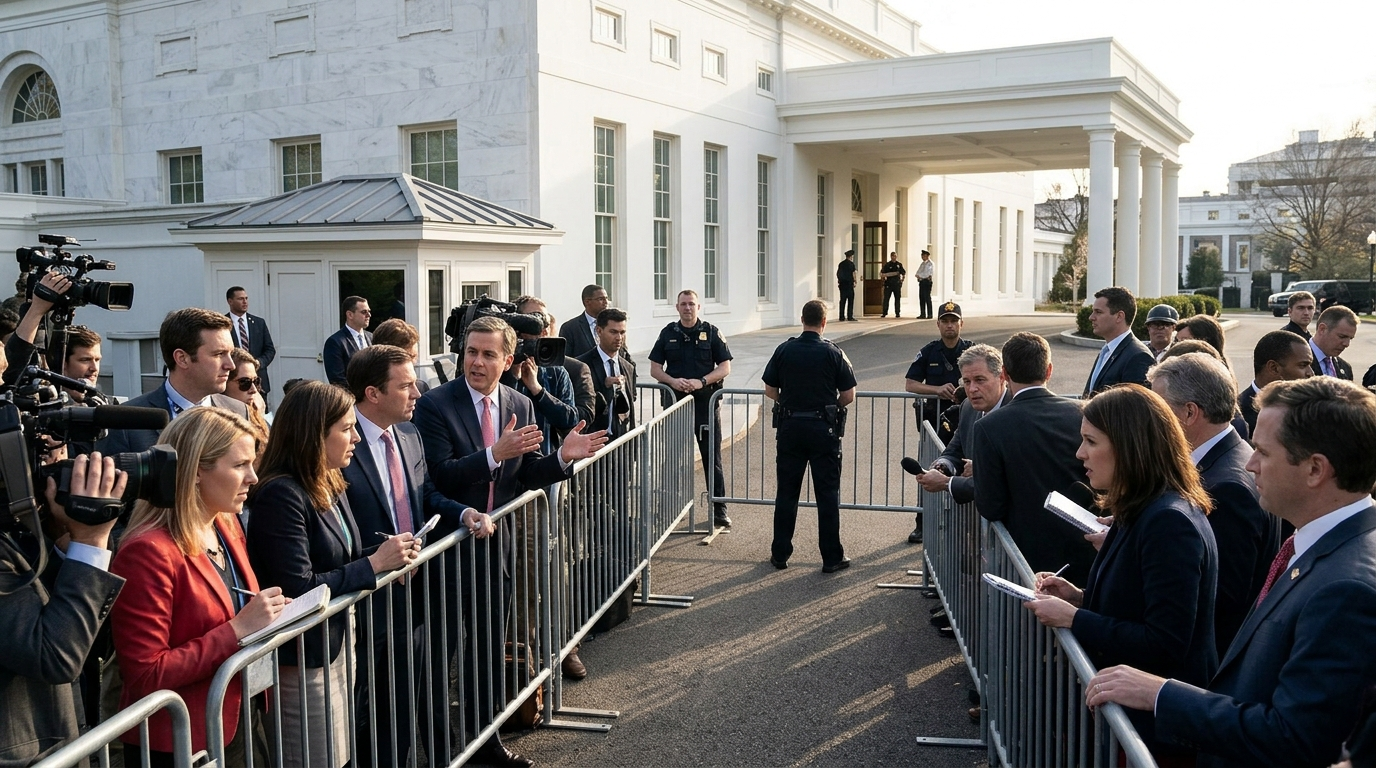
President Donald Trump said Friday that he was “banning” CNN, MS NOW and Politico from the White House, escalating his conflict with major news organizations.
There was no immediate sign that the administration had carried out the threat. The White House had not announced specific access restrictions, leaving the scope and timing of Trump’s statement unclear.
The distinction matters because White House access includes several forms of reporting. Journalists may hold credentials, attend briefings or join smaller groups covering the president’s daily activities.
Claim Lacks Immediate Policy Details
Trump presented the decision as settled, but offered no public details about how a ban would work.
Trump said he was “banning” CNN, MS NOW and Politico “from the White House.”
No immediate action was identified to support that claim. It was also unclear whether Trump meant a full loss of credentials or exclusion from selected events.
Those differences can shape the practical effect on each organization. A reporter barred from a limited event may still retain access to briefings and White House grounds.
A broader credential ban would have greater consequences. It could restrict direct questioning of officials and limit first-hand reporting about presidential decisions.
Access Disputes Carry Legal Questions
Presidents have wide control over meetings, interviews and invitation-only events. Yet permanent press access can involve constitutional protections and formal procedures.



Federal courts have previously found that the government cannot withdraw an established White House press credential without fair procedures. Any action based on a news organization’s coverage could also invite a First Amendment challenge.
Key questions raised by Trump’s statement include:
- Whether existing credentials would be revoked
- Whether individual reporters or entire organizations would be affected
- What standards the White House would use
- Whether affected outlets would receive notice or an appeal process
The answers would help determine whether the declaration was political criticism, an operational order or the start of a formal access dispute.
A Continued Clash With the Press
Trump has repeatedly attacked national news organizations and accused them of unfair coverage. CNN and Politico have often reported critically on his policies, conduct and administration.
Such criticism is protected political speech. The legal issue changes, however, if government authority is used to punish outlets because of their reporting or editorial position.
White House access is also limited by space and security needs. Administrations make routine choices about which reporters enter smaller rooms or travel near the president.
Those practical limits give officials discretion, but they do not settle whether an entire organization may be excluded for viewpoint-based reasons.
Impact Could Extend Across the Press Corps
A formal ban could affect more than the three named outlets. Other news organizations may view it as a warning that critical reporting could lead to lost access.
The White House, meanwhile, could argue that presidential access is not guaranteed and that officials may choose which journalists attend limited events. That position would face closer scrutiny if regular credentials were withdrawn.
For now, Trump’s declaration remains a threat without a publicly identified enforcement step. The next signs to watch are written credential decisions, changes to briefing access and responses from the affected organizations.
If the administration follows through, the dispute could move quickly from political rhetoric to a legal fight over press freedom. If no action follows, the statement may serve mainly as another public attack on news outlets Trump opposes.