



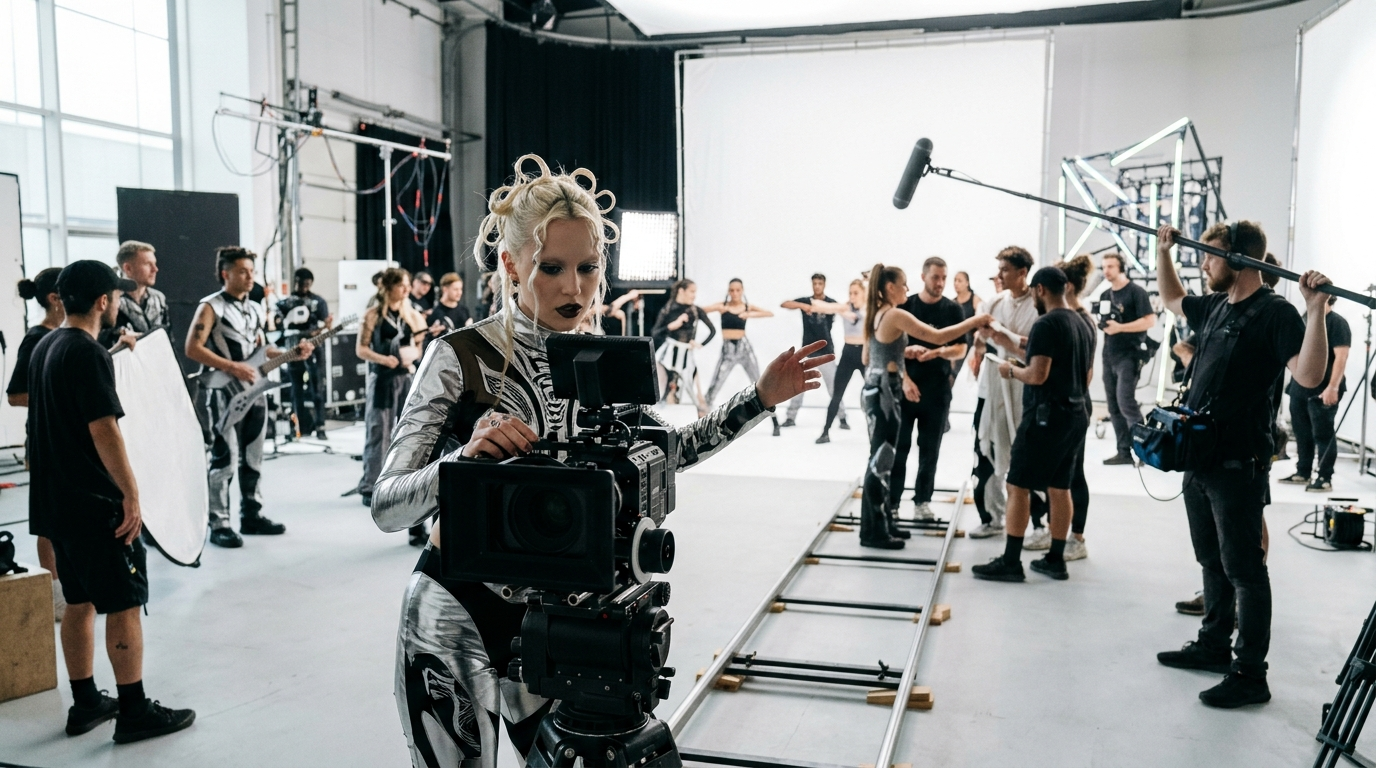
Grimes used artificial intelligence only sparingly in her new music video for “Accelerando,” while more than 70 artists contributed to the production, her team told Business Insider.
The disclosure places human creators at the center of a project linked to an artist closely associated with technology. It also adds fresh context to debates over how music videos are made and how creative credit should be shared.
Human Artists Led the Production
According to Grimes’ team, AI played a limited role in the “Accelerando” video. The project instead drew on the work of more than 70 artists, indicating a large collaborative effort.
AI was “sparingly used” in the music video, Grimes’ team told Business Insider.
The statement does not identify which scenes or production tasks involved AI. It also does not provide a detailed breakdown of the artists’ roles.
Those missing details matter because AI can enter production at many stages. It may assist with early concepts, image editing, animation, visual effects, or final processing. Without a fuller account, viewers cannot measure its exact contribution.
Still, the team’s description establishes two key facts:
- More than 70 artists worked on the “Accelerando” video.
- AI was used in a limited capacity rather than as the main production method.
Disclosure Addresses Creative Credit
The size of the credited artistic team challenges a simple view of AI-assisted media as automated work. Large music video productions often require coordination among artists with different visual and production skills.
The disclosure also points to a growing expectation that creators explain how AI tools were used. Audiences and working artists may interpret a project differently depending on whether software generated most images or supported a narrow task.



Grimes’ team has offered a broad distinction, but not a complete production record. A clearer account could show which work remained human-led and where machine-generated material appeared.
A Test for Transparent Production
“Accelerando” offers a useful case for the music industry because it combines limited AI use with an unusually large group of participating artists. That mix shows that AI and human labor are not always direct substitutes.
However, the number of contributors alone does not answer questions about pay, ownership, consent, or the source material used by any AI system. No information on those issues was included in the team’s statement.
Future disclosures may need more detail to help viewers and artists assess creative responsibility. Useful information could include the tools used, the stages affected, and how contributors were credited.
For now, the central finding is clear: “Accelerando” was not presented as an AI-made video. Grimes’ team described technology as a limited production aid within a project involving more than 70 artists. The next question is whether later credits or production notes will explain how that division of work operated in practice.