




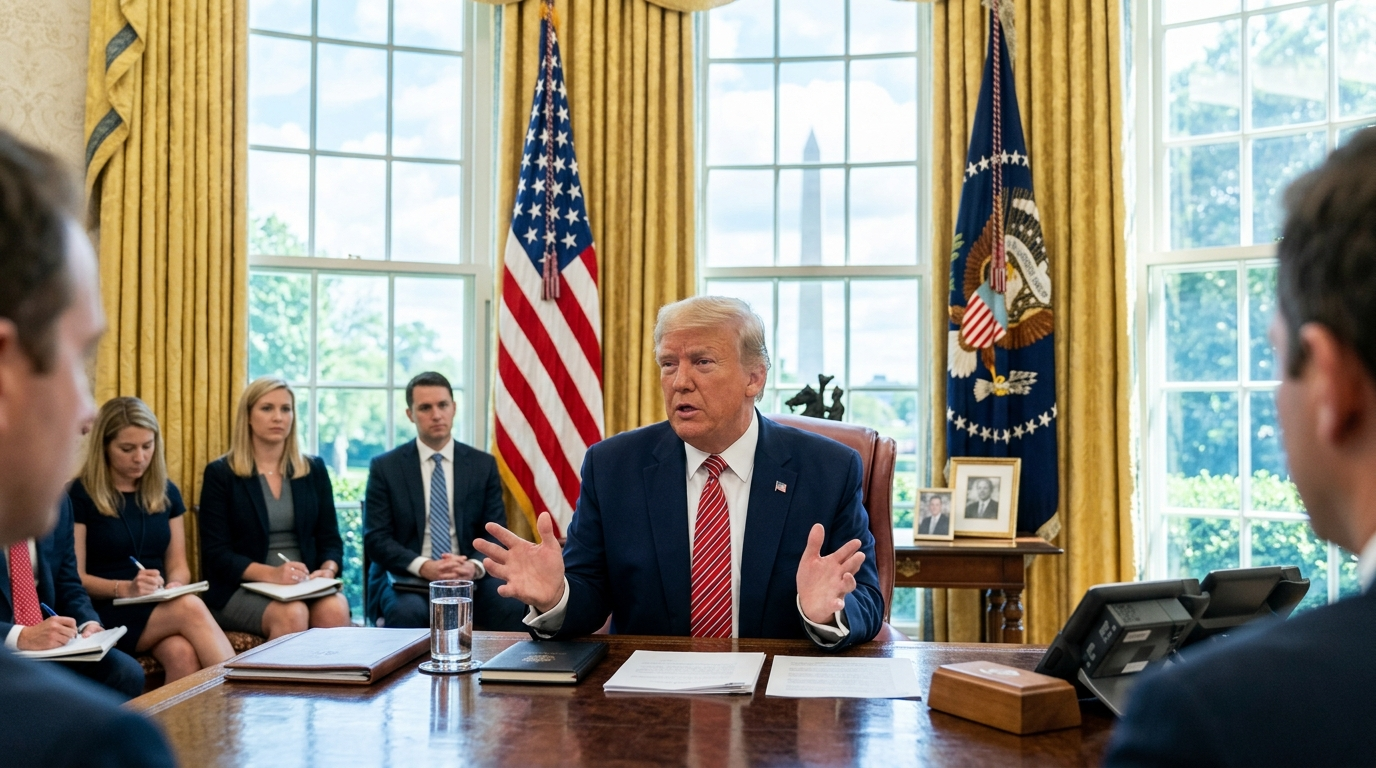
President Donald Trump said he would not use nuclear weapons against Iran or deploy U.S. ground troops, even as Washington reportedly considers new strike options.
The comments set public limits on possible military action during a period of heightened concern about escalation. However, they leave open the prospect of conventional attacks conducted by aircraft, missiles, drones, or naval forces.
Trump Draws Two Clear Limits
Trump ruled out the two most severe forms of direct U.S. military involvement. He said he would not use nuclear weapons against Iran and would not send American troops into the country.
Trump said he would not use nuclear weapons against Iran or send ground troops.
The pledge against a nuclear strike addresses an option with grave human, environmental, and diplomatic consequences. Such weapons would represent a sharp departure from decades of U.S. military practice.
Rejecting a ground deployment also signals that the administration does not plan an occupation or a large land campaign. Ground operations often create greater risks of prolonged combat and American casualties.
Still, those limits do not amount to a rejection of military force. The United States could consider several conventional options without deploying ground units inside Iran.
- Airstrikes launched by crewed aircraft
- Missile attacks from ships or submarines
- Drone operations against selected targets
- Cyberattacks or other non-ground measures
Strike Options Remain Under Review
The United States is reportedly weighing new strike options, though no specific target, timetable, or final decision has been disclosed. That uncertainty is central to the current situation.
Military planning does not always lead to an attack. Governments routinely review options to prepare for several outcomes, strengthen deterrence, or increase pressure during diplomacy.



Trump’s statement may therefore serve two purposes. It reassures the public that some extreme actions are excluded while preserving flexibility for a narrower conventional response.
That approach also carries risks. Even a limited strike could prompt Iranian retaliation against U.S. personnel, regional partners, shipping routes, or other interests. A cycle of attacks could widen despite stated limits.
Regional Risks Shape the Decision
Relations between Washington and Tehran have faced years of tension over Iran’s nuclear program, regional military activity, sanctions, and support for armed groups. Past confrontations have shown how quickly pressure can turn into direct exchanges.
A strike decision would also affect U.S. allies and partners. Governments across the Middle East would have to prepare for possible retaliation, disrupted trade, and pressure on energy markets.
The absence of planned ground troops could reduce the chance of a large U.S. war. Yet modern conflicts can expand through missiles, drones, proxy forces, and attacks on military bases without a formal invasion.
Key questions remain unanswered, including what event could trigger U.S. action, which targets are under consideration, and whether diplomatic channels remain active. The administration has also not outlined how it would prevent a limited operation from expanding.
Trump has drawn important boundaries around nuclear weapons and ground forces, but he has not closed the door to conventional strikes. The next signals from Washington and Tehran will show whether the comments support de-escalation or precede a more limited military operation.