




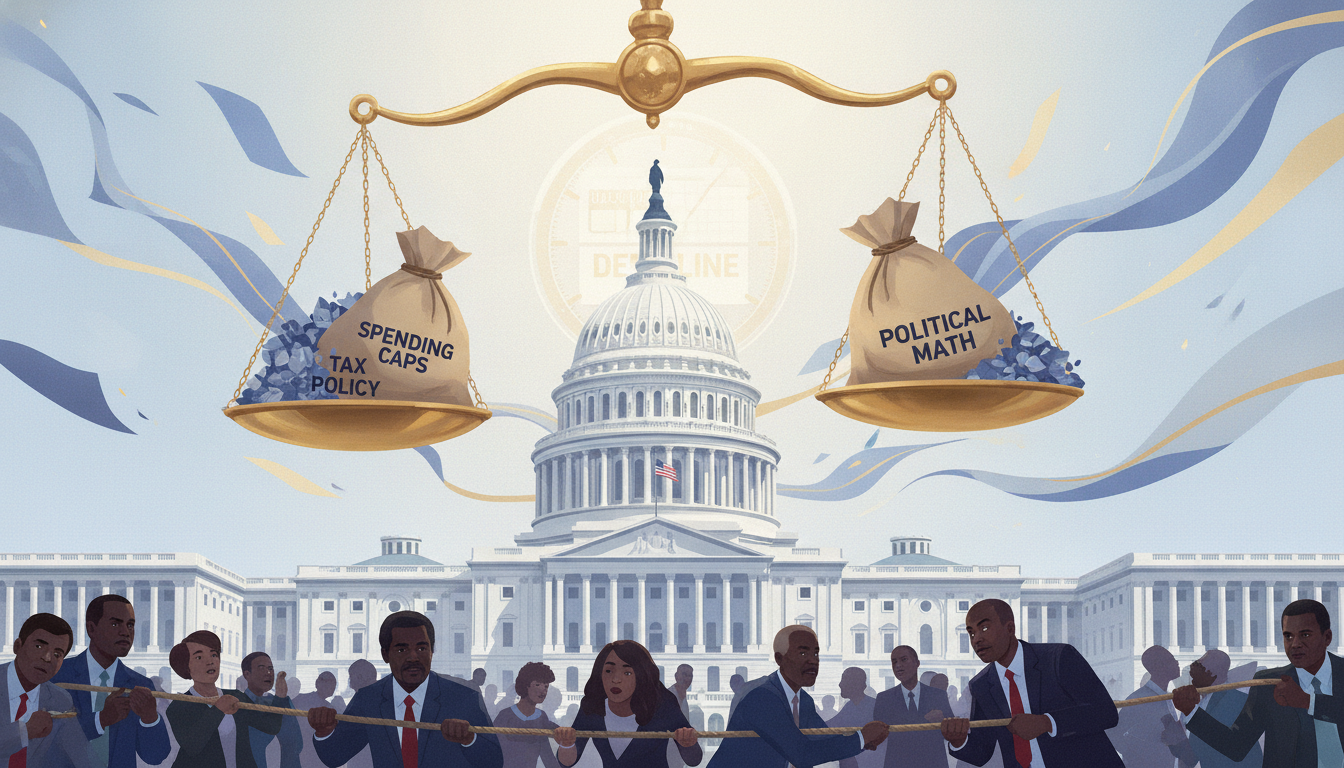
With government funding deadlines approaching, Fox Business host Larry Kudlow examined how lawmakers could steer budget talks and avoid a shutdown. The discussion focused on spending caps, tax policy, and the political math needed to pass a deal in both chambers before funding expires.
The debate is not only about how much to spend. It is also about what to cut, how to sequence votes, and whether to link any tax changes to a spending agreement. Members are weighing short-term funding extensions against a longer deal that could set spending levels for the next year.
Background On The Fiscal Standoff
For years, Congress has relied on short-term measures to keep agencies open. These continuing resolutions buy time but leave agencies planning month to month. They also complicate defense contracts and state programs that need steady funding.
Deficits have widened as interest costs rise and pandemic-era spending rolls off more slowly than expected. The Congressional Budget Office has warned that debt held by the public is high by historical standards and is on track to keep rising without policy changes.
Past standoffs have followed a familiar cycle. Leaders set spending targets, committees write bills, and unresolved issues get lumped into an end-of-year package. If talks stall, a short extension resets the clock, sometimes more than once.
Competing Strategies On Spending And Taxes
Kudlow, a former White House economic adviser, framed the core choice this way: hold the line on spending growth or accept higher near-term outlays in exchange for policy wins. He highlighted options that both parties are considering.
- Freeze or cut nondefense discretionary spending in real terms.
- Protect defense accounts and veterans programs from reductions.
- Seek targeted savings in unspent funds and agency clawbacks.
- Pair business tax relief with stricter spending caps.
- Use a short extension to finish talks, but set a firm end date.
Budget hawks want tighter caps and automatic cuts if Congress misses deadlines. Others warn that deep cuts could disrupt services and local projects. There is also debate over whether any tax changes should move with spending bills. Some lawmakers see a combined package as the only path to 60 votes in the Senate. Others prefer to keep the issues separate.
The Path Through Congress
The House will likely pass a plan with stronger spending cuts. The Senate will aim for a bipartisan compromise with higher caps and policy trade-offs. Any final deal must satisfy both, then win the President’s signature.



One procedural option is budget reconciliation. It allows certain fiscal measures to pass the Senate with a simple majority. Its rules are narrow, and it takes time to set up a budget resolution. Leaders may see it as too slow for a fast-approaching deadline.
An immediate fallback is a clean short-term bill. That would keep funding flat while talks continue. Some see that as a practical step. Others worry it invites more brinkmanship later in the year.
Economic Stakes And Market Signals
Markets tend to react most to uncertainty. A shutdown can delay data releases, slow loan processing, and dent business confidence. The longer it lasts, the broader the effects. Contractors and tourist sites often feel the hit first.
Investors are watching Treasury yields, credit spreads, and consumer sentiment. Rising yields increase interest costs on new debt, which adds pressure on the budget. A stable path can calm markets, even if the deal is modest.
Households face practical questions. Social Security checks continue, but some services slow. Federal workers may face furloughs. Small businesses that rely on permits or federal customers can see delays in payments.
What Each Side Needs
Republican leaders want enforceable caps and visible savings. Democratic leaders want to protect safety net programs and secure funds for infrastructure and science. Both sides want to avoid blame for a shutdown.
Kudlow stressed growth as a key goal, pointing to policies that could raise investment and expand supply. Supporters say stronger growth can ease debt burdens over time. Critics argue that without direct deficit reduction, higher growth alone will not stabilize debt.
Compromise areas include repurposing unspent balances, tightening oversight, and modest adjustments to tax treatment for research and equipment. Larger fights, such as entitlement reform or broad tax changes, seem unlikely in a quick deal.
Key takeaway: a timely agreement with clear caps and minimal policy riders is the likeliest outcome. It would reduce immediate risk and set the stage for deeper talks in the next budget cycle.
As the deadline nears, watch for three signals: whether leaders agree on topline numbers, if the House and Senate align on policy riders, and how long any short-term extension runs. Those details will show whether Washington is buying time or finishing the job.