


Kansas farmers are entering their busiest season under pressure from elevated diesel prices, adding fresh costs to harvesting, hauling crops and moving livestock.
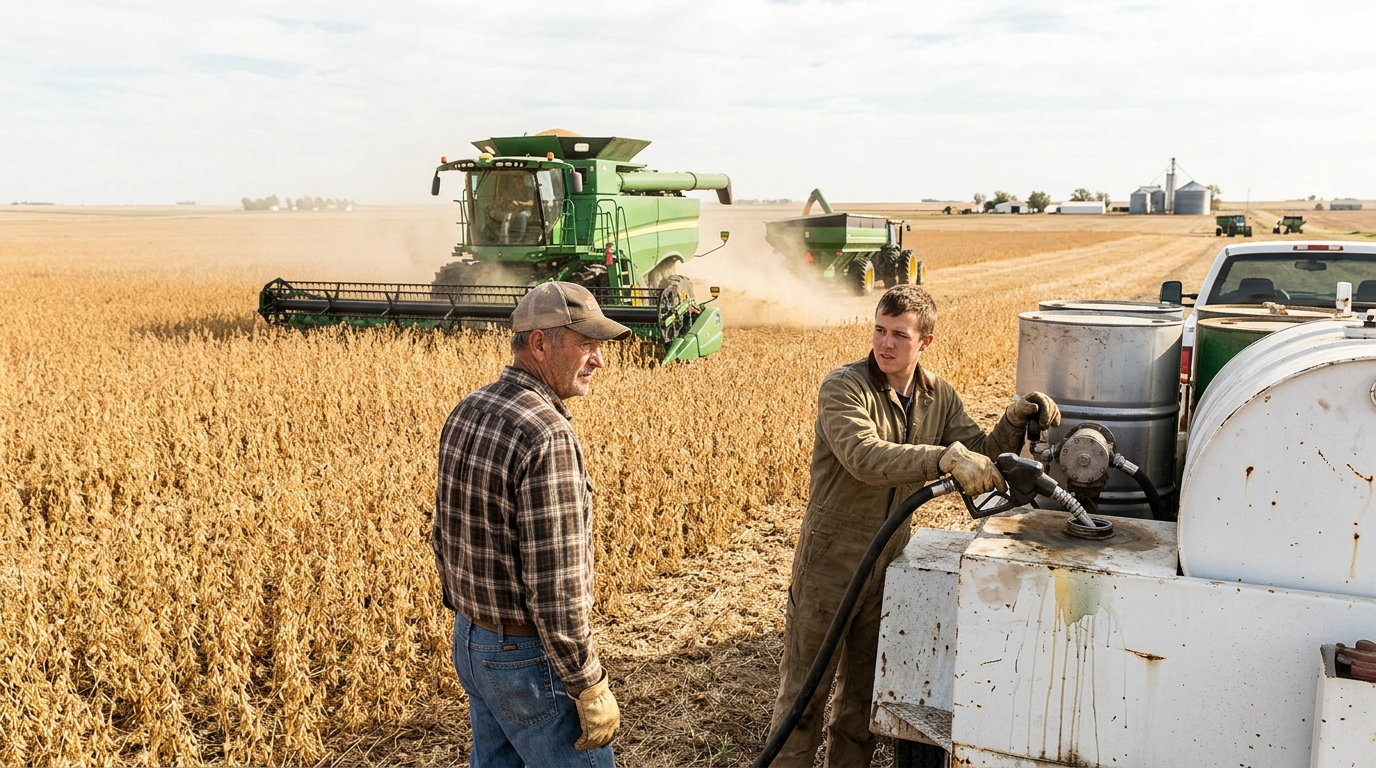
Glenn Brunkow, a fifth-generation farmer in Kansas, calls this period “go time.” Across the state, producers are combining fields, transporting grain to market and moving cattle from summer pastures to winter sites.
Each job depends heavily on fuel. Higher diesel prices can therefore affect nearly every stage of harvest, from operating machinery to delivering crops. The added expense arrives during a short window when delays may reduce yields or crop quality.
Fuel Powers the Harvest
Modern farms use diesel for combines, tractors, grain trucks and other heavy equipment. Livestock operations also need fuel to haul animals, feed and supplies.
Those demands make harvest season especially sensitive to price changes. A farm may need to purchase large amounts of diesel within several weeks, leaving little opportunity to wait for cheaper fuel.
Brunkow described the harvest period as “go time,” reflecting the pace and urgency facing producers.
The work often happens at the same time across several parts of an operation. Crops must be gathered when weather and field conditions allow. Grain then needs to reach storage or buyers. Meanwhile, cattle must be moved before winter conditions arrive.
Farmers can limit some fuel use through careful scheduling and equipment maintenance. Yet many trips and field operations cannot be avoided. A combine must travel through the crop, while grain must still be hauled from rural fields.
Higher Costs Reach Across Farm Operations
Fuel is only one expense in agricultural production, but its effects can spread through the farm budget. Diesel prices influence transportation costs for seed, fertilizer, feed and machinery parts.



Key areas exposed to higher fuel expenses include:
- Running combines and tractors during harvest
- Hauling grain from fields to storage or market
- Moving livestock between seasonal pastures
- Delivering feed and supplies to cattle operations
Producers may have limited ability to recover those costs. Commodity prices are set through regional, national and global markets. Individual farmers generally cannot raise the price of grain simply because diesel becomes more expensive.
That gap can narrow operating margins. The effect varies by farm size, crop, distance to market and the amount of fuel purchased earlier at lower prices.
Timing Leaves Farmers Few Choices
Harvest decisions are shaped by weather as much as economics. Farmers must act when crops are ready and fields are dry enough for heavy machinery.
Waiting for fuel prices to fall may not be practical. Delayed harvesting can expose crops to storms, wind, moisture or other losses. For livestock producers, seasonal changes also set firm limits on when cattle can remain on summer pasture.
Some farms store fuel and buy it ahead of peak demand. That strategy can reduce exposure to sudden price increases, but it requires storage capacity and advance cash. Smaller operations may have fewer options.
Farmers may also combine trips, reduce unnecessary equipment use or coordinate transportation. Such steps can help, although they cannot remove the basic fuel needs of a large harvest.
Rural Economies Could Feel the Strain
Farm expenses extend outside the farm gate. Producers buy fuel, repairs and services from local businesses. If higher operating costs reduce farm income, spending may also decline in nearby towns.
The pressure can affect grain elevators, truckers, equipment dealers and livestock businesses. Consumers may also see indirect effects if transportation and production costs remain elevated across the food supply chain.
For Kansas producers, the immediate task remains getting crops out of the fields and livestock into winter locations. Diesel prices will be one factor shaping the final cost of that work.
The coming weeks will show how weather, crop returns and fuel expenses combine to affect farm finances. The main issue to watch is whether elevated diesel costs ease after harvest or remain a burden during winter feeding and preparations for the next planting season.