




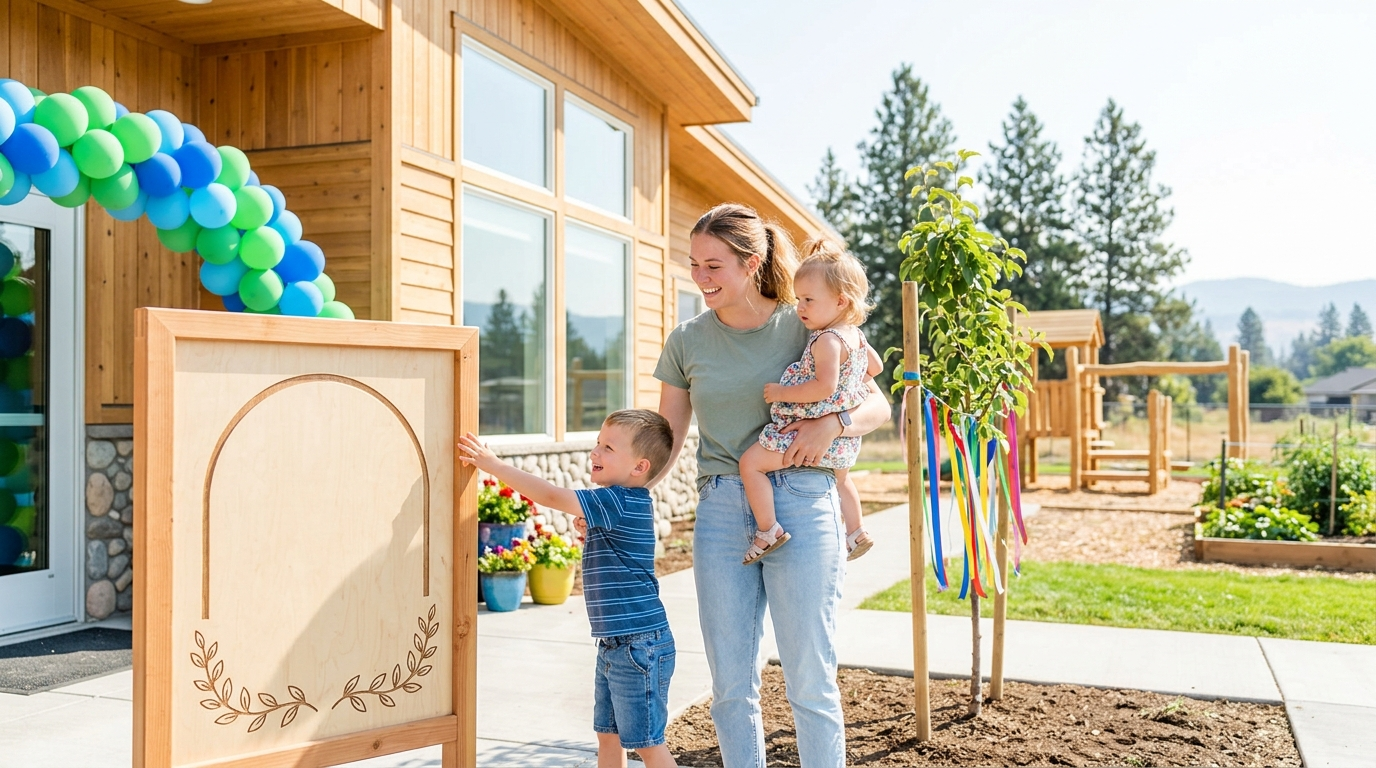
A soon-to-open Head Start preschool in Spokane, Washington, appeared at a critical moment for Cassie Reed and her two young children.
The family had recently left a domestic violence shelter and moved into a third-floor apartment. On the building’s ground floor, Reed found a preschool that could place early education within steps of their new home.
The discovery shows how the location of child care can shape a family’s recovery. For parents rebuilding after violence, nearby services may reduce transportation problems, support employment and give children a stable routine.
Early Education Meets Basic Needs
Head Start is a federally funded program serving young children from low-income families. It combines preschool education with health, nutrition and family support services.
The program began in 1965 as part of the federal government’s anti-poverty efforts. Its model treats school readiness as more than classroom instruction. Children’s health, housing conditions and family stability can also affect their ability to learn.
That approach has special relevance for families leaving domestic violence shelters. A move into permanent housing can bring greater safety, but it also creates new demands. Parents may need child care, transportation, work, counseling and medical care at the same time.
Having a preschool in the same building could remove one major daily obstacle. It may also help children maintain regular attendance while their household establishes new routines.
Location Can Determine Access
Child care access often depends on more than whether a classroom has an open seat. Families must consider travel time, work schedules and the cost of reaching a provider.



Those pressures can be harder for a parent who has recently left an abusive household. A survivor may have limited access to a car, money or a support network. Safety concerns can also affect where and how the family travels.
A building-based Head Start site may offer several practical benefits:
- Shorter and safer trips between home and preschool.
- Fewer transportation costs for the parent.
- More consistent attendance for young children.
- Direct access to family support and health referrals.
Yet proximity alone does not solve every problem. Programs must have enough qualified staff, reliable funding and space for eligible children. Families may also need mental health care, legal aid and long-term housing support.
Stability After Domestic Violence
Children exposed to domestic violence may experience stress that affects sleep, behavior and learning. Predictable schedules and supportive adults can help them regain a sense of security.
Preschool staff can play an important role, but they are not substitutes for trained counselors or medical professionals. Effective support often requires coordination among educators, health providers, housing agencies and domestic violence services.
Privacy is another concern. Survivors may need strict safeguards around addresses, family records and communication with other adults. Early education providers must balance family engagement with the need to protect sensitive information.
A Broader Test for Public Programs
Reed’s experience illustrates why service design matters. Placing education near affordable housing can make public assistance easier to use, especially during a period of crisis.
It also points to a larger policy question: whether early education should be planned alongside housing and family safety services. Separate programs may exist, but families can still struggle if those services are difficult to reach.
For Reed and her children, the preschool downstairs represented more than convenience. It offered the prospect of routine at a time of major change.
The center’s opening will test whether that promise becomes lasting support. Its staffing, enrollment capacity and coordination with local services will help determine its impact. The wider lesson is clear: access often depends on putting help where families already live.