



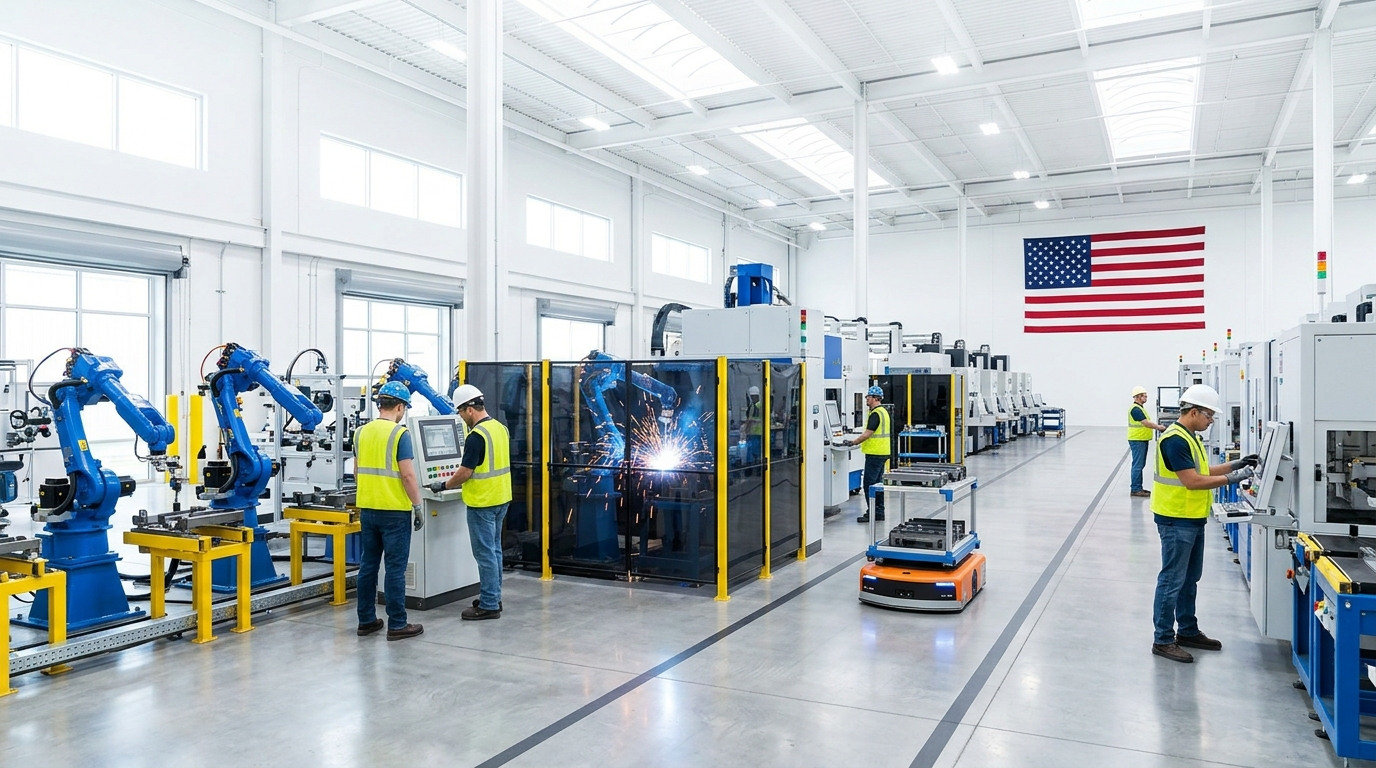
U.S. manufacturers may need to deploy robots faster as worker shortages persist and China accelerates factory automation, according to a Path Robotics executive.
The warning points to a growing challenge for American industry. Companies want to expand domestic production, but many struggle to recruit enough skilled workers. Robotics could help close that labor gap while supporting higher output.
Worker Shortages Reshape Factory Investment
Manufacturers often need trained employees for welding, machining, maintenance, and production management. Persistent vacancies can delay orders, limit factory expansions, and raise operating costs.
Path Robotics develops automated systems for industrial work, including welding. An executive at the company told FOX Business that automation will be critical to expanding U.S. manufacturing while labor remains scarce.
Automation will be critical to expanding U.S. manufacturing as worker shortages persist and China moves faster to adopt robotics.
The argument does not mean factories can operate without people. Automated equipment still requires workers to install, supervise, maintain, and repair it. Plants also need employees who can manage production quality and respond when systems fail.
For manufacturers, the practical question is where robotics can ease the greatest production constraints. Repetitive, physically demanding, or hazardous tasks are common targets. These uses may also reduce injuries and let skilled employees focus on more complex duties.
China Raises the Competitive Pressure
China’s faster adoption of industrial robots adds urgency for U.S. companies. Greater automation can help factories produce more goods with consistent quality and shorter delivery times.
If American adoption trails that pace, domestic producers could face pressure on cost, output, and delivery speed. The issue also affects efforts to move manufacturing closer to U.S. customers and reduce reliance on distant suppliers.



Still, buying robots does not guarantee better performance. Companies must adapt production lines, train employees, and ensure that new systems can handle real factory conditions. Smaller manufacturers may find those investments harder to finance than large corporations do.
Jobs May Change Rather Than Disappear
Automation often raises concern about job losses. Some routine positions may decline as machines take over selected tasks. At the same time, factories may create roles in programming, equipment support, systems integration, and quality control.
The likely effects will differ by plant and occupation. Key factors include:
- The tasks assigned to automated systems
- The cost of equipment and worker training
- The availability of skilled technicians
- The ability of smaller factories to invest
Employers, schools, and public agencies may therefore need to expand technical training. Workers must have realistic routes into new roles if automation changes existing jobs.
A Wider Test for Industrial Policy
The debate reaches past individual factories. Expanding U.S. production requires enough workers, dependable equipment, stable supply chains, and capital for modernization. Robotics can address some labor limits, but it cannot solve every production problem.
Manufacturers must also weigh cybersecurity, maintenance expenses, and dependence on specialized technology providers. Poorly planned automation can shift bottlenecks rather than remove them.
The Path Robotics executive’s assessment frames automation as a competitive need rather than an optional upgrade. The next test will be whether U.S. manufacturers can adopt it while preparing workers for changing jobs. China’s pace adds pressure, but effective execution, access for smaller firms, and workforce training will determine the outcome.