



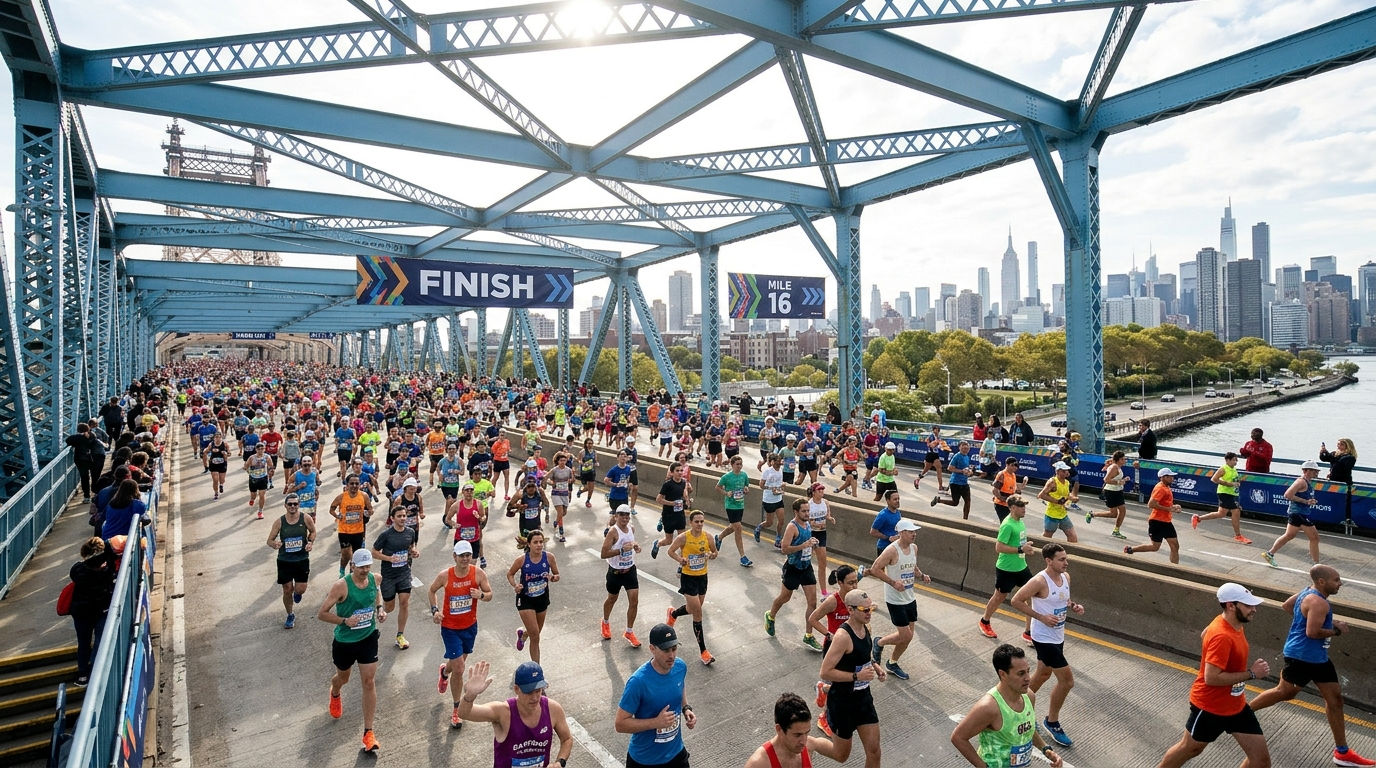
Nearly 60,000 runners took on New York City’s 26.2-mile marathon course in 2026, traveling from Staten Island to Central Park.
The large field placed the event among the city’s biggest mass-participation gatherings. It also showed the scale required to move thousands of athletes through public streets and into Manhattan’s central park.
A Course Across New York City
The race began in Staten Island before runners started the long journey to the finish line in Central Park. The full marathon distance covered 26.2 miles.
New York’s marathon is known for connecting distinct communities within one race. Its point-to-point format turns city streets into an endurance course, while spectators gather along the route.
The Central Park finish carries practical and symbolic weight. Athletes reach it after hours of running, marking the end of months or years of training for many participants.
Participation Reaches Major Scale
A field of nearly 60,000 creates demands that go far outside the race itself. Organizers must manage staggered starts, runner tracking, aid stations, medical services and finish-line operations.
Several figures define the event’s size:
- Nearly 60,000 runners participated.
- The course measured 26.2 miles.
- Runners started in Staten Island.
- The race ended in Central Park.
The participation figure also reflects the wide appeal of large urban marathons. Such races often include elite athletes, experienced amateurs, charity runners and first-time marathoners.



That mix can create competing priorities. Top runners focus on speed and placement. Recreational entrants may aim to set personal records, support charities or simply reach the finish.
Logistics Match the Athletic Challenge
For runners, the main test is physical endurance. For New York City, the challenge is coordinating a temporary sporting event across heavily used public spaces.
A race involving nearly 60,000 people requires close planning around transportation, street access and crowd movement. Medical teams must also prepare for fatigue, injuries and changing weather conditions.
The starting and finishing areas carry the greatest pressure. Staten Island must receive and organize a vast field before the race. Central Park must then process finishers safely as they complete the course.
Those demands continue after runners cross the line. Participants need water, food, medical checks and clear routes away from the finish area. Friends and relatives must also move through crowded parts of the city.
What the Turnout Signals
The 2026 participation total suggests sustained interest in destination races and public endurance events. A marathon of this size can also support local spending on hotels, restaurants and transportation.
However, large races can disrupt residents and businesses through road closures and travel delays. Organizers and city agencies must balance those costs against tourism, charitable activity and civic participation.
The event’s central achievement remains its scale. Nearly 60,000 people completed or attempted the same demanding distance on one city course.
Future editions will be judged not only by participation, but also by safety, access and the quality of the runner experience. The 2026 race set a high operational standard, carrying a massive field from Staten Island to a Central Park finish 26.2 miles later.