



Postgraduate students in professional medicine programs may now qualify through a “practical achievement,” offering an alternative way to show they are ready for clinical work.
The development, reported by Nature, points to a greater role for hands-on assessment in advanced medical education. However, available information does not identify the institutions, countries, degrees, or start date covered by the change.
Practical Skills Gain Greater Weight
Professional medicine degrees prepare students for work that depends on applied skills. These may include examining patients, making clinical decisions, communicating with families, and responding to urgent situations.
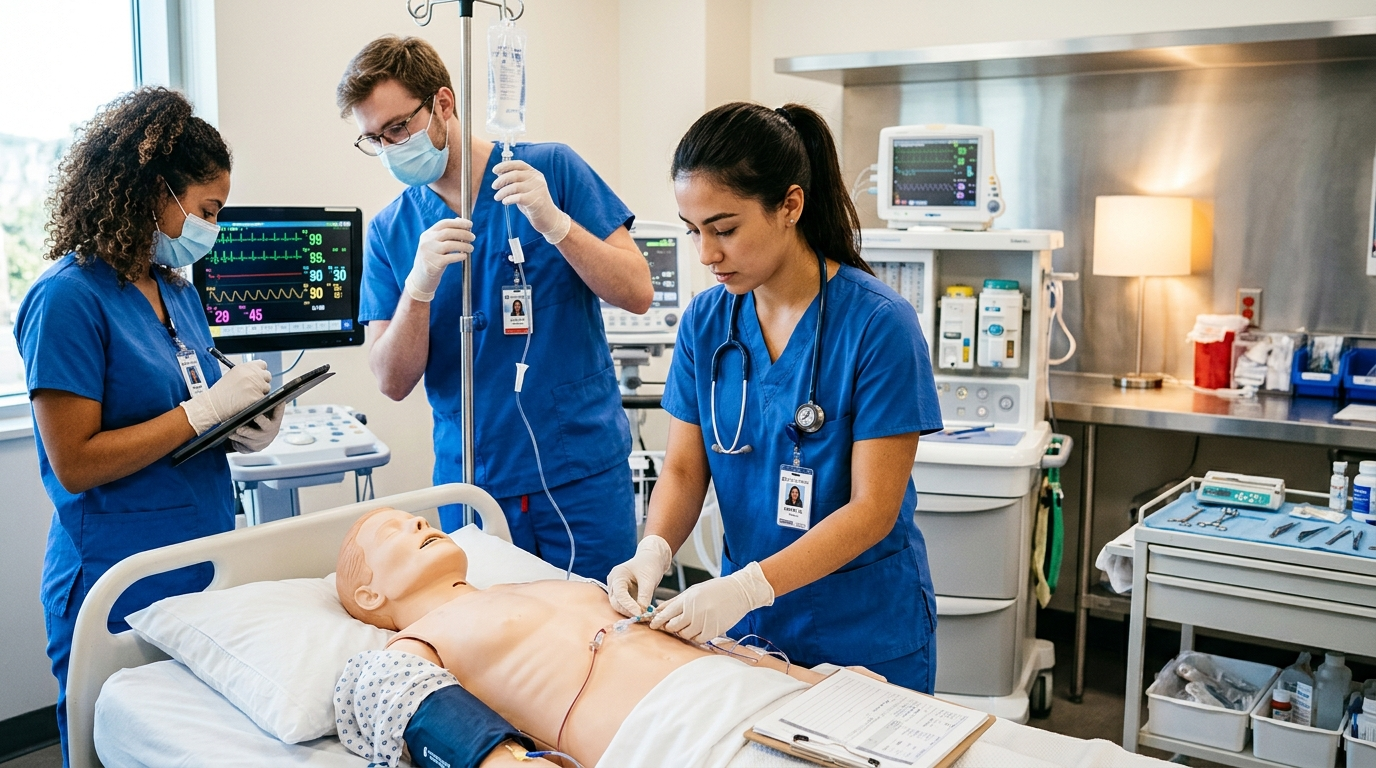
A practical achievement could allow postgraduate students to demonstrate those abilities in a supervised setting. It may involve a clinical assessment, workplace performance, a completed procedure, or another approved measure.
“Postgraduate students studying professional medicine degrees can qualify with a ‘practical achievement’.”
The wording suggests that demonstrated performance may count toward qualification. It does not establish whether practical achievement replaces a dissertation, written examination, research project, or another requirement.
How Medical Training Is Usually Assessed
Medical education has long mixed academic study with clinical practice. Students often complete written tests, observed examinations, placements, case reports, and supervised work before receiving a degree.
Postgraduate professional programs can differ from research degrees. A research degree usually centers on original scholarship. A professional degree often places more weight on safe and effective workplace performance.
That distinction helps explain why practical assessment may be suitable for some medicine programs. A student can understand medical theory yet still need to prove that knowledge can be applied under clinical conditions.



Benefits and Questions for Educators
A practical route could give universities a clearer view of a student’s readiness for patient care. It may also recognize skills that are difficult to measure through a written thesis or timed examination.
Several details will determine how fair and useful the route becomes:
- Who defines an acceptable practical achievement
- How assessors apply consistent standards
- Whether patients participate in the assessment
- How students can appeal an unsuccessful result
- Whether licensing bodies recognize the qualification
Supporters of workplace assessment may argue that it reflects the daily demands of medicine. Critics may question whether one achievement can represent months or years of learning.
Consistency is another concern. Clinical settings vary in staffing, patient needs, equipment, and supervision. Universities would need clear rules so students receive equal treatment across different hospitals or training sites.
Patient Safety Remains Central
Any practical assessment in medicine must protect patients. Students need close supervision, informed participation, and firm limits on what they may do.
Assessors also need suitable training. Without shared scoring methods, judgments could depend too heavily on individual opinion. Records of each assessment would help institutions review decisions and improve standards.
The reported qualification route signals a possible shift toward evidence of workplace ability in postgraduate medicine. Its impact will depend on the details, including which programs qualify and how achievement is measured.
Universities, students, and medical regulators will now need clearer guidance. The key test is whether the approach can recognize real clinical skill while preserving academic standards, fairness, and patient safety.