




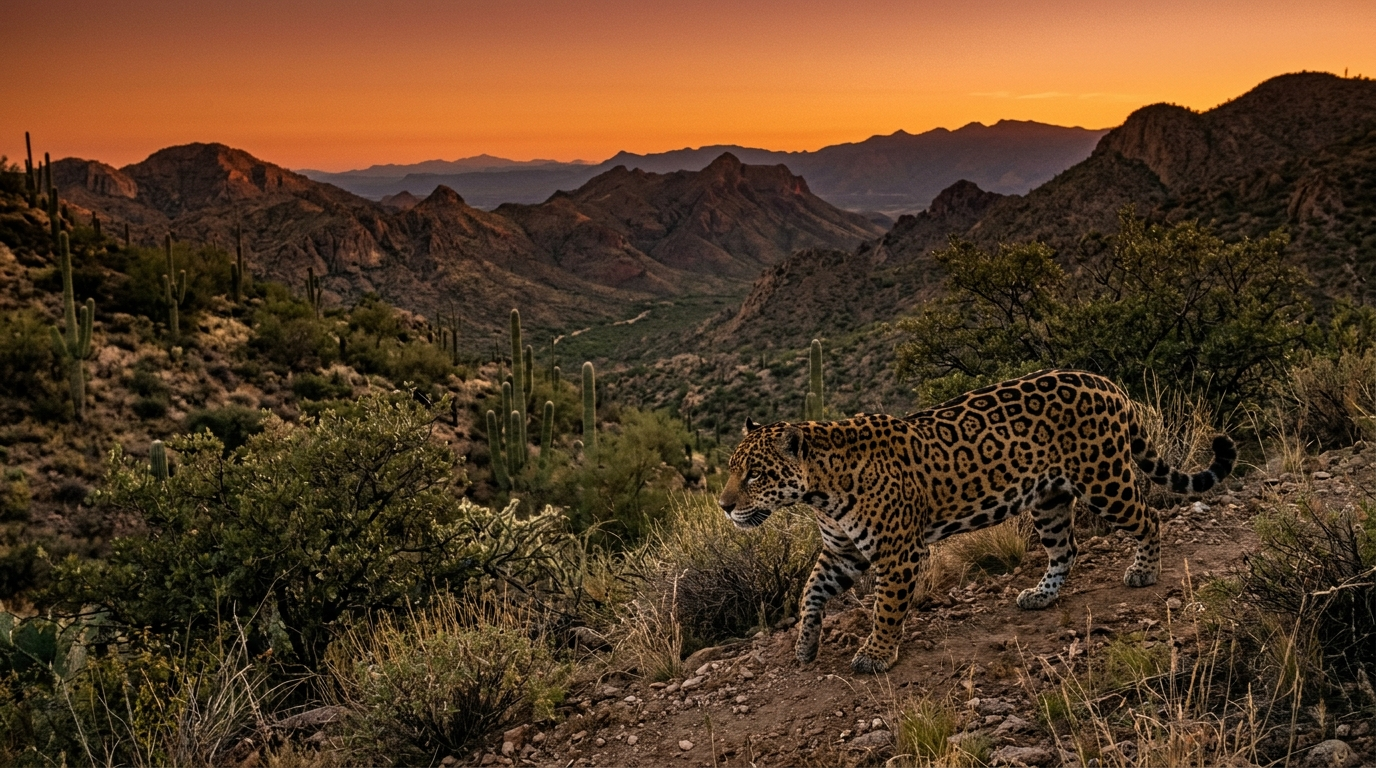
A lone male jaguar roaming Arizona’s mountains and a female seen across the Mexican border are raising hopes for the species’ return to the region.
The sightings place two members of the rare cat population within a relatively short distance. Yet major threats remain, including habitat loss, fragmented travel routes, and the risks faced while crossing human-controlled areas.
Signs of a Possible Return
Jaguars once occupied a broad area that included parts of the southwestern United States. Their current presence north of Mexico is far more limited, making each confirmed sighting important to wildlife researchers.
The Arizona animal is described as a lone male moving through mountain habitat. A female has also been spotted south of the international border in Mexico.
“The sightings raise hopes for the species, despite serious threats.”
A male sighting alone does not prove that a breeding population has formed in Arizona. Male jaguars can travel long distances while seeking territory, food, and potential mates.
The female’s presence in Mexico offers a more hopeful sign. Females are essential for establishing a breeding population, but researchers would need more evidence before concluding that recovery is underway.
Why Border Habitat Matters
Wild animals do not follow political boundaries. Mountain ranges and valleys across Arizona and northern Mexico can act as travel routes between patches of habitat.
For jaguars, access to connected territory may determine whether isolated animals can find mates and establish lasting populations. Barriers can restrict that movement and divide animals from suitable land.


The main concerns include:
- Loss or damage to mountain and desert habitat
- Roads, fencing, and other barriers along travel routes
- Reduced access to prey and water
- Conflict with people and livestock operations
- The small number of jaguars documented near Arizona
These pressures make the female sighting important but uncertain. Her location across the border does not mean she will travel north. It also does not show that the Arizona male will move south.
Hope Tempered by Risk
Wildlife sightings can stir public interest, but conservation decisions depend on repeated observations and reliable evidence. Researchers may use remote cameras, tracks, and other field signs to follow an animal’s movements without disturbing it.
Such monitoring can help determine whether the male remains in Arizona, how much territory he uses, and whether other jaguars enter the area. It may also identify routes that need protection.
The sightings present two competing views of the species’ status. One is hopeful: jaguars are still reaching habitat near the United States and Mexico border. The other is sobering: two animals do not amount to a secure population.
Any lasting recovery would likely require safe movement across connected habitat, protection on both sides of the border, and continued cooperation between wildlife agencies and local communities.
For now, the roaming male and the female in Mexico offer a rare sign that jaguars remain part of the region. The next evidence will show whether these appearances are isolated events or early signs of a larger return.