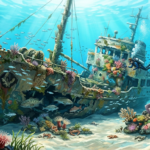

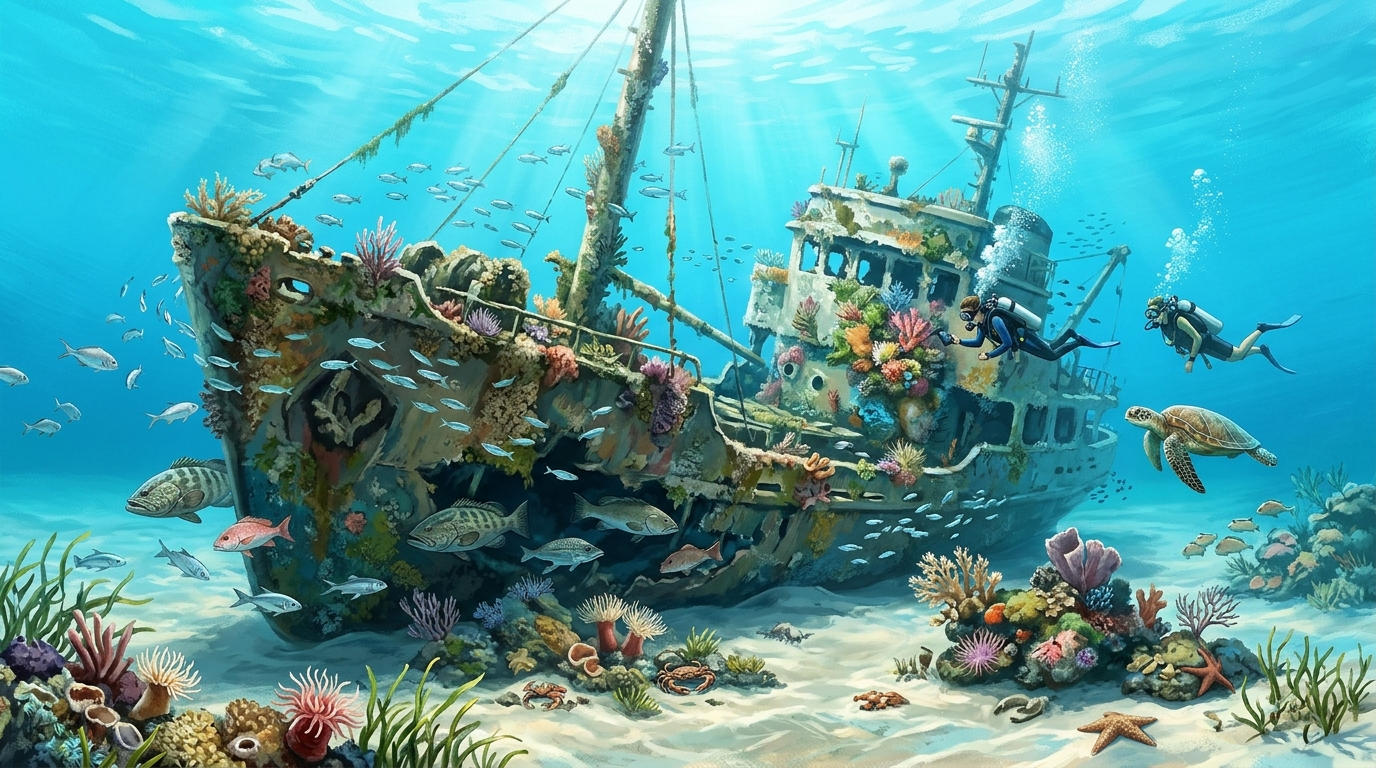
Florida’s Okaloosa County has bought a ship for a $13.5 million project designed to create the world’s largest artificial reef. The planned reef could support marine life while drawing divers and other visitors to the county’s Gulf Coast waters.
The purchase marks a major step in the county’s plan, although key details remain undisclosed. Officials have not identified the ship, its purchase price, the sinking site, or the project timeline.
Ship Purchase Advances Reef Project
Artificial reefs are human-made structures placed on the seafloor to provide habitat for fish and other marine species. Retired ships are often used because their large frames offer shelter and feeding areas.
Before deployment, a vessel must be cleaned and prepared to meet environmental requirements. Fuel, oil, wiring, insulation, and other potentially harmful materials may need to be removed.
The ship must then be placed at an approved location and depth. The site must limit risks to navigation, fishing activity, nearby habitats, and public safety.
Okaloosa County’s stated goal adds unusual scale to the undertaking. The claim that it will become the world’s largest artificial reef will likely depend on how size is measured. Possible measures include vessel length, total reef area, or the volume of submerged material.
Tourism and Marine Benefits Expected
Artificial reefs can create new destinations for recreational diving and fishing. That activity may benefit charter operators, marinas, hotels, restaurants, and other local businesses.
A large ship can also become a recognizable attraction. Divers may visit repeatedly as marine growth spreads across the structure and different species begin using it.



The project’s main expected benefits include:
- New habitat and shelter for marine organisms
- Additional diving and fishing opportunities
- More visitor spending in coastal communities
- A possible reduction in pressure on some natural reef sites
However, artificial reefs do not automatically produce more fish. In some cases, they may gather existing fish in one place rather than increase the wider population. Long-term monitoring can help determine whether the site supports new marine growth or mainly concentrates wildlife.
Environmental Review Will Shape Results
The project’s success will depend on careful preparation, placement, and oversight. A poorly chosen site could affect sediment, currents, existing habitats, or navigation routes.
Public agencies also must plan for diver safety. Large wrecks can contain confined spaces, sharp surfaces, and strong currents. Access points and hazards may need to be changed before sinking.
The $13.5 million project cost will draw attention to funding and public value. A clear breakdown would show how much is being spent on the ship, environmental cleaning, towing, permits, deployment, and future monitoring.
Okaloosa County has made a high-profile investment in marine recreation and habitat development. The next steps will determine whether the project meets its environmental and economic goals. The ship’s identity, final location, preparation plan, and deployment date will be central details to watch.