




Imaging and chemical tests on a 115-million-year-old dinosaur fossil have found structures that may be blood cells, renewing debate over whether delicate biological material can survive for millions of years.
The finding could help researchers study how dinosaurs lived and changed over time. Yet the evidence has not persuaded every scientist. Critics say cell-like shapes and chemical signals can have other causes, including mineral growth, microbes, or contamination.
Evidence From Shape and Chemistry
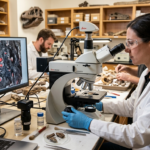
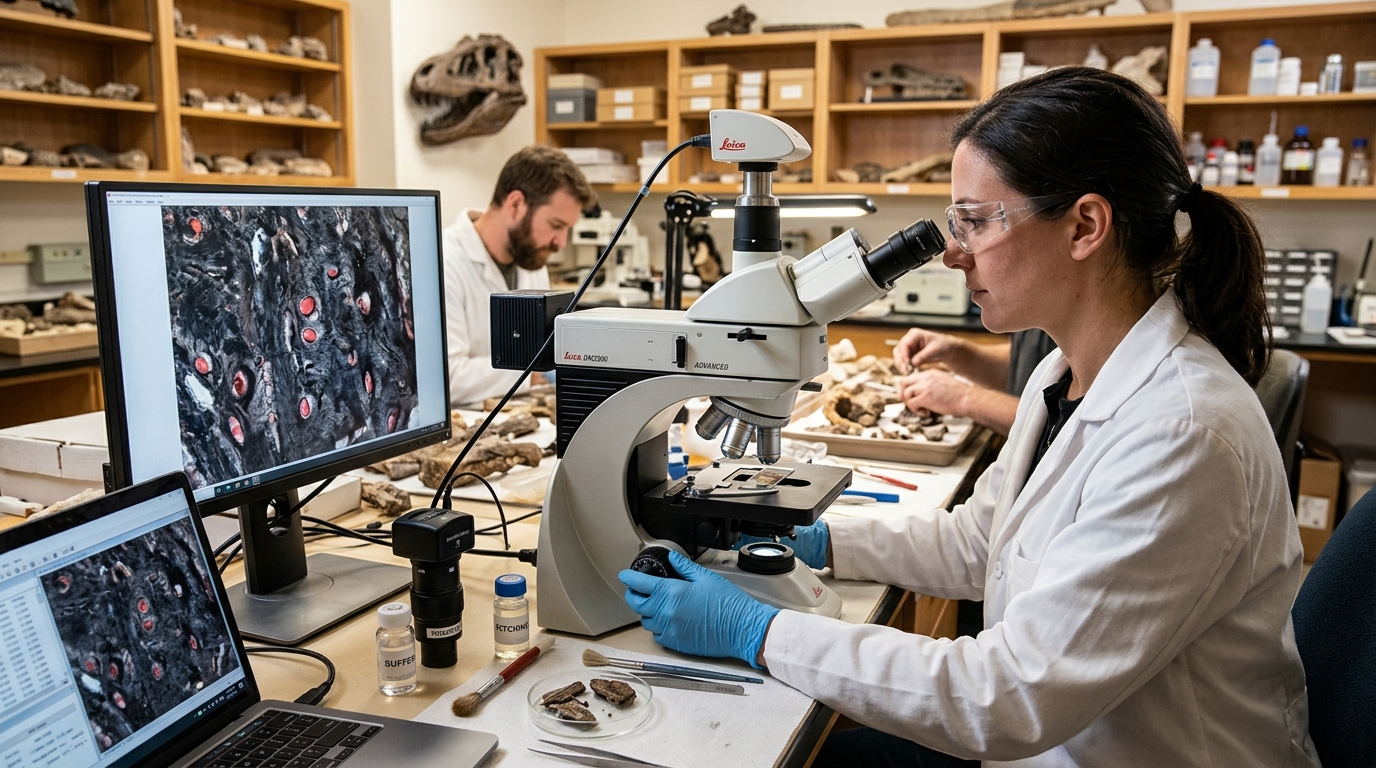
The research rests on two forms of evidence: images of microscopic structures and an analysis of their chemical makeup. Together, those results point to possible remnants of blood cells within the fossil.
“Imaging and chemical analysis of a 115-million-year-old dinosaur fossil points to blood cells.”
Using both approaches can strengthen a fossil study. Imaging shows a structure’s size, shape, and location. Chemical analysis tests whether its composition matches the proposed biological source.
Still, a resemblance is not proof. Minerals can form rounded or flattened features that look like cells. Chemical traces associated with living tissue may also come from later organisms or handling.
Why the Claim Faces Scrutiny
Fossilization usually destroys soft tissue. After an animal dies, cells begin to break down as enzymes, bacteria, heat, pressure, and groundwater alter the remains.
Hard tissues such as bones and teeth are more likely to enter the fossil record. Blood cells are far less durable, making any claim of their survival over 115 million years unusual and difficult to verify.
Skepticism does not mean the structures are necessarily nonbiological. It reflects the high standard needed to rule out simpler explanations. Scientists would want to know whether the signals occur inside protected fossil material and whether surrounding rock shows the same chemistry.



Key tests may include:
- Comparing the suspected cells with nearby sediment and mineral deposits.
- Checking whether microbes could have produced similar structures.
- Repeating the chemical tests with separate instruments and laboratories.
- Studying additional fossils from the same site and time period.
What Ancient Cells Could Reveal
If confirmed, blood-cell remnants could provide a rare record of dinosaur biology. Their form and chemistry might offer clues about physiology, disease, preservation, or relationships among extinct and living animals.
The discovery would not mean intact dinosaur blood had survived. Fossil evidence often consists of altered chemical residues or mineral copies rather than original cells. That distinction matters when interpreting what researchers can learn from the material.
The debate also fits a wider shift in paleontology. Improved microscopes and chemical tools allow scientists to examine fossils at smaller scales. Those methods have produced reports of proteins, pigments, and tissue-like structures, but many such claims have prompted disputes over preservation and contamination.
Independent Confirmation Is the Next Test
The strongest support would come from repeated results across several samples, backed by controls that exclude modern material. Researchers must also show how the structures survived burial, chemical change, and long periods underground.
For now, the fossil presents an important possibility rather than a settled conclusion. The imaging and chemistry make a case for ancient blood cells, while alternative explanations keep that case open to challenge.
Further testing will determine whether the structures record dinosaur biology or the complex process of fossil formation. Either result could improve how scientists assess claims of soft tissue in very old remains.