





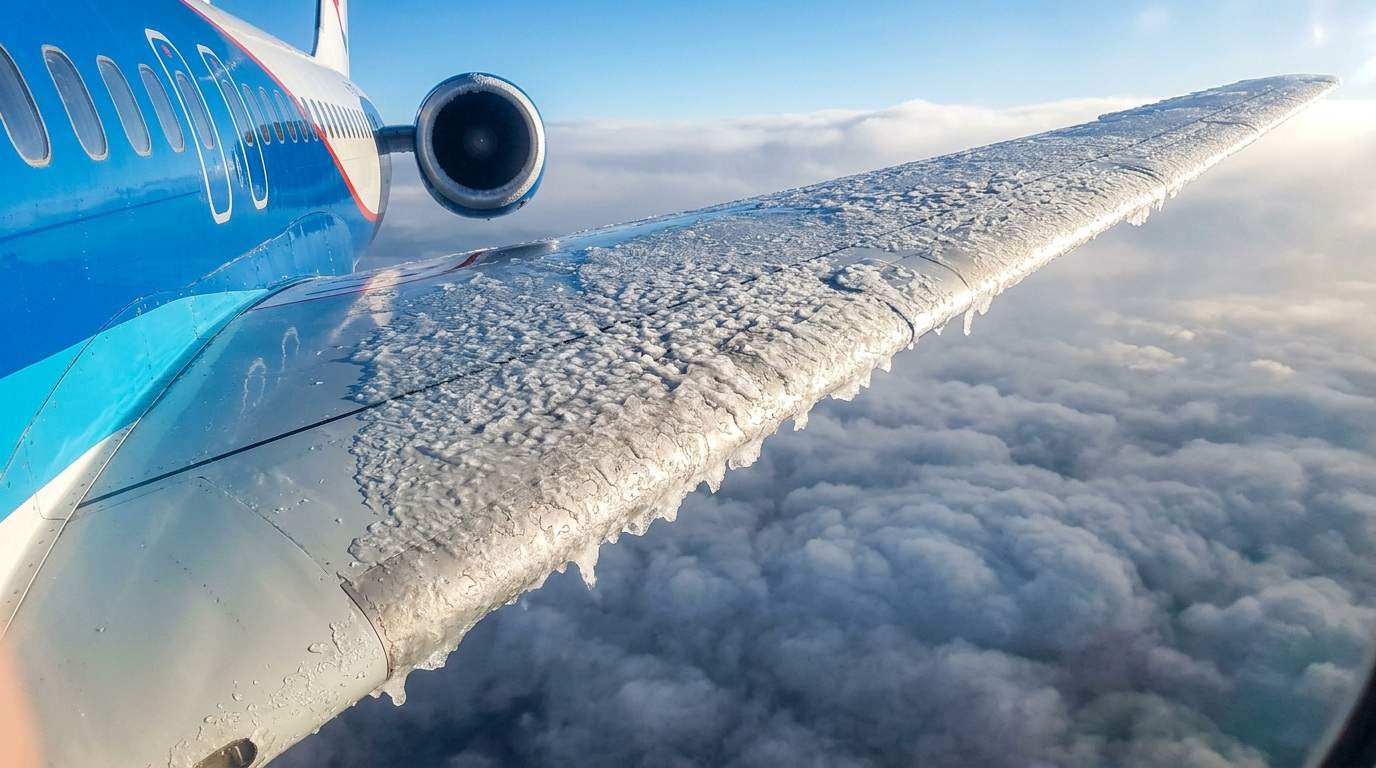
Ice on an aircraft wing can alter its shape and weaken its ability to fly safely, aviation experts warn. The hazard can develop when an aircraft encounters cold clouds containing liquid water, making early detection and removal critical.
Even a thin, uneven coating can disturb the smooth airflow that produces lift. It can also increase drag, reduce control and raise the speed at which a plane may stall.
Why Wing Shape Matters
Aircraft wings are designed with precise curves that guide air above and below them. This airflow creates lift, which keeps the aircraft in the air.
“Ice can change the shape of a plane’s wing, disrupting its aerodynamics,” experts said.
Ice buildup can roughen a wing’s surface or change its leading edge, the front section that first meets the air. Air may then separate from the wing sooner than expected.
That separation can reduce lift while forcing the engines to work harder. Pilots may also notice shaking, slower acceleration or changes in how the aircraft responds.
How Aircraft Icing Develops
Icing often occurs when supercooled water droplets strike an aircraft and freeze. These droplets remain liquid below the normal freezing point until they contact a surface.
Several forms of ice can affect flight:
- Clear ice may spread across a surface and can be hard to see.
- Rime ice often has a rough, cloudy appearance.
- Mixed ice combines features of clear and rime ice.
The danger is not limited to wings. Ice can collect on propellers, tail surfaces, engine openings and sensors. Blocked or distorted sensors may provide pilots with inaccurate speed or altitude information.



Prevention Begins Before Takeoff
Ground crews inspect aircraft during cold weather and remove snow, frost or ice before departure. Deicing fluid clears existing contamination, while anti-icing fluid can delay new buildup for a limited period.
Once airborne, many aircraft use heated surfaces, inflatable wing coverings or other systems to prevent or shed ice. Pilots also rely on weather reports and onboard information to avoid severe icing conditions.
These protections vary by aircraft. A system designed to manage limited icing does not make every cloud safe. Flight crews may need to change altitude, alter course or leave the affected area.
Small Changes Can Carry Large Risks
Icing highlights why aircraft performance depends on more than visible damage. A wing can appear mostly intact while its airflow has changed enough to affect handling.
The risk can be greater during takeoff and landing, when aircraft fly closer to stall speed and have less altitude for recovery. Added weight from ice matters, but the altered wing shape is often the more serious concern.
Safe operations depend on accurate forecasts, careful inspections and quick action by pilots. As winter weather and cold clouds affect flight routes, passengers may face delays caused by deicing or route changes. Those delays reflect a basic safety rule: an aircraft must begin and continue flight with surfaces capable of producing predictable lift.